

Bankruptcy stops the bleeding, but your credit score after bankruptcy takes time to heal. The damage is real-your score drops significantly the moment you file-but recovery is absolutely possible with the right moves.
We at Hurst Law Firm, P.A. have seen countless clients rebuild their credit faster than they expected. This guide shows you exactly how.
How Bankruptcy Reshapes Your Credit Score in Memphis, TN
Immediate Impact: The Score Drop Hits Hard
Filing for bankruptcy creates an immediate and substantial credit score drop. Most filers see their score plummet between 130 and 200 points within days of filing, according to data from credit monitoring services tracking real bankruptcy cases. A Chapter 7 filing hits harder initially because the court discharges your debts entirely, signaling to lenders that you couldn’t pay what you owed. Chapter 13 is gentler on your score because you propose a repayment plan, showing creditors you intend to pay back at least some debts. However, this distinction matters less than you think. Both types remain on your credit report for seven to ten years, but your score doesn’t stay depressed for that entire period. The trajectory matters far more than the initial damage.
Recovery Happens Faster Than Most Expect
Most people assume bankruptcy means a decade of financial hardship. That’s wrong. Clients frequently see their credit scores climb 100 points or more within the first two years after filing. Chapter 7 filers often recover faster because once debts are discharged, you have a clean slate with no outstanding obligations dragging down your profile. Chapter 13 filers see slower initial recovery because the repayment plan itself appears on your credit report, but consistent on-time payments during your three to five year plan actively rebuild your creditworthiness. The Fair Isaac Corporation, which calculates FICO scores, weights recent payment history heavily, so each month you pay on time after bankruptcy matters significantly more than the filing itself. Within three to four years, many filers qualify for favorable mortgage or auto loan rates again. This isn’t theoretical-it’s what happens when people take deliberate action after filing.
Chapter 7 Versus Chapter 13: Two Different Paths Forward
Chapter 7 bankruptcy wipes out unsecured debts like credit cards and medical bills, leaving you debt-free but with a severely damaged credit profile initially. Chapter 13 requires you to enter a repayment plan lasting three to five years, which means you make regular monthly payments that demonstrate financial responsibility during the recovery period. The counterintuitive advantage of Chapter 13 emerges over time. While your score drops less dramatically at filing, the subsequent years of on-time payments rebuild your creditworthiness actively. Lenders see that you can follow a court-ordered payment schedule, which proves your commitment to financial obligations. Chapter 7 filers must rebuild through other means-secured cards, becoming an authorized user, or credit-builder loans-because they have no active repayment plan showing responsible behavior. Neither path is superior; they simply demand different reconstruction strategies. Your choice between them should depend on your income, assets, and ability to repay debts, not on credit score recovery speed.
Now that you understand how bankruptcy affects your credit score, the real work begins. The next section walks you through the practical steps that actually move your score upward and position you for financial stability.
Practical Steps to Rebuild Credit After Bankruptcy in Memphis, TN
Secured Credit Cards: Your Fastest Rebuilding Tool
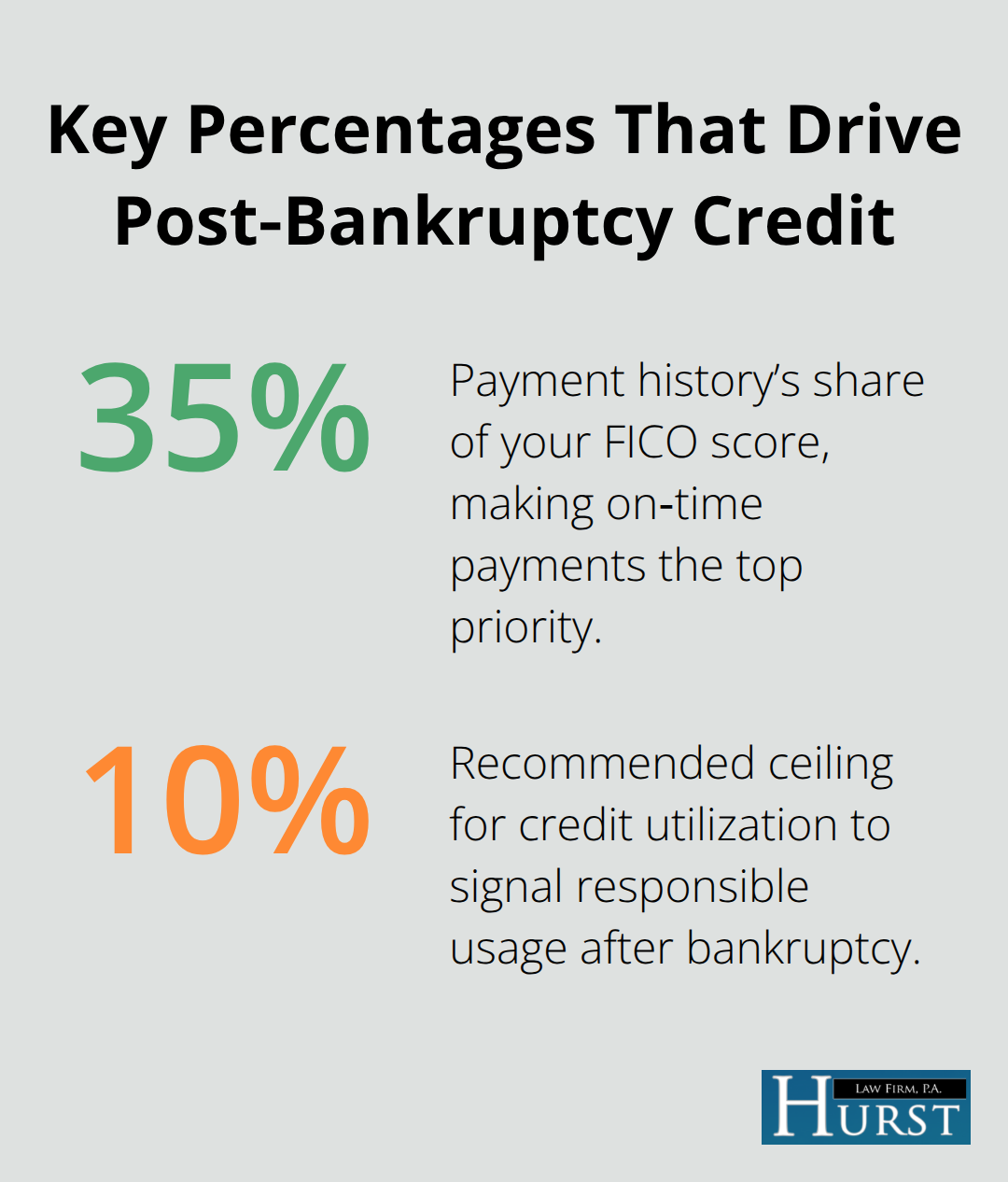
Secured credit cards work differently than standard cards and offer your fastest path forward after bankruptcy. You deposit cash as collateral-typically $500 to $2,500-and that amount becomes your credit limit. Capital One, Discover, and US Bank all offer secured cards specifically designed for post-bankruptcy rebuilding, and they report to all three credit bureaus. Charge small purchases monthly and pay the full balance before the due date arrives. This demonstrates payment reliability without requiring a credit inquiry that would further damage your score. After 18 to 24 months of perfect payment history, most issuers convert your card to an unsecured account and return your deposit. Data from the Consumer Financial Protection Bureau shows that secured card holders who maintain zero late payments improve their scores by an average of 50 to 100 points within the first year. Your payment history comprises 35 percent of your FICO score, so this matters more than anything else you do.
On-Time Payments: The Non-Negotiable Rule
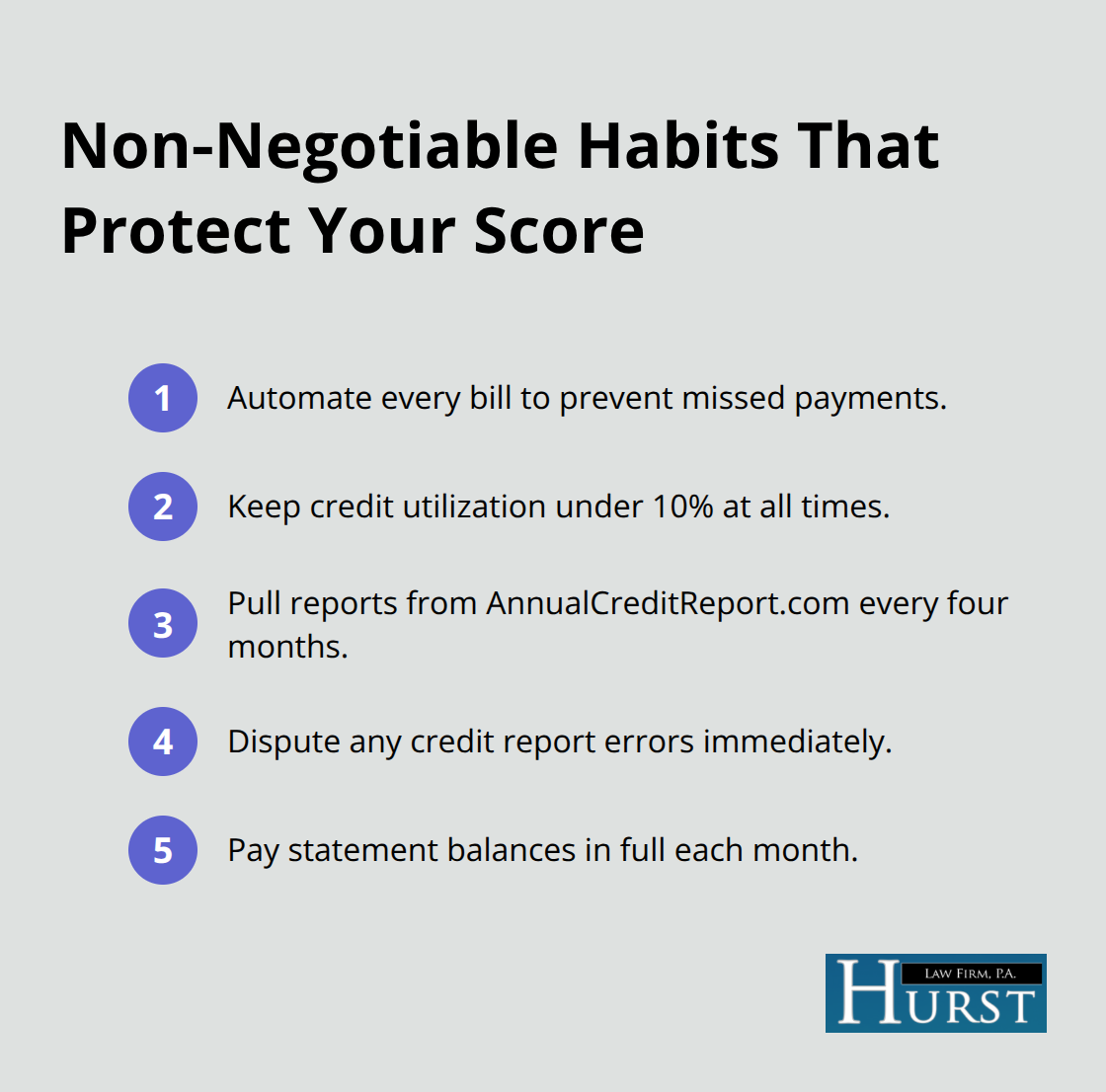
Late payments after bankruptcy are financial suicide. One 30-day late payment can drop your score 40 to 100 points and erase months of progress-this happens because recent payment history weighs heavily in credit calculations. Set up automatic payments for every bill, including utilities, insurance, phone, and streaming services.
You’re not just rebuilding credit; you’re proving you’ve changed your financial behavior. This single habit matters more than any other action you take during recovery.
Credit Utilization and Report Monitoring
Credit utilization (the percentage of available credit you use) should stay below 10 percent even though your limits are tiny after bankruptcy. If your secured card has a $500 limit, keep your balance under $50 monthly. Pull your credit reports from AnnualCreditReport.com every four months and dispute any errors immediately; the Federal Trade Commission found that one in four consumers had errors on their credit reports, and post-bankruptcy reports often contain mistakes. Errors can delay recovery by months, so aggressive monitoring pays off.
These steps aren’t optional or theoretical-they’re the mechanics that lenders use to decide whether you’re trustworthy again. Once you’ve established this foundation, accelerating your recovery requires additional strategies that go beyond basic card management.
Strategies to Accelerate Credit Recovery in Memphis, TN
Authorized User Status: Leverage Someone Else’s Credit History
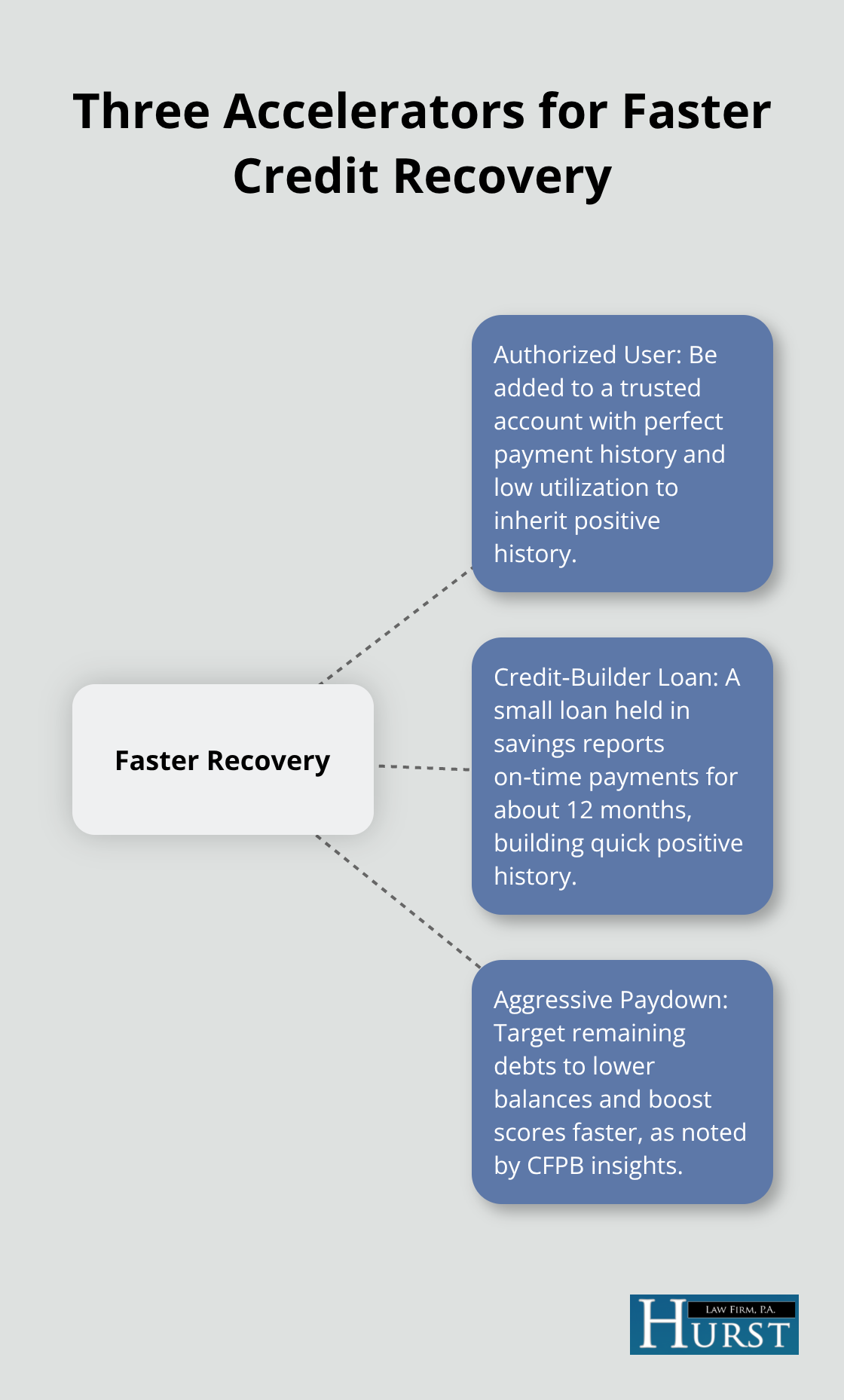
Authorized user status works faster than most people realize, but you need the right account. Ask a family member or trusted friend with excellent payment history and a low credit utilization rate to add you to their account. You don’t need to use the card or even receive it in the mail; you simply benefit from their positive payment history, which reports to the credit bureaus under your name. Experian research shows that authorized users see their credit scores improve by an average of 30 to 100 points within two to three months, depending on the primary account holder’s credit age and payment record. This strategy works because credit bureaus treat authorized users nearly identically to primary cardholders for scoring purposes.
The catch is critical: the account must have zero late payments and a low balance relative to the credit limit. One missed payment on that account damages your score just as severely as your own mistake. This means you must trust the primary cardholder completely and verify their payment habits before accepting the offer.
Credit-Builder Loans: Pay to Prove Your Reliability
Credit-builder loans offer a different acceleration path that doesn’t depend on anyone else’s financial behavior. Credit unions like Connexus and Navy Federal offer these loans specifically designed for post-bankruptcy rebuilding. You borrow $500 to $1,000, but the lender holds the money in a savings account while you make monthly payments toward the loan. After 12 months of on-time payments, you receive the full amount.
This sounds pointless, but it’s not. You’re paying interest on money you already have to prove you can follow a repayment schedule, which is exactly what lenders want to see after bankruptcy. The monthly payments report to all three credit bureaus, and the loan term is short enough that you build significant positive history quickly. This strategy costs money in interest (typically 6 to 10 percent annually), but the credit score improvement justifies the expense for most people seeking faster recovery.
Aggressive Debt Paydown: Reduce What You Still Owe
Attack any remaining debts aggressively. If you still owe money after bankruptcy, prioritize paying down balances on accounts that report to credit bureaus. The Consumer Financial Protection Bureau data indicates that reducing outstanding debt balances improves credit scores faster than almost any other action. Even small monthly payments toward remaining obligations demonstrate commitment and lower your overall debt-to-income ratio.
The combination of these three strategies creates compounding progress: authorized user benefits appear immediately, credit-builder loans show consistent repayment behavior over months, and aggressive debt paydown reduces the financial obligations lenders worry about.
Final Thoughts
Your credit score after bankruptcy will recover if you act with consistency and purpose. The secured credit card you open this month, the authorized user status you arrange next month, and the credit-builder loan you start in three months compound into real progress that transforms your financial standing. Within two years, you’ll qualify for favorable interest rates again, and within four years, most lenders will treat you as a normal borrower.
The financial behaviors you establish during rebuilding become habits that protect you for decades. One late payment hurts, but it doesn’t erase your progress if you return to on-time payments immediately. One high credit card balance stalls your recovery, but paying it down restarts your momentum and moves you forward faster than you expect.
If you’re considering bankruptcy or navigating recovery, contact Hurst Law Firm, P.A. to discuss your situation with someone who understands Memphis’s financial landscape and your path forward.