


Chapter 13 bankruptcy offers a structured path to manage debt, but not everyone qualifies. Understanding Chapter 13 eligibility in Tennessee requires knowing specific income thresholds, debt limits, and financial requirements that the court enforces.
We at Hurst Law Firm, P.A. help Tennessee residents figure out whether they meet these requirements and what filing a Chapter 13 plan actually means for their financial future.
Income Thresholds and Debt Limits for Chapter 13
Tennessee imposes strict income and debt requirements before you can file Chapter 13. The means test, established by the U.S. Bankruptcy Code, compares your household income against the median income for Tennessee families of your size. According to the U.S. Trustee Program, the median household income in Tennessee varies by family size, ranging from approximately $52,000 for a single person to over $105,000 for a family of four as of 2026. If your income exceeds these thresholds, you must pass the means test by demonstrating sufficient disposable income to fund a repayment plan. The court calculates disposable income by subtracting allowed living expenses from your gross income, and these expense allowances come directly from IRS standards, not arbitrary figures. The trustee will scrutinize every deduction against what the IRS permits for your region and family size.
Debt Limits That Actually Matter
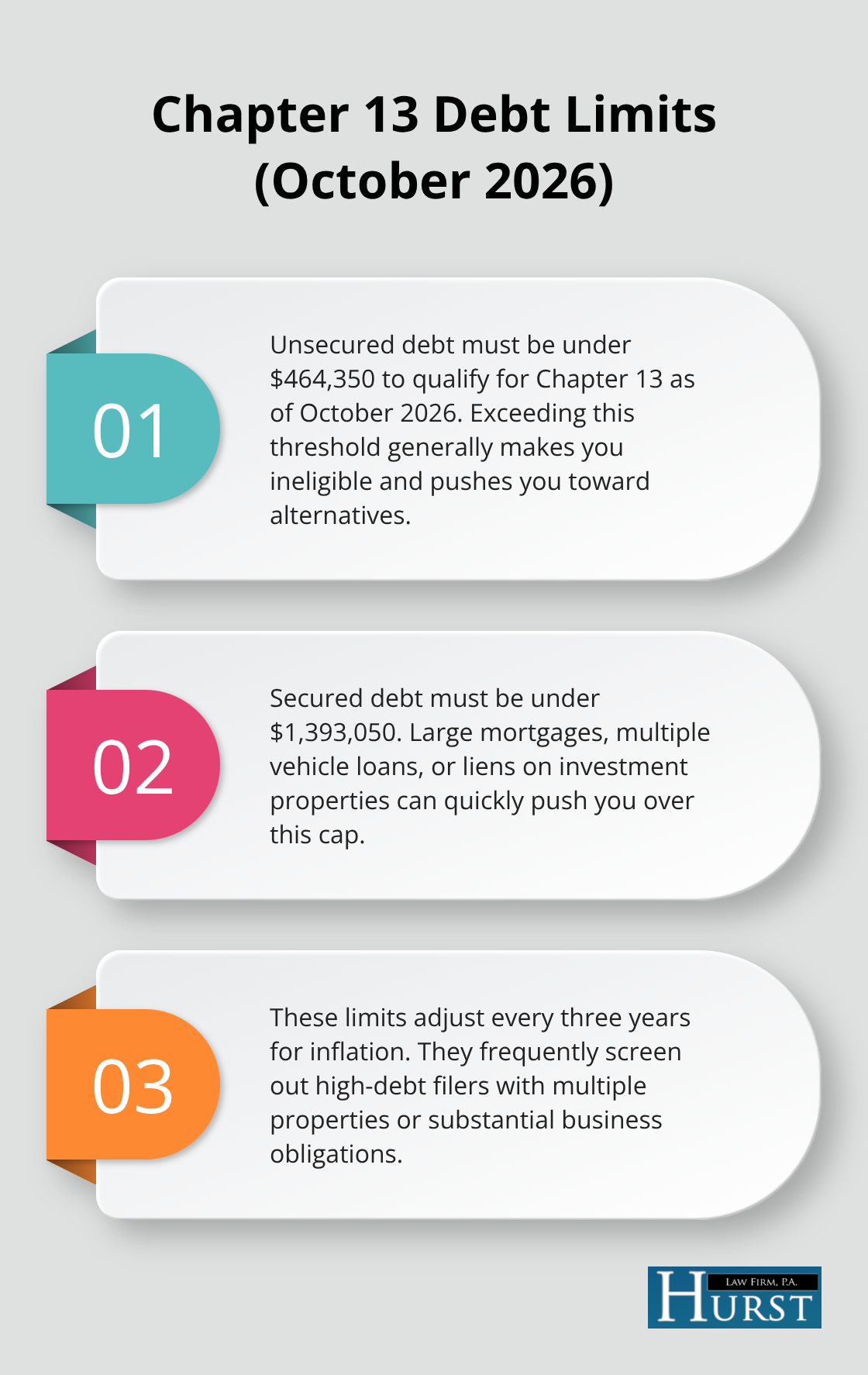
Chapter 13 has specific debt caps that disqualify high-income earners with substantial obligations. As of October 2026, your unsecured debts cannot exceed $464,350, and your secured debts cannot exceed $1,393,050. These limits increase every three years based on inflation adjustments. Many people think these caps are impossibly high, but they actually eliminate filers with multiple investment properties, business loans, or significant real estate debt. If you owe $500,000 in credit card debt alone, Chapter 13 won’t work for you-you would need Chapter 7 instead.
How Income and Debt Work Together
Your household income and total debt picture work together to determine eligibility. High earners with manageable debt often qualify, while lower-income filers with moderate debt typically qualify as well. The trustee will reject any plan that fails to comply with income and debt limits, so getting this right before filing matters enormously. A miscalculation wastes filing fees and court time, which is why precision in these calculations prevents costly delays.
What Comes Next in Your Eligibility Assessment
Beyond income thresholds and debt caps, other factors shape whether you can file Chapter 13 in Tennessee. Your employment status, existing debts, and any previous bankruptcy filings all play a role in the court’s decision.
Factors That Affect Your Chapter 13 Eligibility
Employment Status and Income Stability
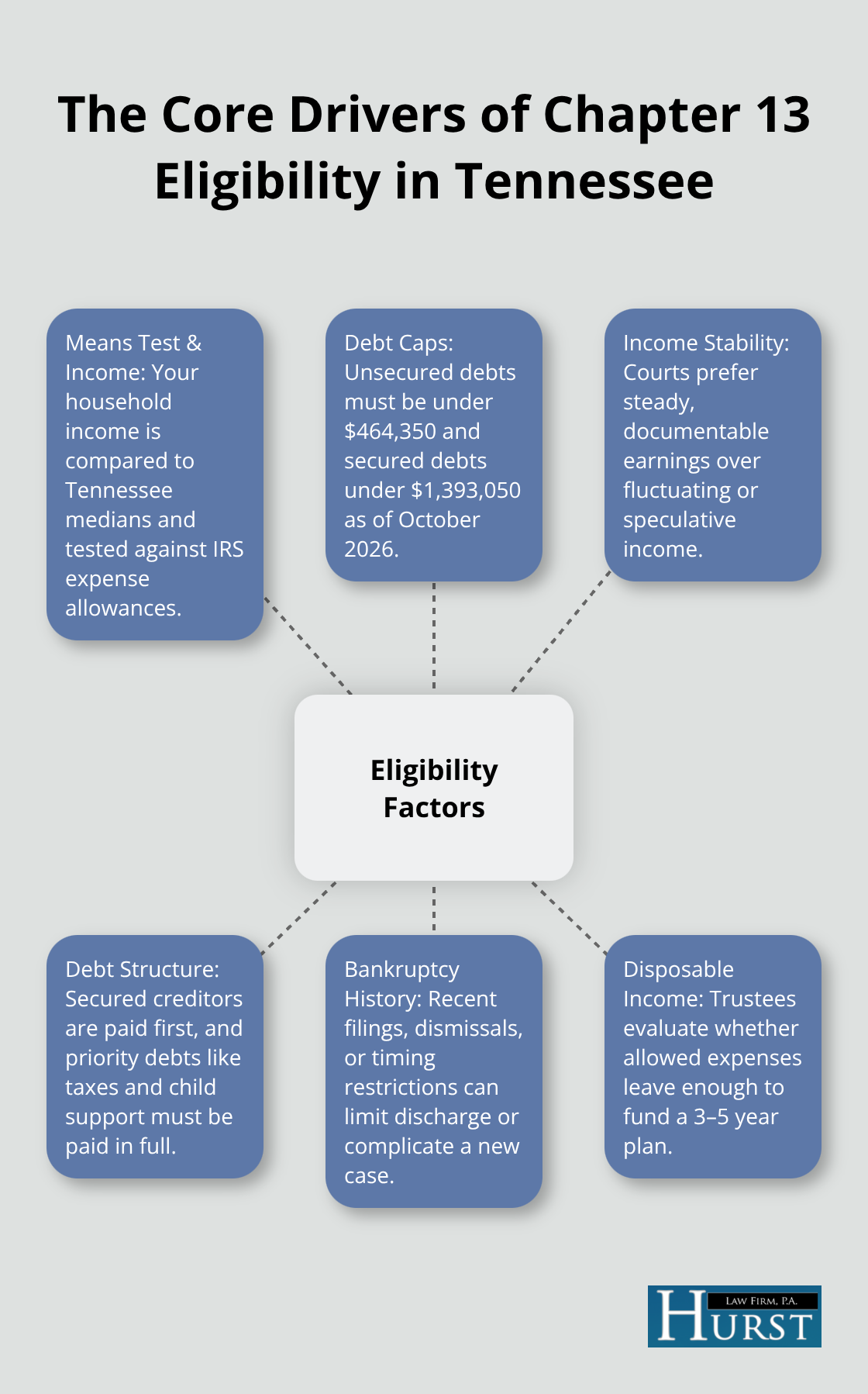
Your income stability matters far more than the raw number on your tax return. The court wants proof that you can sustain a three-to-five-year repayment plan, which means seasonal workers, freelancers, and commission-based earners face tougher scrutiny than salaried employees. If you work in construction and earn $60,000 one year and $35,000 the next, the trustee will average your income over the past two years and potentially reject your plan if the average falls below what you need to fund payments.
Self-employed individuals must provide two years of tax returns, profit-and-loss statements, and bank records for court review. Unemployment or recent job loss does not automatically disqualify you, but you must show the court that your current income will remain stable going forward. A recent job change with a written offer letter and start date can work, though the trustee prefers three to six months of paystubs from your new employer.
Disability income, Social Security, and pension payments all count as stable income sources. What fails is expecting approval based on income you hope to earn or future bonuses that lack guarantees.
How Your Existing Debts Impact Eligibility
Your existing debt structure influences whether you can actually afford Chapter 13 payments. If you carry substantial secured debt like a mortgage and car loans alongside unsecured debts, your disposable income shrinks dramatically because secured creditors receive payment first through your plan. The IRS expense standards allow only basic living costs, so the court will not accept arguments that you need premium internet service or expensive gym memberships.
Priority debts like back taxes and child support must be paid in full through your plan, which consumes disposable income that could go toward credit cards. This reality means filers with significant priority obligations face much tighter monthly budgets than those without them.
Previous Bankruptcy Filings and Timing Restrictions
Previous bankruptcy filings create strict timing restrictions under the automatic stay provisions. If you filed Chapter 7 within the past eight years, you cannot receive a discharge in Chapter 13, making the filing pointless for most filers. If you filed Chapter 13 within the past two years, you face significant complications filing again.
The court also examines whether you dismissed a prior bankruptcy case due to failure to make payments or complete the plan, which signals to the trustee that you lack the discipline to succeed this time. One overlooked detail from your bankruptcy history can derail eligibility before you ever step foot in court, which is why a thorough review of your complete financial and bankruptcy background matters tremendously.
Understanding these three factors-employment stability, debt structure, and bankruptcy history-gives you a realistic picture of your Chapter 13 prospects. The next step involves taking a hard look at your actual financial situation and running the numbers yourself.
How to Assess Your Financial Reality Right Now
Gather Your Financial Documents
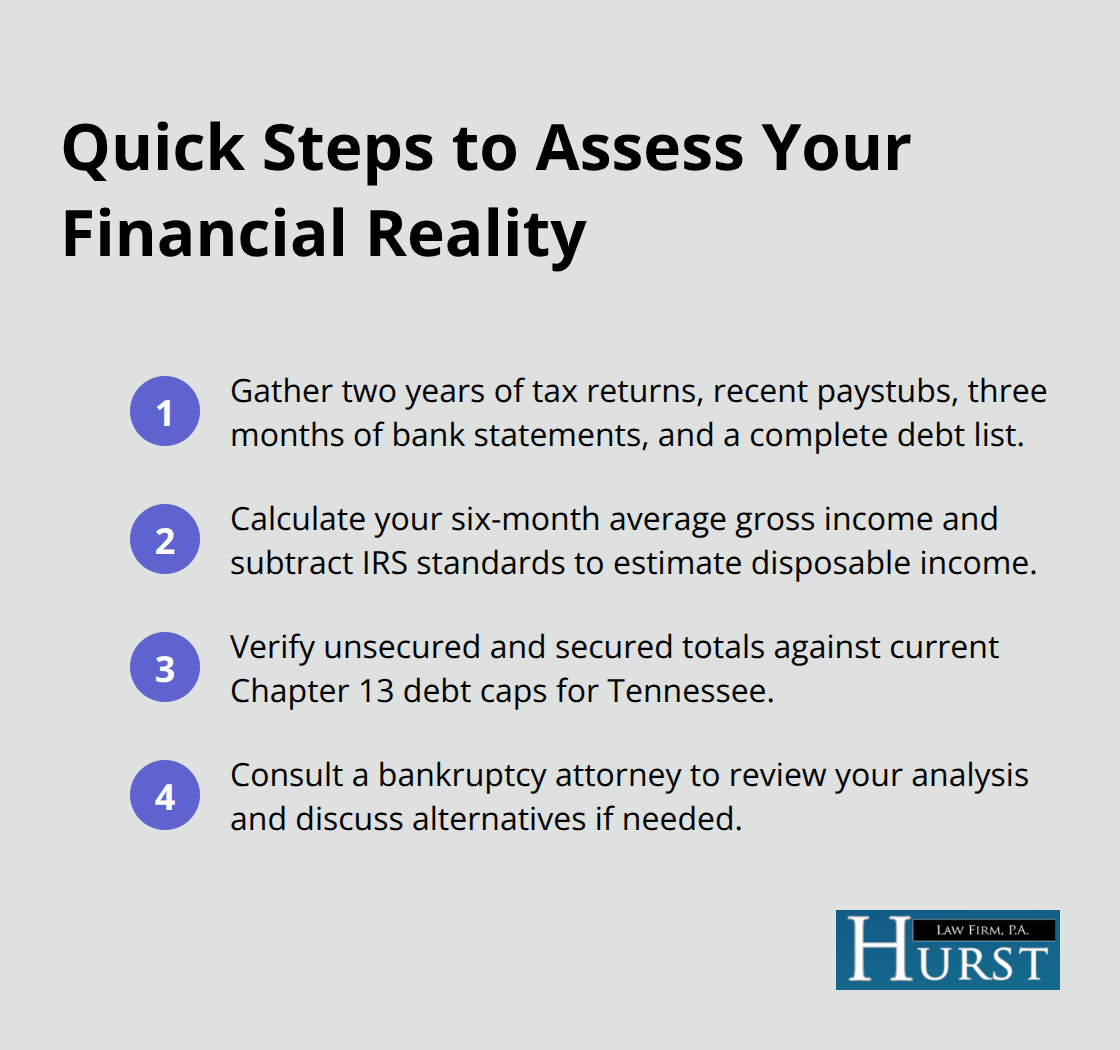
Start with your actual numbers, not estimates or hopes. Pull together your last two years of tax returns, recent paystubs, bank statements from the past three months, and a complete list of all debts with current balances and creditor names. The court will request these documents anyway, so assembling them now reveals whether Chapter 13 actually works for your situation. Many filers uncover during this process that their income falls below what they thought or their debt exceeds the Chapter 13 limits, which saves them from filing a doomed petition.
Calculate Your Household Income and Disposable Income
Calculate your household gross income by adding all sources: wages, self-employment income, rental income, Social Security, disability payments, and any other regular money coming in. The U.S. Trustee Program requires you to use income from the past six months when determining your average, which matters enormously if you recently started a job or experienced a job loss. Next, subtract the IRS National Standards for your family size and location from that gross income to find your actual disposable income available for a Chapter 13 plan.
The IRS standards for Tennessee as of 2026 allow approximately $1,200 monthly for a single person’s food and household supplies, though this varies by family size. If your calculated disposable income falls below $200 monthly after all allowed expenses, many trustees will oppose your plan because the payment amount becomes too low to meaningfully address your debts.
Verify Your Debt Totals Against Chapter 13 Limits
List every debt you owe, separating secured debts like mortgages and car loans from unsecured debts like credit cards and medical bills, then add priority debts like back taxes and child support. Total your unsecured debts and confirm they stay under $464,350 and your secured debts under $1,393,050 as of October 2026. Pull your credit report from annualcreditreport.com to verify you have not missed any obligations, then calculate what your monthly Chapter 13 payment would need to be by dividing your total unsecured debt by 60 months if you plan a five-year plan.
If that number exceeds your calculated disposable income, your plan fails the court’s requirements. This is the moment to be brutally honest about whether you can actually afford the payments for 36 to 60 months without missing work or facing unexpected emergencies. Many filers uncover they cannot maintain payments when they run these numbers themselves, which is far better than learning this after filing.
Consult a Bankruptcy Attorney Before Filing
A bankruptcy attorney can review your financial analysis and identify solutions you might have missed. We recommend having this financial analysis completed before your initial consultation because it determines whether we can help you move forward or whether alternative solutions better suit your situation.
Final Thoughts
Chapter 13 eligibility in Tennessee depends on three concrete factors: your income must fall within the means test thresholds, your debts must stay under the current limits, and you must demonstrate the ability to fund a repayment plan for three to five years. If you have gathered your financial documents, calculated your disposable income against IRS standards, and verified your debts against the Chapter 13 caps, you now have a realistic picture of whether this path works for you. Those who qualify face a structured repayment plan that stops creditor harassment, halts foreclosure proceedings, and provides a legal framework to address your obligations.
The process demands honesty about what you can actually afford each month, not what you hope to earn or what you wish your expenses were. Many filers discover during this assessment that Chapter 13 solves their situation, while others find that Chapter 7 or alternative debt management strategies better fit their circumstances. The numbers matter far more than your intentions.
We at Hurst Law Firm, P.A. review your complete financial picture and identify whether you meet Chapter 13 eligibility requirements in Tennessee. If you have completed your financial analysis and want professional guidance on your next steps, contact us for a personalized evaluation. We help individuals and families address financial distress through consumer bankruptcy options tailored to your circumstances.