


A chapter 7 lawyer in Memphis TN can help you understand the single most powerful protection that starts when a bankruptcy case is filed: the automatic stay. For many people facing collection calls, lawsuits, wage garnishment, repossession threats, or foreclosure pressure, that stay is the first real pause in a financial crisis that has felt nonstop.
We at Hurst Law Firm, P.A. help individuals and families in Memphis and the surrounding communities navigate consumer bankruptcy options, including Chapter 7. This guide explains what the automatic stay actually does under federal law, how it works after a Chapter 7 filing, and the mistakes that commonly weaken the protection people expect.
What the Automatic Stay Actually Does in a Chapter 7 Case
The automatic stay is a federal legal command, not a courtesy from creditors. Under 11 U.S.C. § 362(a), the filing of a petition under section 301, 302, or 303 operates as a stay, applicable to all entities, of a broad list of collection and enforcement acts. A voluntary Chapter 7 case is commenced by filing a petition with the bankruptcy court under 11 U.S.C. § 301, and that commencement constitutes an order for relief. In practical terms, the stay is the legal barrier that tells most creditors to stop trying to collect pre-filing debts while the case proceeds.
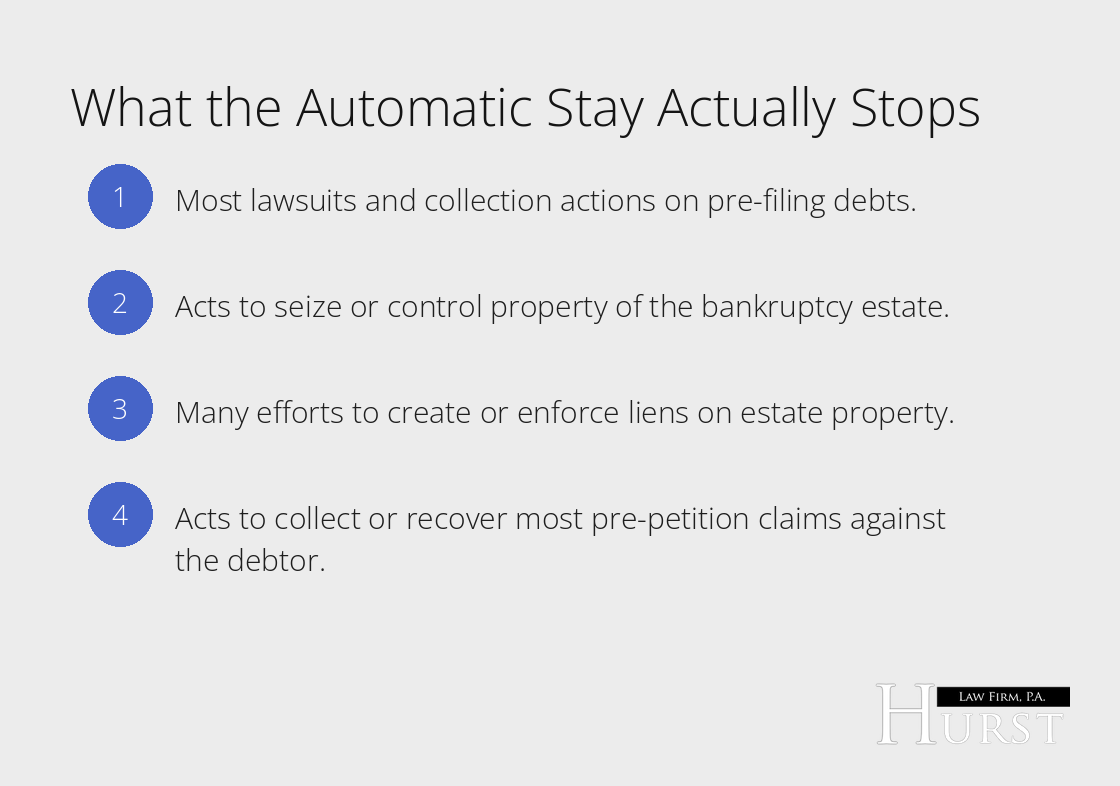
Section 362(a) stays, among other things, the commencement or continuation of most judicial or administrative actions against the debtor to recover a pre-petition claim; enforcement of a pre-petition judgment against the debtor or property of the estate; acts to obtain possession of estate property or to exercise control over it; acts to create, perfect, or enforce liens against estate property; acts to collect, assess, or recover a pre-petition claim against the debtor; and certain setoffs. For a Memphis resident drowning in credit-card pressure or facing a threatened repossession, those categories are the difference between constant creditor contact and a court-backed pause.
Why the Stay Starts at Filing, Not at Discharge
People sometimes assume bankruptcy protection begins only when debts are wiped out at the end of the case. That is not how the statute works. The stay arises from the filing of the petition itself. Discharge is a later event that can permanently eliminate personal liability on many dischargeable debts. The stay is the immediate shield that buys time for the case to move through the trustee process, the meeting of creditors, and the path to discharge. Understanding that sequence helps you plan medical bills, car payments, and housing decisions without confusing temporary protection with the final discharge order.
Property of the Estate and Why Control Matters
Many stay provisions protect property of the estate. Under 11 U.S.C. § 541, the estate generally includes legal and equitable interests of the debtor in property as of the commencement of the case, with additional interests described in the statute. That is why acts to seize, repossess, or exercise control over estate property are stayed. In a Chapter 7 case, the trustee and the court need a stable picture of what property exists so exemptions, possible liquidation, and creditor treatment can be handled under the Bankruptcy Code rather than through a race among collectors.
Memphis Cases Are Heard in the Western District of Tennessee
Consumer bankruptcy cases for Memphis residents are filed in the United States Bankruptcy Court for the Western District of Tennessee. Local procedures, meeting-of-creditors scheduling, and trustee practices matter, but the automatic stay itself is a federal Code provision that applies nationwide. A chapter 7 lawyer in Memphis TN still has to fit your facts into both the national statute and the local court process so the stay is not only invoked, but also maintained correctly as the case moves forward.
How the Automatic Stay Actually Works After You File Chapter 7
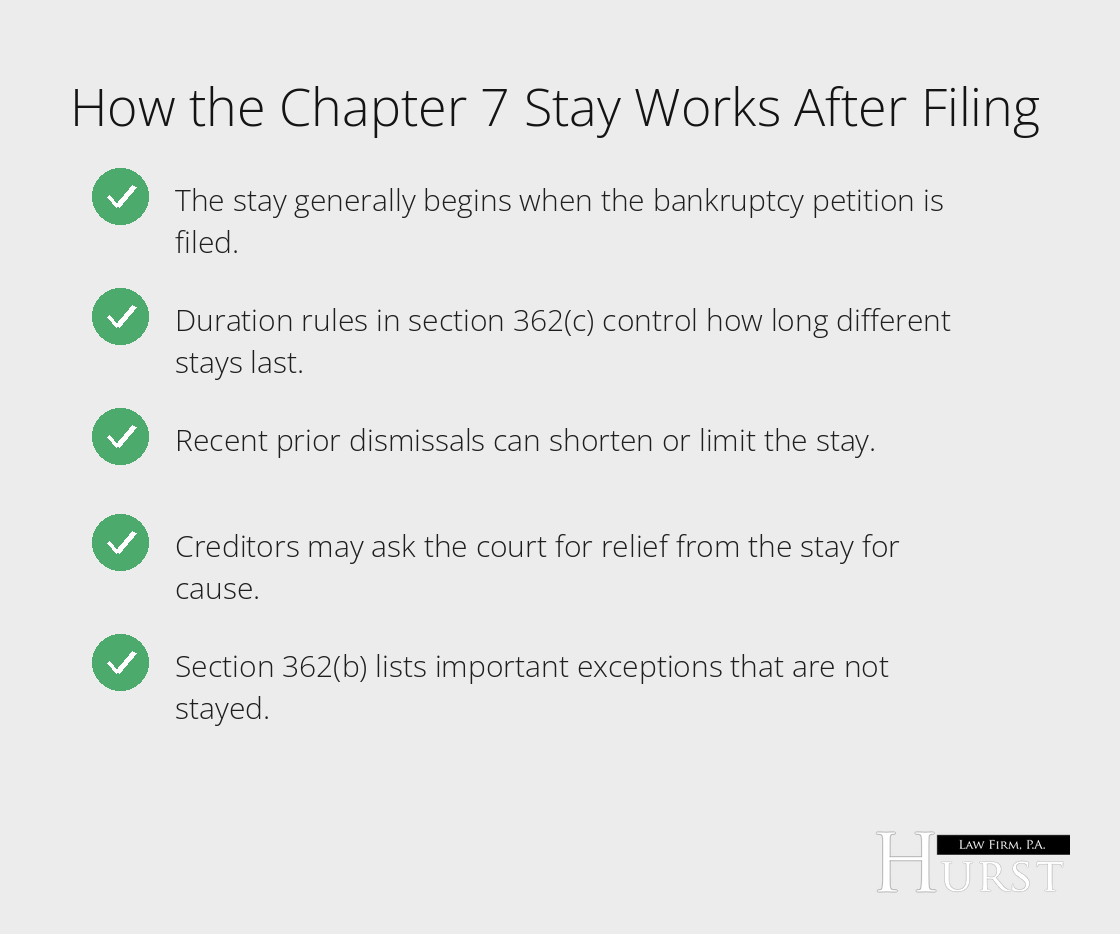
Filing starts the stay, but the stay is not unlimited in time or scope. Section 362(c) explains how long different parts of the stay continue, and section 362(b) lists important exceptions. Memphis filers who treat the stay as permanent immunity from every legal problem can be surprised when a creditor seeks relief from the stay or when an excepted proceeding continues.
How Long the Stay Usually Continues
Under 11 U.S.C. § 362(c), the stay of an act against property of the estate generally continues until the property is no longer property of the estate. The stay of other acts under subsection (a) generally continues until the earliest of the time the case is closed, the time the case is dismissed, or—in a Chapter 7 case concerning an individual—the time a discharge is granted or denied. In a typical individual Chapter 7 case that proceeds to discharge, that means many collection actions remain stayed through the discharge point, after which the discharge injunction and other Code provisions take over for discharged debts. The exact handoff depends on the debt and the property involved.
Repeat Filings Can Shorten or Limit the Stay
Section 362(c)(3) and related provisions create special rules when an individual debtor had a prior case pending within the preceding one-year period that was dismissed. In some of those situations, the stay can terminate earlier unless the court extends it after notice and a hearing. People who file, dismiss, and refile without understanding those timing rules can lose the very breathing room they expected. If you had a recent prior case, tell your attorney immediately so the stay analysis is based on your actual filing history rather than on an assumption that every new petition carries a full stay for the entire case.
Creditors Can Ask the Court for Relief From the Stay
The stay is powerful, but it is not unchallengeable. Under section 362(d), the court may grant relief from the stay for cause, including lack of adequate protection, or when other statutory grounds are met, such as when the debtor has no equity in property and the property is not necessary to an effective reorganization. In Chapter 7, secured creditors sometimes seek stay relief so they can continue a foreclosure or repossession process as to specific collateral. That possibility is why communication about car loans, mortgages, and intended surrender or retention decisions belongs in the early case plan, not after a motion is already on calendar.
Important Exceptions Still Allow Some Actions to Continue
Section 362(b) lists acts that are not stayed. Among other exceptions, the stay generally does not stop the commencement or continuation of a criminal action against the debtor, and it has specific limits for certain family-law matters such as proceedings to establish or modify domestic support obligations, child custody or visitation matters, and dissolution of marriage except to the extent the proceeding seeks to determine the division of property that is property of the estate. Taxing authorities also retain limited powers described in the statute, such as certain audits and notices of tax deficiency. A chapter 7 lawyer helps you separate debts and proceedings that the stay actually stops from those that may continue.
What Commonly Weakens Automatic-Stay Protection
Most stay problems are avoidable. They usually come from incomplete disclosures, ignored secured-debt strategy, misunderstanding exceptions, or repeat-filing traps. Memphis residents who wait until a repossession truck is in the driveway, or who assume every lawsuit freezes forever without further attention, often discover that the stay needed more active management than they expected.
Leaving Out Creditors, Lawsuits, or Prior Cases on the Papers
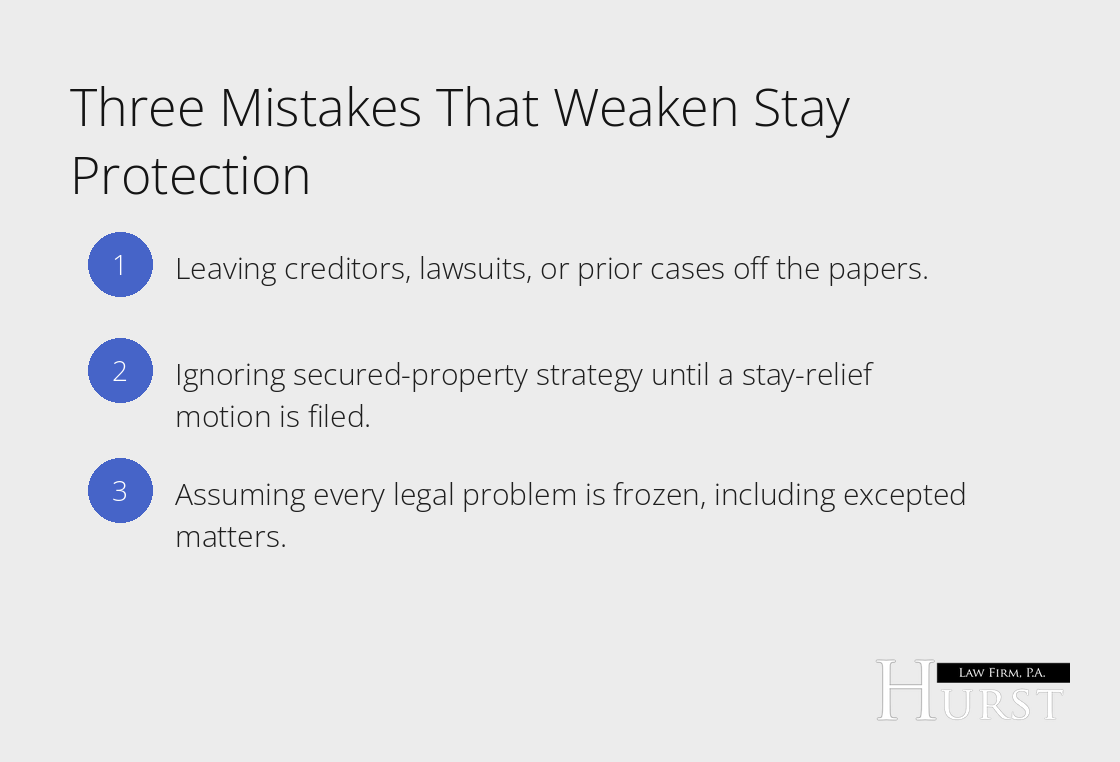
The petition and schedules are the roadmap the court, trustee, and creditors use. Omitting a collector, a pending lawsuit, a repossession threat, or a recent prior bankruptcy filing can create confusion about who must honor the stay and whether special repeat-filing rules apply. Accuracy at filing is part of making the stay usable in the real world, not just on paper.
Ignoring Secured Property Decisions Until a Creditor Moves for Relief
If you intend to keep a car or home that secures a loan, the stay alone may not finish the story. Creditors may seek stay relief, and Chapter 7 options for secured debts can include surrender, redemption in appropriate cases, or reaffirmation under the Code’s separate requirements. Waiting until a motion is filed compresses your choices. Early planning with a chapter 7 lawyer in Memphis TN keeps the stay from becoming a short pause before a rushed hearing.
Treating Every Legal Problem as If the Stay Covers It
Criminal matters and certain family-law proceedings can continue under section 362(b) even after filing. Assuming the stay freezes everything can lead people to miss hearings or deadlines in excepted matters. The safer approach is to inventory every pending case, collection effort, and government action, then match each one against section 362(a) and 362(b) instead of relying on a general hope that bankruptcy stops the world.
Final Thoughts
A chapter 7 lawyer in Memphis TN uses the automatic stay as the opening protection that makes the rest of a Chapter 7 case workable. Under 11 U.S.C. § 301, filing the petition starts the case and constitutes an order for relief. Under 11 U.S.C. § 362, that filing stays a wide range of collection and enforcement activity, subject to statutory exceptions, duration rules, and possible court-ordered relief. For many Memphis families, that pause is what finally creates room to organize debts, claim exemptions, and move toward discharge.
If you are facing aggressive collection, garnishment pressure, or the threat of losing a vehicle or home and want to understand whether Chapter 7 and the automatic stay fit your situation, contact Hurst Law Firm, P.A. to speak with our team in Memphis, Tennessee. We will review your debts, explain how the stay may apply, and help you take a practical next step.