


Chapter 13 bankruptcy offers a structured path to manage debt, but the real challenge is whether your repayment plan fits your actual budget. Many people in Memphis TN worry that a Chapter 13 plan will strain their finances beyond what they can handle.
We at Hurst Law Firm, P.A. know that Chapter 13 plan affordability depends on understanding how payments are calculated and what options exist when your circumstances shift. This guide walks you through the mechanics of repayment plans and practical strategies to make your plan work for your financial situation.
How Chapter 13 Repayment Plans Work in Memphis TN
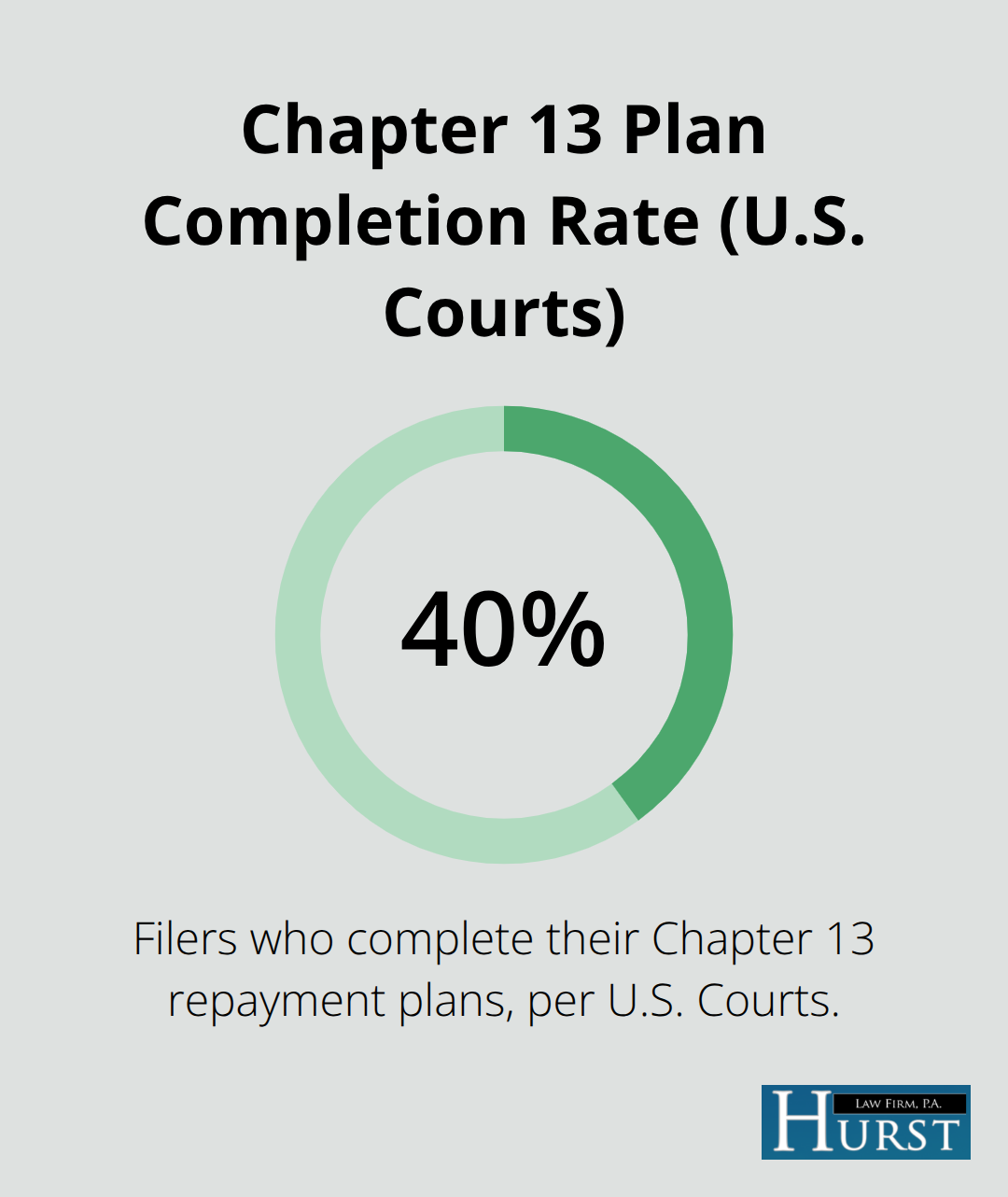
Chapter 13 bankruptcy restructures your debt into a repayment plan that typically lasts three to five years. The court approves a plan where you pay a portion of your debts through a trustee who distributes funds to your creditors. This structure differs fundamentally from Chapter 7, which liquidates assets. In Chapter 13, you keep your property while catching up on missed payments and paying down what you owe. The U.S. Courts reported that Chapter 13 filers completed their plans at rates around 40 percent, meaning affordability remains a significant factor in whether people finish their repayment obligations.
Your Income Determines Your Monthly Payment
The bankruptcy court calculates your Chapter 13 payment based on your disposable income-what remains after subtracting allowed living expenses from your gross income. The court uses the median income for Tennessee to establish baseline expense allowances, then compares your actual income against these standards. If you earn less than the state median, you fall into a simpler calculation. If you earn more, the court applies stricter expense limits and typically requires you to commit more money toward your plan. For 2024, the median family income in Tennessee for a family of four sits around 62,000 dollars annually, according to the U.S. Trustee Program. Your actual household expenses matter significantly here, but the court won’t accept inflated figures. Documentation for legitimate expenses like property taxes, insurance, and childcare strengthens your position during plan confirmation.
The Trustee Manages and Monitors Your Obligations
Your Chapter 13 trustee acts as the intermediary between you and your creditors, collecting your monthly payment and distributing funds according to the court-approved plan. This person has authority to object to your plan if the numbers don’t align with legal standards or if payments appear unaffordable. The trustee also monitors whether you complete plan payments on time and can recommend modifications if your financial situation changes. Most trustee offices allow online payment options and provide clear accounting of where your money goes each month.
What Happens When Your Circumstances Shift
Life changes-job loss, medical emergencies, or unexpected expenses-can make your original plan unaffordable. The trustee and the court recognize this reality and allow plan modifications when your financial situation genuinely shifts. You file a motion to modify your plan, and the court reviews whether your new circumstances justify a change in payment amounts or timeline. The modification process takes time, but it prevents you from defaulting on obligations you cannot meet. Understanding this flexibility matters because it means your plan isn’t permanently locked in place if your income or expenses change significantly.
What Really Affects Your Monthly Chapter 13 Payment
How the Court Calculates Your Disposable Income
Your disposable income forms the foundation of your Chapter 13 payment, but the court’s calculation often surprises people because it doesn’t match how you actually budget your money. The court subtracts specific expense allowances from your gross income, and these allowances follow IRS standards that may differ significantly from your real spending. For example, the IRS food allowance for a family of four in Tennessee for 2024 is around 1,400 dollars monthly, but your actual grocery costs might be higher or lower. The court won’t budge on these figures unless you can prove your expenses fall below the standard or that you have unusual circumstances like medical debt or child support obligations.
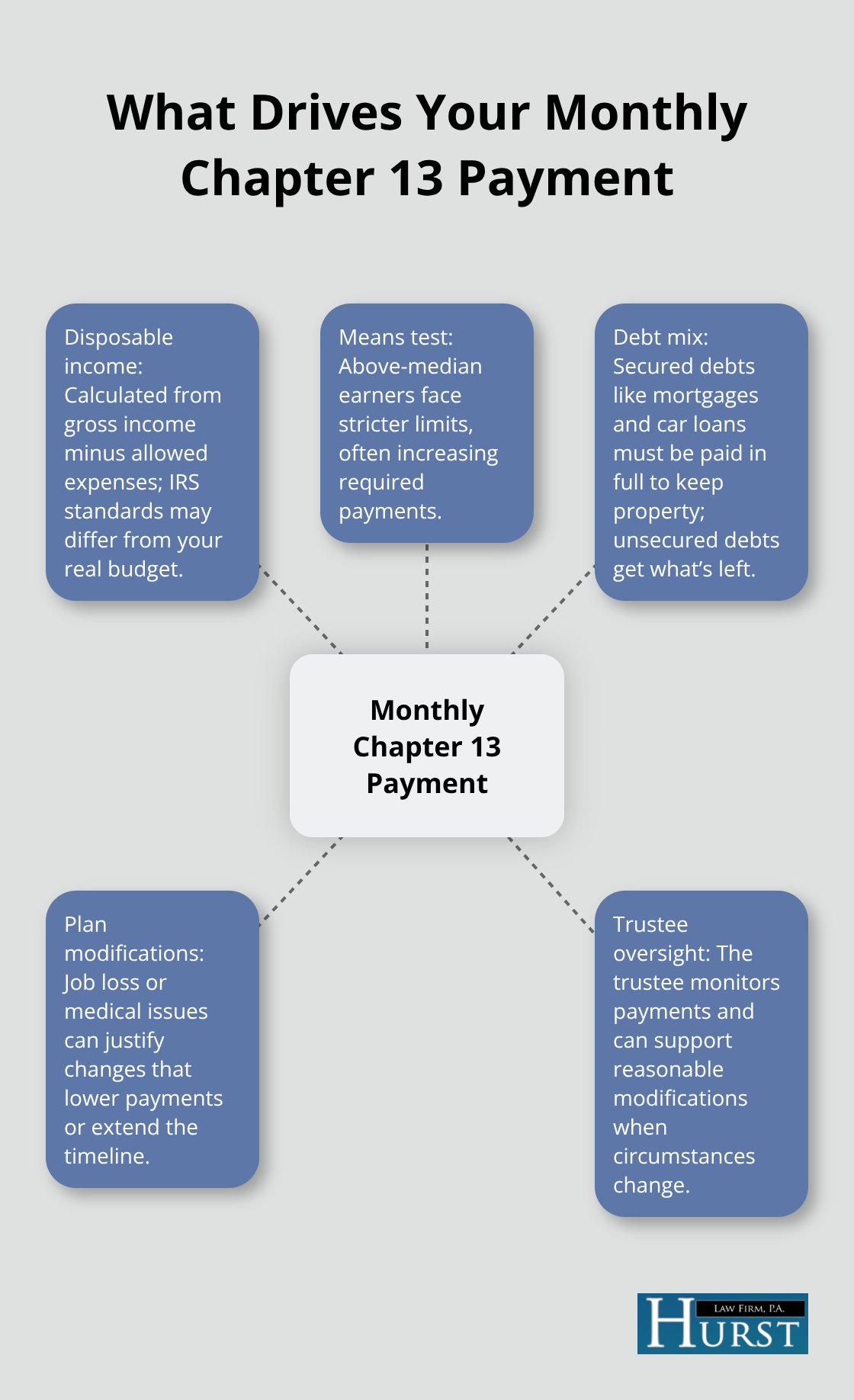
If you earn above Tennessee’s median income, the court applies the means test, which scrutinizes your expenses even more carefully and typically increases your payment obligation. This is where many people in Memphis TN realize their plan will be tighter than expected, and understanding this upfront prevents confirmation delays and plan failures later.
Secured Debt vs. Unsecured Debt Changes Everything
The type of debt you owe dramatically changes your payment structure because secured debt and unsecured debt receive different treatment in Chapter 13. Secured debts like mortgages and car loans must be paid in full through your plan if you want to keep the property, which means your payment often includes catching up on missed payments plus ongoing obligations. Unsecured debts like credit cards and medical bills receive whatever money remains after secured debts and living expenses are covered, and creditors typically recover only a fraction of what you owe.
If your plan includes significant secured debt arrears, your monthly payment climbs substantially, sometimes making affordability the real barrier to confirmation. Understanding this distinction helps you anticipate whether your plan will stretch your budget or remain manageable.
Modifying Your Plan When Life Happens
When your financial situation changes, you can modify your plan to extend the repayment period from three to five years, which lowers your monthly obligation but extends your commitment. Job loss, medical emergencies, or reduced hours trigger the need for modification, and the trustee generally supports reasonable modifications that keep you current rather than pushing you toward default. Multiple modifications during your five-year period are possible when circumstances warrant them.
The next section explores specific strategies that help you negotiate better terms and work directly with your trustee to make your plan sustainable.
Making Your Plan Affordable Through Strategic Adjustments
The court calculates your Chapter 13 payment based on rigid formulas, but that doesn’t mean your plan is unchangeable or that you’re stuck with unmanageable payments. The most direct approach involves extending your repayment timeline from three years to five years, which spreads your total debt obligation across more months and lowers your monthly payment significantly. If you owe 60,000 dollars over three years, you’d pay roughly 1,667 dollars monthly, but stretching that same debt to five years drops your payment to around 1,000 dollars monthly. This extension isn’t automatic-you must file a motion with the court and demonstrate that your financial circumstances justify the longer timeline-but courts regularly approve these modifications when the numbers support affordability.
Working with Your Trustee on Payment Reality
Your Chapter 13 trustee isn’t your adversary; they want you to complete your plan, not default halfway through. This relationship matters because your trustee can advocate for modifications that keep you current and prevent plan failure. Many people in Memphis TN don’t realize they can contact their trustee to discuss payment hardship before missing a payment. If your hours at work decrease or unexpected expenses arise, raising this with your trustee early allows them to recommend modifications proactively. The trustee may support reducing your monthly payment temporarily or extending your plan timeline, changes that require court approval but typically move faster when the trustee backs the request. Proactive communication about financial changes prevents defaults that would otherwise derail plans entirely. Your trustee’s contact information and payment options appear in your plan documents, and most offices accept payments online, which helps you stay organized and on schedule.
Addressing Secured Debt Arrears Without Breaking Your Budget
If you’re behind on a mortgage or car loan, catching up on those missed payments drives much of your Chapter 13 obligation, and this is where affordability often becomes the real problem. Some people discover that the cost of curing mortgage arrears makes their plan impossible to afford, even when they could manage regular ongoing payments. In these situations, you can propose a plan modification that extends your repayment period specifically to spread the arrears payments across five years rather than three. Another option involves negotiating directly with secured creditors before filing Chapter 13, potentially getting them to agree to smaller catch-up amounts or modified terms. This pre-filing negotiation sometimes reduces the total arrears amount you’ll need to pay through the plan. If a secured creditor’s claim seems excessive or includes questionable fees, your attorney can challenge it during the plan confirmation process.
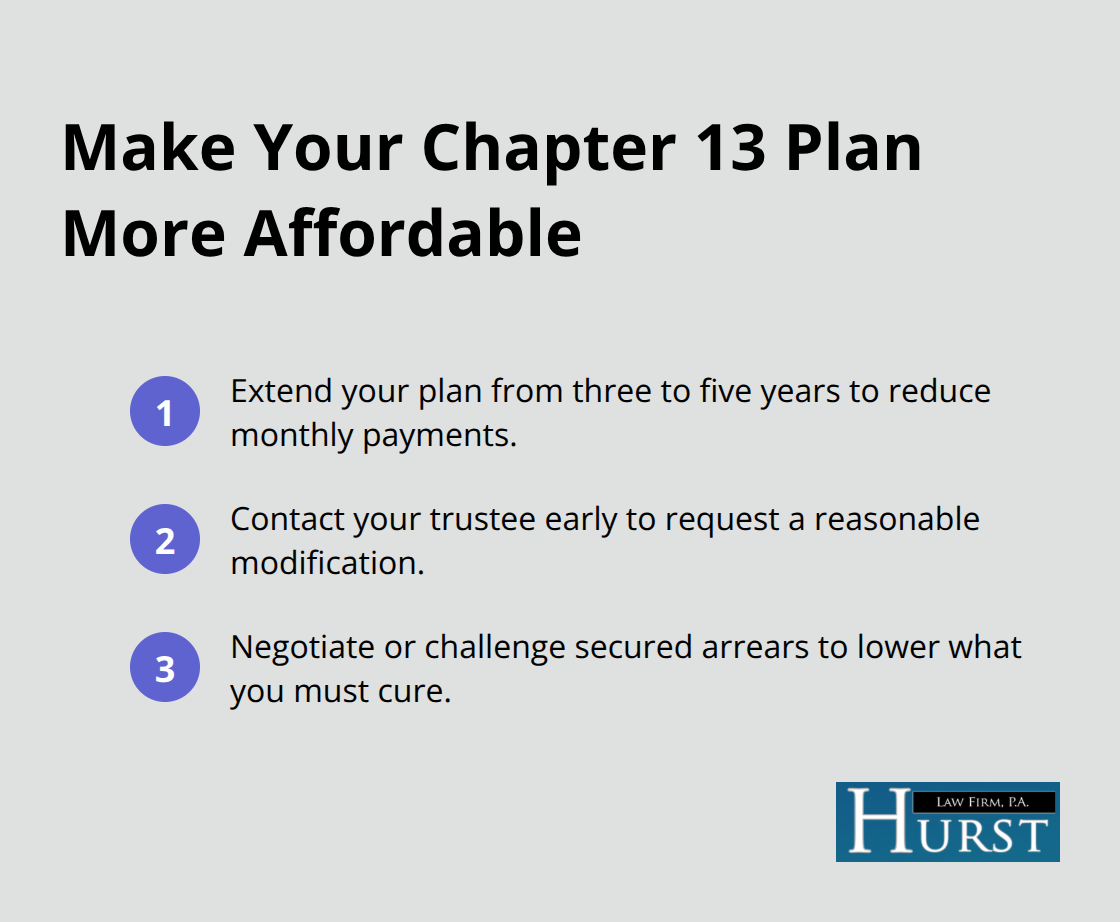
Courts occasionally reduce inflated arrears claims when the evidence supports doing so, which directly lowers your monthly obligation.
Final Thoughts
Chapter 13 plan affordability depends on three realities: your disposable income sets your payment, your debt type shapes your obligation, and modification options exist when life changes. The court’s expense calculations may not match your actual budget, but they provide predictability-you know your monthly payment and your debt-free date. This certainty beats the endless cycle of minimum payments that never shrink your balance.
Your Chapter 13 plan remains flexible throughout your repayment period. If your income drops, your hours decrease, or unexpected expenses arise, you can modify your plan to extend the timeline or adjust your payment. Communicating early with your trustee about financial hardship keeps you ahead of problems rather than scrambling after you’ve missed payments. Extending your repayment from three to five years often makes the difference between an affordable plan and one that strains your finances beyond reason, as that extra time spreads your obligation across more months and lowers your monthly commitment substantially.
If Chapter 13 plan affordability concerns you, contact Hurst Law Firm, P.A. to discuss your specific situation. We work with Memphis residents to calculate realistic numbers, identify modification strategies, and navigate the trustee relationship so you can focus on rebuilding your financial foundation.