


Debt from medical bills, credit cards, and personal loans can feel overwhelming. If you’re drowning in unsecured debt, Chapter 7 bankruptcy might be the solution you need.
We at Hurst Law Firm, P.A. help Memphis residents understand how Chapter 7 works and what to expect throughout the process. This guide walks you through everything from the automatic stay to debt discharge, plus how to find Memphis Chapter 7 help when you need it most.
What Happens to Your Debt and Assets in Chapter 7
When you file Chapter 7 in Memphis, the court appoints a trustee to manage your case. That trustee’s job is to stop creditors from calling and suing you immediately through something called the automatic stay. This legal protection takes effect the moment your petition is filed, and creditors must halt collection calls, lawsuits, and wage garnishments. The Federal Trade Commission reports that debt collection calls affect roughly 43 million Americans annually, so this relief matters for your peace of mind and your ability to focus on moving forward.
The Automatic Stay Stops Creditor Contact
The automatic stay is one of the most powerful tools in bankruptcy law. Creditors cannot contact you by phone, mail, or any other means once the stay is in place. If a creditor violates this order, they face penalties and potential damages.
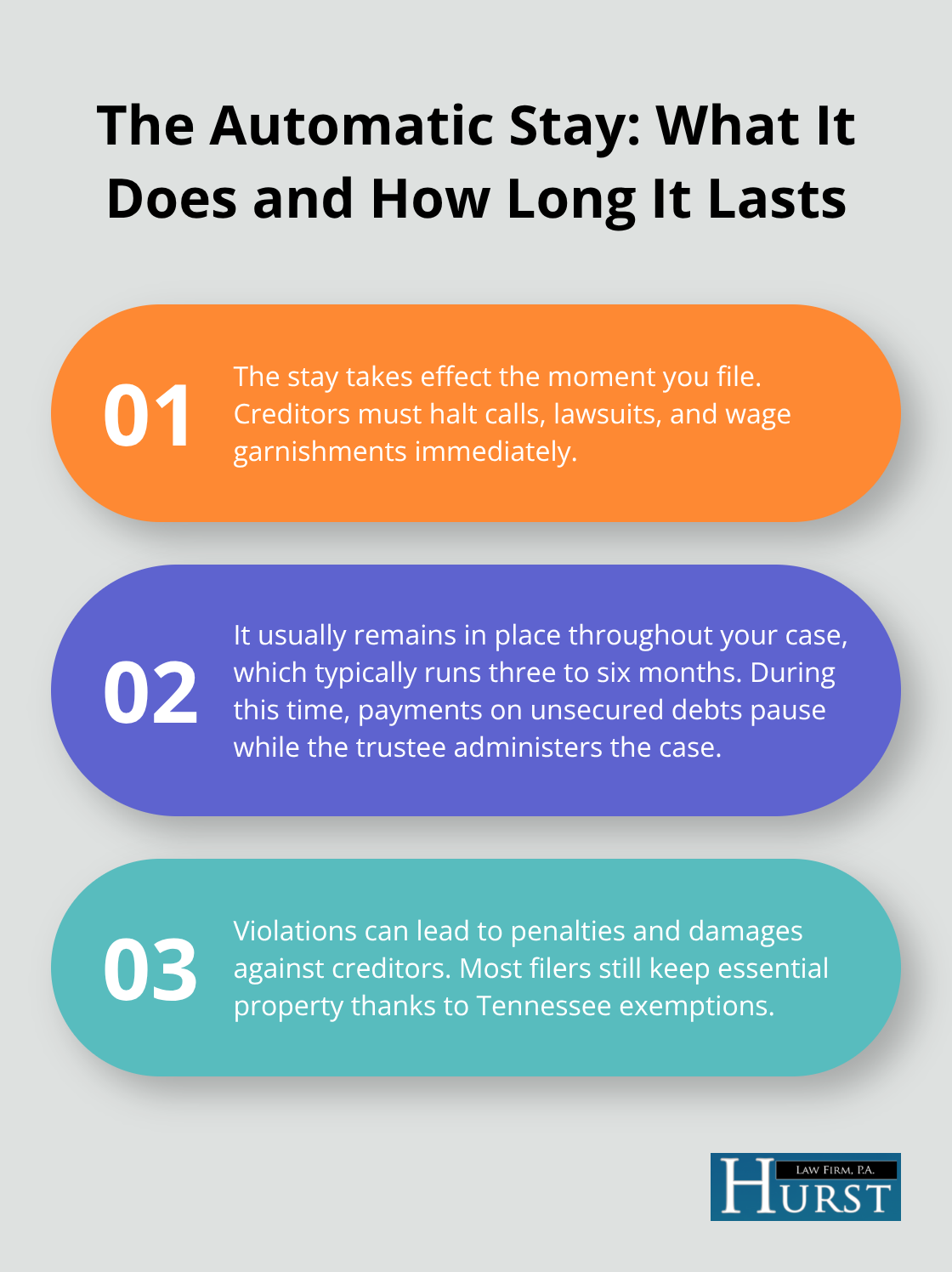
The stay typically remains active throughout your case, which usually lasts three to six months in Chapter 7. During this window, you stop making payments on unsecured debt like credit cards and medical bills. Instead, the trustee begins collecting your non-exempt assets to distribute to creditors. This process sounds harsh, but most Chapter 7 filers keep their essential property because Tennessee exemption laws protect your primary residence, vehicle, household items, and retirement accounts up to certain limits.
Tennessee Exemption Laws Protect Your Essential Property
Not all your possessions get sold in Chapter 7. Tennessee law shields specific property from liquidation, which means you keep what matters most. Your primary home receives homestead exemption protection up to $25,000 in equity if you’re single, or $50,000 if you’re married filing jointly. One vehicle receives protection up to $4,650 in value. Retirement accounts like 401ks and IRAs receive full protection under federal law. Household goods, clothing, and personal items are exempt up to $10,000 total. The trustee focuses on selling non-exempt assets such as vacation homes, investment properties, expensive jewelry, or collectibles. If you own a second vehicle or have significant equity in real estate beyond your primary residence, those assets may be liquidated. Understanding which assets are at risk before filing prevents surprises during the process.
Debt Discharge Eliminates Your Legal Obligation
Once the trustee completes asset distribution and you finish required credit counseling courses, the court issues a discharge order. This order permanently eliminates your personal liability for discharged debts. You no longer owe credit card balances, medical bills, personal loans, or collection accounts included in your petition. The discharge typically arrives four to six months after filing. Certain debts cannot be discharged, including student loans, recent taxes, child support, alimony, and criminal fines. Creditors cannot sue you to collect discharged debts, and they cannot report them as active accounts on your credit report after discharge. Your credit score takes an immediate hit from the bankruptcy filing, but many filers see scores recover to the 620–650 range within two to three years after discharge by building positive credit habits.
What Comes Next in Your Chapter 7 Case
The discharge order marks the end of your bankruptcy case, but your financial recovery continues beyond that point. Many Memphis residents move forward with rebuilding their credit and establishing new spending habits. The next phase involves understanding what happens at the 341 meeting of creditors and how local guidance makes this transition smoother.
Why Chapter 7 Makes Sense for Memphis Families
Chapter 7 bankruptcy resolves your debt crisis faster than any other consumer bankruptcy option available. Most Memphis residents complete the entire process within three to six months, compared to Chapter 13 cases that stretch three to five years with mandatory monthly payments. The U.S. Courts reported that Chapter 7 cases filed in 2024 averaged 4.2 months from filing to discharge, meaning you get your fresh start while life moves forward. Speed matters when creditors call daily and wage garnishments drain your paycheck.
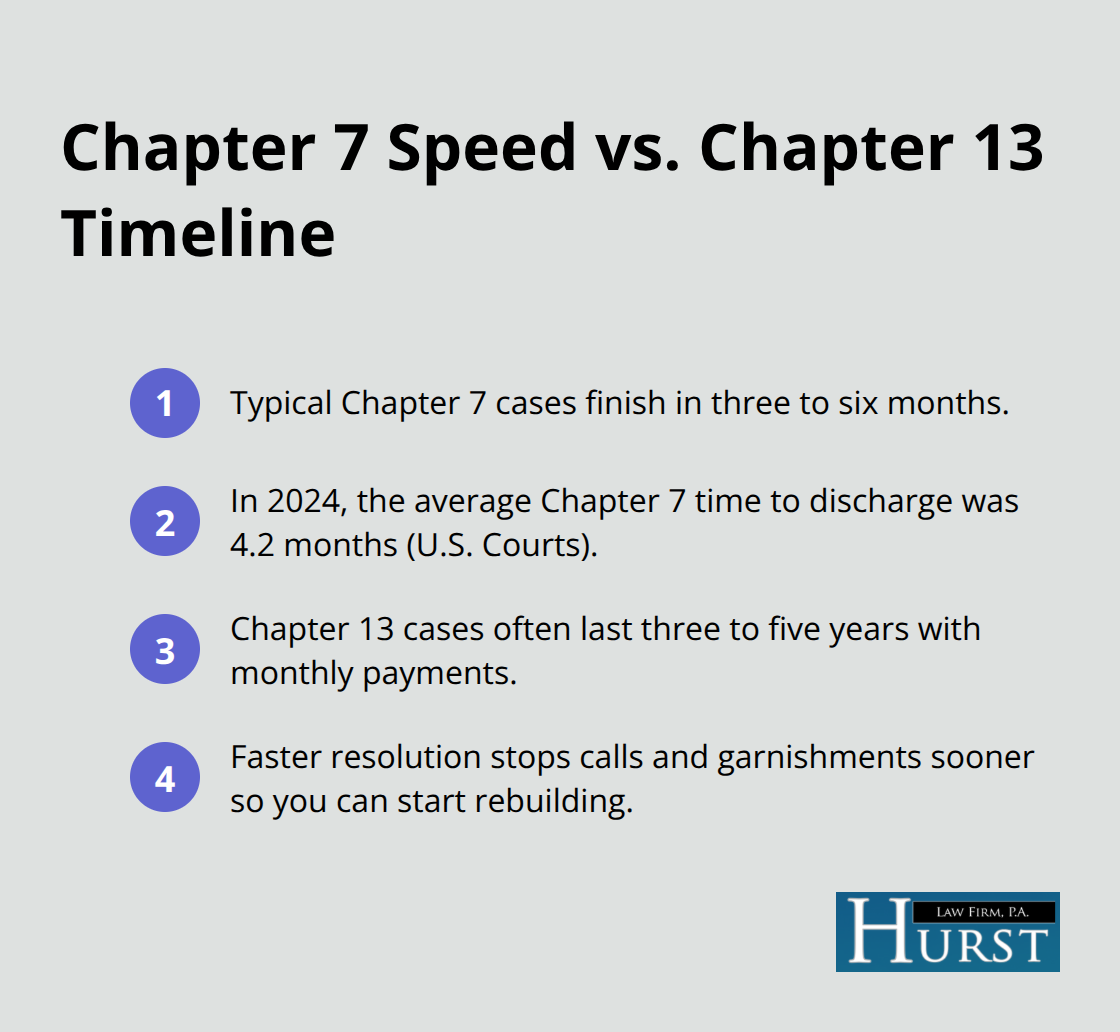
The quicker resolution stops the bleeding immediately through the automatic stay and moves you into rebuilding mode without years of court-ordered payment plans hanging over your head.
Unsecured Debt Disappears Permanently
The real power of Chapter 7 lies in erasing unsecured debts completely. Credit cards, medical bills, personal loans, collection accounts, and utility arrears vanish after discharge. You do not negotiate with creditors or settle for pennies on the dollar through debt management programs that take years to complete. The debt simply disappears through the court system. According to the American Bankruptcy Institute, the average Chapter 7 filer eliminates approximately $85,000 in unsecured debt through discharge. That represents genuine financial relief, not a temporary pause or reduced payment plan. Once the discharge order arrives, creditors cannot call you about those debts, cannot sue you, and cannot report them as active accounts on your credit report.
No Monthly Payment Obligations After Discharge
Chapter 13 bankruptcy forces you into a repayment plan for three to five years where you send money to the court each month. Chapter 7 eliminates this burden entirely. After your case closes, you owe nothing to the bankruptcy court and nothing on the discharged debts. You rebuild your financial life on your own terms without court oversight or monthly obligations. This freedom matters tremendously for Memphis families living paycheck to paycheck. You gain breathing room to stabilize your income, build an emergency fund, and establish positive credit habits without juggling court-mandated payments alongside rent and utilities.
The Timeline Advantage Over Other Options
Chapter 7 moves faster than alternatives because the trustee liquidates assets and distributes funds to creditors within months rather than years. Chapter 13 requires you to stick with a payment plan through the entire three to five year period, which means financial strain continues for years. The speed of Chapter 7 (typically four to six months) allows you to move past the bankruptcy filing and focus on rebuilding. Medical debt, credit card balances, or personal loans that would take years to repay through other options disappear in a matter of months. This acceleration matters when you need relief now, not years from now.
Moving Forward With Your Fresh Start
The discharge order marks your transition from financial crisis to recovery. Local guidance through this process helps you understand what happens next and how to rebuild your credit effectively. The 341 meeting of creditors and means test requirements shape your path forward, and understanding these steps prepares you for what comes next in your Chapter 7 journey.
Getting Local Bankruptcy Support in Memphis
Why You Need an Attorney for Chapter 7
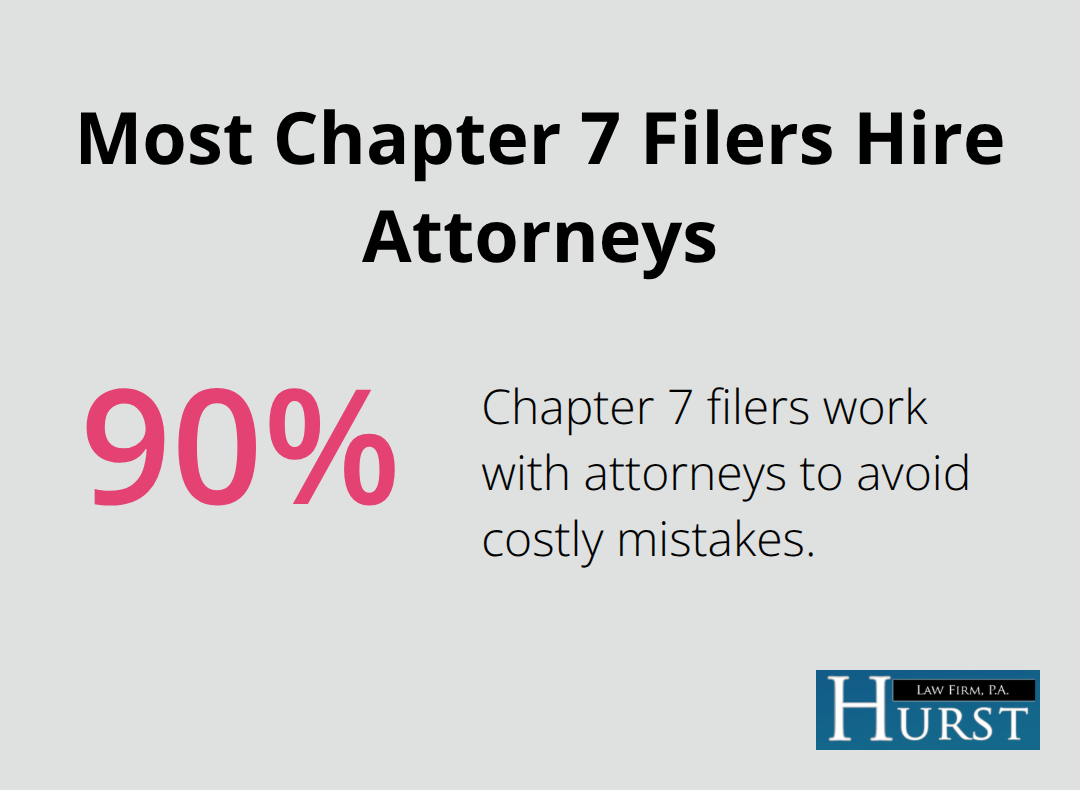
Filing Chapter 7 without legal representation carries serious risks. The process involves strict deadlines, complex paperwork, and technical requirements that trip up filers who attempt it alone. According to the American Bankruptcy Institute, roughly 90 percent of Chapter 7 filers work with attorneys because the stakes are too high for mistakes.
A Memphis bankruptcy attorney handles your petition, represents you at the 341 meeting of creditors, and protects your rights throughout the case. The attorney also verifies you meet the means test requirements, which determine whether you actually qualify for Chapter 7 or need to file Chapter 13 instead. Your attorney reviews your financial situation, identifies which assets qualify for exemption under Tennessee law, and prevents costly errors that could result in case dismissal or loss of property you should have protected.
Understanding the 341 Meeting of Creditors
The 341 meeting of creditors happens about four to six weeks after you file. Despite the intimidating name, this meeting is straightforward and typically lasts under 15 minutes. The trustee asks you questions about your income, expenses, assets, and debts based on information from your petition. Creditors rarely attend these meetings, and when they do, they ask minimal questions. Your attorney attends with you and handles most of the interaction, which means you simply answer truthfully and let your legal representation manage the technical portions. This preparation reduces anxiety and helps you navigate the process with confidence.
How the Means Test Determines Your Chapter 7 Eligibility
The means test is the mathematical calculation that decides your Chapter 7 eligibility. If your household income exceeds the median income for Tennessee, you must pass the means test to file Chapter 7. The calculation compares your gross income against allowed expense categories established by the U.S. Trustee Program. Many Memphis residents assume they fail the means test and resign themselves to Chapter 13, but the calculation includes legitimate deductions for housing, transportation, utilities, and other necessities that often bring qualifying filers under the threshold. Your attorney completes this calculation accurately and identifies which expenses reduce your disposable income, which is why professional guidance matters tremendously at this stage.
Final Thoughts
Chapter 7 bankruptcy offers Memphis families a genuine path forward when unsecured debt becomes unmanageable. The automatic stay stops creditor harassment immediately, asset liquidation resolves your case in months rather than years, and a discharge order eliminates your legal obligation to pay. You emerge from the process without ongoing court-ordered payments, without creditor calls, and with the opportunity to rebuild your credit on your own timeline.
Tennessee exemption laws protect your essential property throughout the process, which means your home, vehicle, retirement accounts, and household items remain safe while the trustee handles non-exempt assets. This balance allows most Memphis residents to keep what matters most while eliminating the debt that’s been crushing them. Local guidance transforms Chapter 7 from an intimidating legal process into a manageable journey that protects your rights at every stage.
We at Hurst Law Firm, P.A. help Memphis residents navigate consumer bankruptcy and take control of their financial future. If you’re ready to explore Memphis Chapter 7 help and understand whether this option works for your situation, contact Hurst Law Firm, P.A. to discuss your case with our team. Your fresh start is within reach.