


Chapter 7 bankruptcy offers Memphis residents significant protection for their most valuable assets. The key is understanding which property qualifies for exemption and how to claim it properly.
We at Hurst Law Firm, P.A. see too many people lose assets they could have protected simply because they didn’t know the rules. This guide walks you through exempt property in Chapter 7 and shows you how to keep what matters most.
What Property Stays Protected in Chapter 7
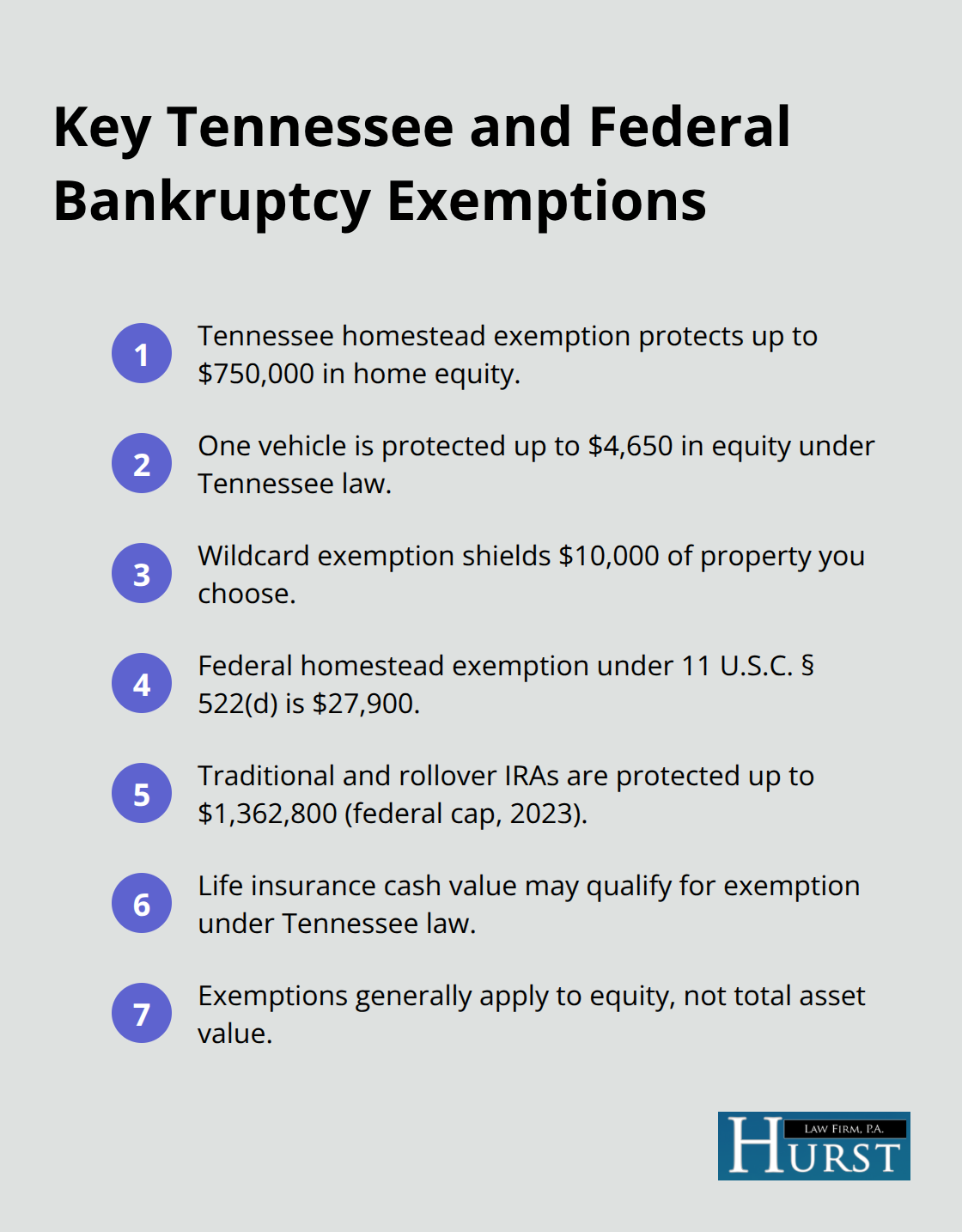
Tennessee’s homestead exemption protects up to $750,000 of equity in your primary residence under Tennessee Code Annotated Section 26-2-301. This ranks among the most generous homestead protections in the country. The exemption covers not just the house itself but also the land it sits on. If your home is worth $300,000 and you owe $200,000 on your mortgage, you keep that $100,000 in equity.
The exemption applies whether you file Chapter 7 or Chapter 13, making it a powerful tool for protecting your largest asset.
Your Vehicle and Personal Belongings
Tennessee allows you to exempt one vehicle worth up to $4,650 in equity under state law. If you own a car outright worth $3,500, that entire vehicle stays with you through Chapter 7. For personal property like furniture, clothing, and household items, Tennessee provides a wildcard exemption of $10,000 that applies to any property you choose. This means your kitchen table, bedroom set, and tools in the garage all count toward this protection. Many people underestimate this exemption because they don’t think their used furniture has much value, but courts evaluate items at fair market value, not replacement cost.
Retirement and Insurance Assets
Your retirement accounts receive strong protection in Chapter 7 bankruptcy. Traditional IRAs, Roth IRAs, 401(k) plans, and pension accounts are largely shielded from creditors. Federal law protects up to $1,362,800 in traditional and rollover IRAs as of 2023. Life insurance policies with cash surrender value also qualify for exemption, protecting money you’ve built up in whole life or universal life policies. These protections exist because bankruptcy law recognizes that retirement savings and life insurance serve essential purposes for your family’s future security.
What Happens Next With Your Protected Assets
Understanding which assets you protect is only half the battle. The next section shows you how to maximize these exemptions and avoid costly mistakes that many Memphis filers make when claiming their protections.
Maximizing Your Exemptions Before Filing
Choose State or Federal Exemptions Strategically
Most Memphis residents face a critical decision point before filing Chapter 7: whether to use federal exemptions or Tennessee state exemptions. Tennessee allows you to choose, and this choice fundamentally changes what you protect. Federal exemptions under 11 U.S.C. Section 522(d) provide a homestead exemption of $27,900, which is substantially lower than Tennessee’s $750,000 protection. If you own a home with significant equity, state exemptions are almost always the better path. However, federal exemptions sometimes offer stronger protection for retirement accounts and personal property in specific situations. The decision requires careful analysis of your complete financial picture, not just your largest assets. Calculating both scenarios for every client reveals which option protects more of your assets-the wrong choice can cost you tens of thousands of dollars in unprotected equity.
Avoid Transfers Before Filing
Timing your Chapter 7 filing matters far more than most people realize. Tennessee’s fraudulent transfer statute allows courts to reverse asset transfers made within four years before filing if the transfer was designed to defraud creditors. Many debtors transfer property to family members weeks before filing, thinking they’re protecting assets, when they’re actually creating grounds for the trustee to recover that property and liquidate it. The safest approach is filing without any recent transfers, which means if you’re considering Chapter 7, stop moving money or property today.
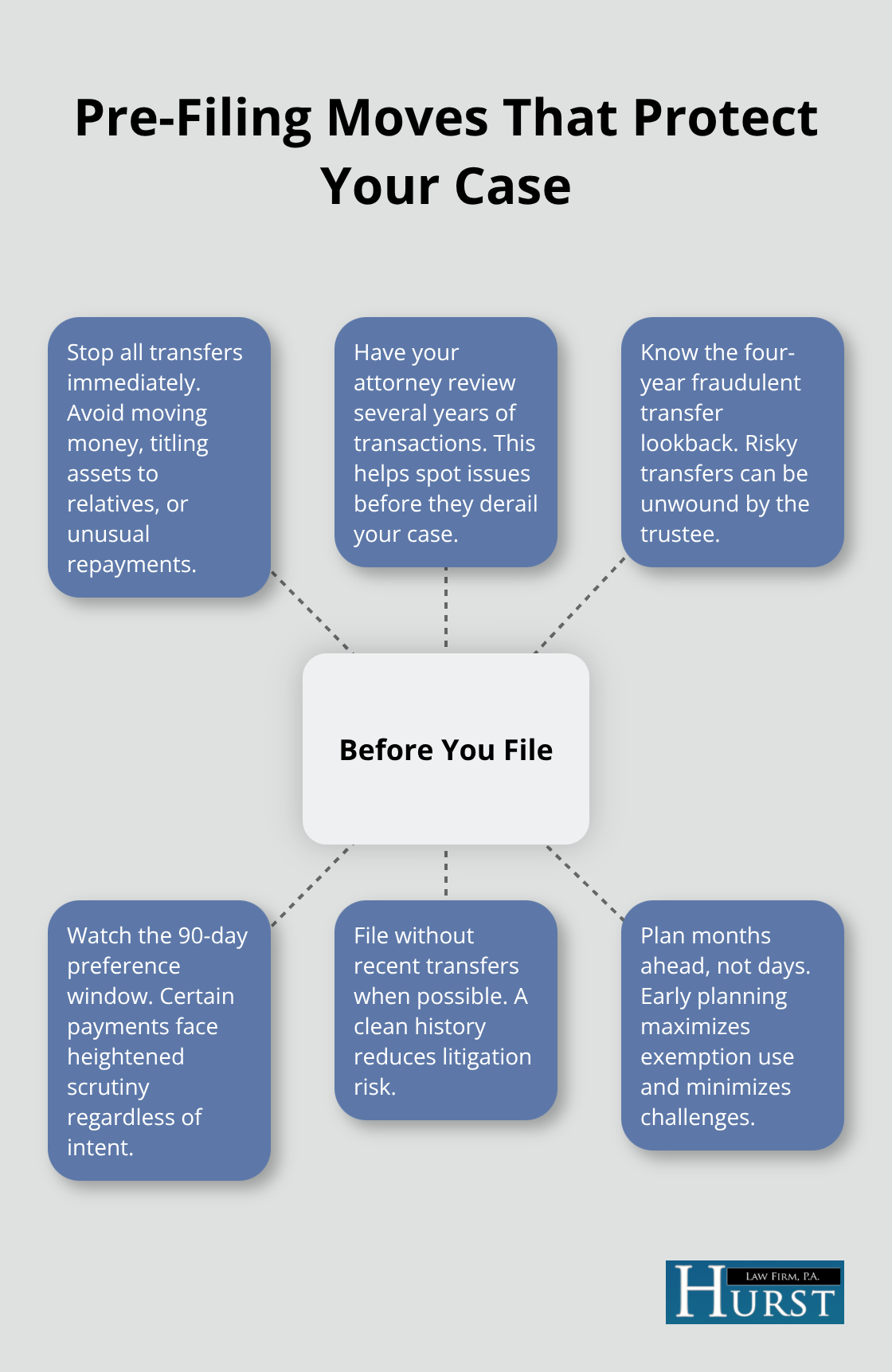
Asset protection planning should happen months or even years before filing, not days before. Your bankruptcy attorney will review your transaction history and flag any transfers that could trigger trustee litigation. This examination of your financial moves over the past several years identifies potential problems before they derail your case.
Identify All Available Protections
Your bankruptcy attorney plays a vital role in uncovering exemptions you might miss on your own. Many debtors overlook wildcard exemptions, retirement account protections, or state-specific rules that apply to their situation. A thorough review of your assets (including bank accounts, insurance policies, and personal property) reveals protections you didn’t know existed. Some assets qualify for multiple exemptions, and your attorney determines which combination maximizes your protection. This comprehensive approach prevents costly oversights that leave valuable assets vulnerable to liquidation.
The next section shows you the common mistakes that cost Memphis debtors their protected assets-and how to avoid them.
Common Mistakes That Cost Debtors Their Protected Assets
Failing to Claim Every Available Exemption
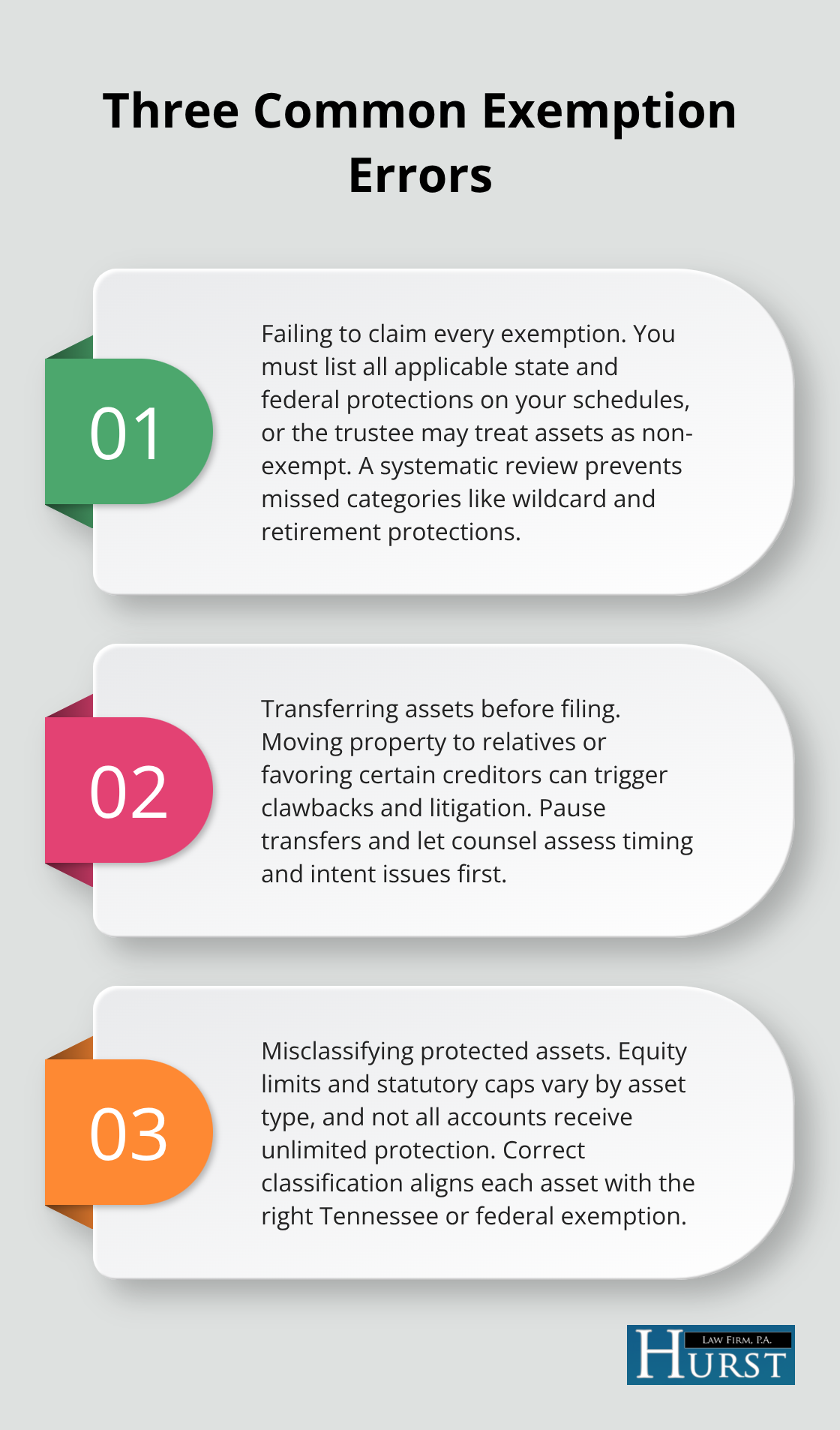
Most Memphis debtors lose protected assets not because the law fails them, but because they overlook exemptions entirely. The first and most expensive mistake happens when people fail to claim every exemption available to them. Tennessee law provides multiple layers of protection, but they only work if you actively claim them on your bankruptcy schedules.
Many filers focus on their home and vehicle while completely missing the $10,000 wildcard exemption that protects household goods, tools, or bank account funds. Debtors frequently assume their $8,000 in tools will face liquidation until they identify the wildcard exemption that covers them completely. The bankruptcy trustee has no obligation to find exemptions for you. If an exemption isn’t claimed on your petition, the trustee treats that asset as property available for liquidation.
This means a $5,000 bank account sitting unclaimed in your exemptions becomes money the trustee distributes to your creditors. The solution requires a systematic review of every asset you own, from retirement accounts to insurance policies to personal property, and matching each item to the correct exemption category.
Transferring Assets Before Filing
The second critical error involves asset transfers in the months before filing. Debtors frequently move property to family members, pay down debts to specific creditors, or consolidate accounts thinking they’re protecting assets when they’re actually creating legal problems.
Tennessee courts can reverse fraudulent transfers made within four years before filing if the trustee proves you transferred assets to hinder, delay, or defraud creditors. This lookback period means a transfer you made three years ago could still trigger trustee litigation that recovers the property and forces its sale. Additionally, transfers within 90 days of filing face heightened scrutiny under federal bankruptcy law regardless of your intent.
The safest strategy stops all asset movement immediately if you’re considering Chapter 7 filing. Asset protection planning should happen months or even years before filing, not days before. Your bankruptcy attorney will review your transaction history and flag any transfers that could trigger trustee litigation.
Misclassifying Protected Assets
The third mistake involves misclassifying which assets actually qualify for protection. Some debtors believe their car qualifies for full protection when equity exceeds $4,650, or they assume all retirement accounts receive unlimited protection. Federal law caps traditional IRA protection at $1,362,800 as of 2023, meaning high-balance accounts may face partial liquidation.
A 529 college savings plan doesn’t receive the same protection as a 401(k), yet many filers treat them identically. Cryptocurrency holdings, investment accounts, and business interests follow completely different exemption rules than household property. Proper classification requires understanding Tennessee Code Annotated Section 26-2-103 and how federal exemptions under 11 U.S.C. Section 522 apply to your specific assets (including any accounts or policies you may have overlooked).
Incorrect classification before filing means discovering during your case that assets you thought were protected actually aren’t, leaving you unable to recover them once the bankruptcy concludes.
Final Thoughts
Protected assets in Chapter 7 bankruptcy form your financial foundation after filing. Memphis residents who understand exempt property Chapter Seven and claim every available protection retain significantly more wealth than those who file without proper planning. The $750,000 homestead exemption, vehicle protection up to $4,650, and $10,000 wildcard exemption work together to shield your most important possessions from liquidation, while retirement accounts and life insurance policies receive additional federal protection that many debtors never claim.
The difference between losing assets and keeping them often comes down to timing and knowledge. Filing Chapter 7 without reviewing your complete financial picture costs thousands in unprotected equity, while transferring assets in the months before filing creates legal problems that reverse your protection efforts entirely. Failing to claim every exemption available under Tennessee law leaves money on the table that the trustee will distribute to creditors instead.
Proper planning before filing Chapter 7 transforms your case outcome by stopping all asset transfers immediately, documenting every possession you own, and understanding which exemptions apply to your situation. We at Hurst Law Firm, P.A. have guided Memphis residents through this process since 1997, helping families identify all available protections and file Chapter 7 with confidence. Schedule a consultation to review your assets, determine whether state or federal exemptions serve you better, and create a filing strategy that maximizes what you keep.