


Wage garnishment can take a significant portion of your paycheck before it reaches your bank account. If you’re facing this situation in Memphis TN, you have more options than you might realize.
We at Hurst Law Firm, P.A. help people stop wage garnishment protections by exploring bankruptcy and other legal strategies. This guide walks you through your rights and the concrete steps available to protect your income.
How Wage Garnishment Actually Works in Memphis
The Garnishment Process Step by Step
A creditor obtains a court judgment against you and then uses that judgment to claim a percentage of your paycheck directly from your employer. Your employer is legally required to withhold this amount before you receive your wages. The garnishment process starts when a creditor files a lawsuit, wins the case, and serves your employer with a garnishment order. From that point forward, your paycheck shrinks automatically until the debt is paid or the garnishment is lifted.
Federal and Tennessee Limits on Garnishment
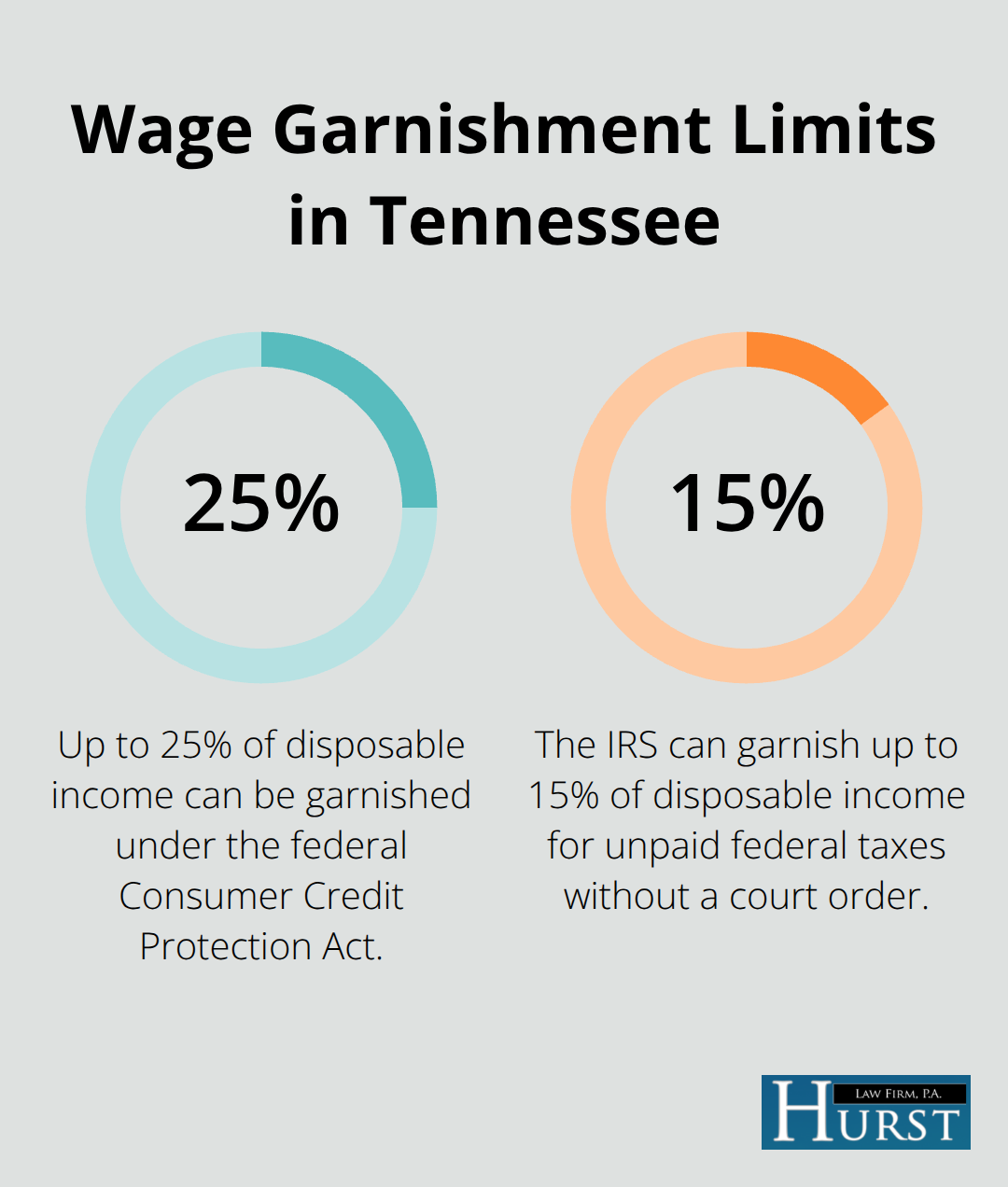
In Tennessee, the federal Consumer Credit Protection Act sets the baseline for how much creditors can take. Creditors can garnish up to 25 percent of your disposable income or the amount by which your weekly income exceeds 30 times the federal minimum wage, whichever is less. Since the federal minimum wage is $7.25 per hour, this means if you earn less than $217.50 per week in disposable income, creditors cannot garnish anything at all under federal law. Tennessee follows these federal limits closely, though the state offers additional protections for certain types of income like public assistance and unemployment benefits.
Which Debts Trigger Garnishment
The types of debts that trigger garnishment differ significantly. Credit card companies, personal loan providers, and medical debt collectors pursue garnishment regularly because these are unsecured debts requiring a court judgment first. Child support and tax debts operate differently and can skip the judgment step entirely, making them particularly aggressive.
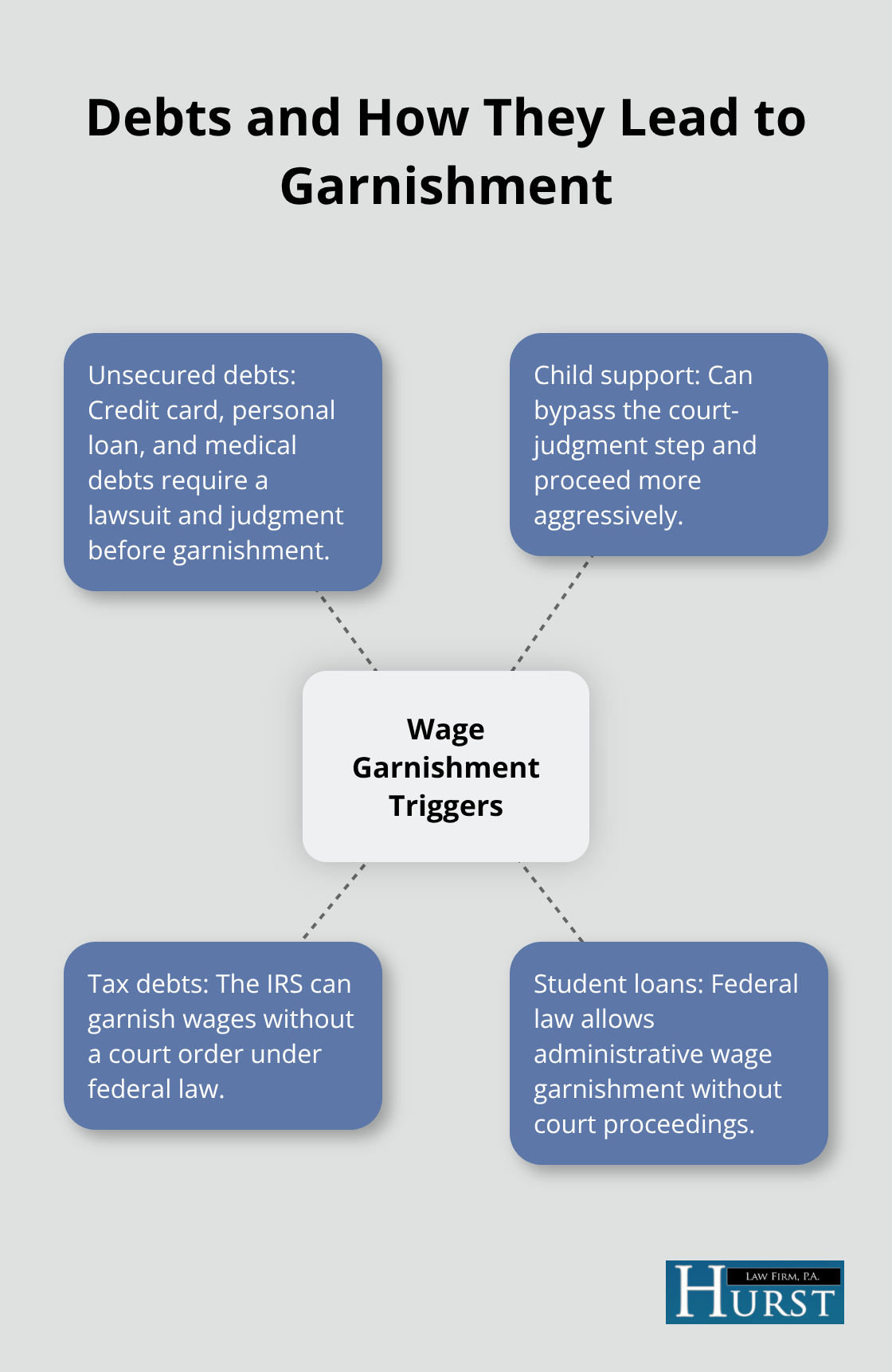
The IRS can garnish up to 15 percent of your disposable income for unpaid taxes without a court order. Student loan defaults also bypass normal court procedures under federal law.
Why Bankruptcy Stops Garnishment Immediately
If you face garnishment from any of these sources in Memphis, the situation feels urgent because money disappears from every paycheck. This is precisely why Chapter 7 and Chapter 13 bankruptcy filings carry such weight in wage garnishment cases. Filing for bankruptcy triggers an automatic stay that stops garnishment immediately upon filing, giving you breathing room to address your financial situation.
How Bankruptcy Stops Wage Garnishment
Filing for bankruptcy in Memphis TN halts wage garnishment immediately through the automatic stay, a court order that takes effect the moment your case is filed with the court. This automatic stay prohibits creditors from continuing collection efforts, including wage garnishment, regardless of whether the debt is secured or unsecured. The U.S. Courts report that the automatic stay stops nearly all creditors simultaneously. You stop losing money from your paycheck the day your bankruptcy petition reaches the court, not weeks or months later. This immediate relief gives you time to reorganize your finances without the constant drain of garnishment.
Chapter 7 Bankruptcy Wipes Out Unsecured Debts
Chapter 7 bankruptcy eliminates credit card debt, medical bills, personal loans, and other unsecured debts entirely through liquidation. When you file Chapter 7 in Memphis, the automatic stay stops garnishment immediately, and if your case qualifies for discharge, those debts disappear completely. According to the American Bankruptcy Institute, approximately 60 percent of personal bankruptcy filings are Chapter 7 cases, which speaks to how common this path is for wage garnishment victims. The process typically concludes within three to six months, meaning you get relief fast. If you have minimal assets, Chapter 7 often costs less than Chapter 13 because you avoid funding a repayment plan. However, Chapter 7 requires that your income falls below Tennessee’s median income levels to qualify.
Chapter 13 Creates a Protected Repayment Plan
Chapter 13 bankruptcy stops garnishment and consolidates your debts into a three-to-five-year repayment plan approved by the court. During this plan period, creditors cannot pursue garnishment or other collection activities, giving you predictable monthly payments instead of shrinking paychecks. The Federal Reserve reports that Chapter 13 filers typically repay between 0 and 100 percent of their debts depending on their income and assets, with many paying far less than the original debt amount. This option works well if you earn too much for Chapter 7 or if you want to keep assets like a car or home. Your disposable income gets calculated precisely, and the court-approved plan remains affordable throughout the repayment period.
Negotiating Without Bankruptcy Rarely Works
Attempting to settle debts directly with creditors before filing bankruptcy rarely stops active garnishment because creditors have already obtained court judgments. Most creditors continue garnishing while negotiation discussions happen, making this approach frustratingly slow. If you can negotiate a lump-sum settlement before a judgment exists, you might avoid garnishment entirely, but once garnishment starts, settlements become significantly harder to arrange. Creditors have no incentive to stop taking money from your paycheck when the law allows them to continue. Bankruptcy remains the only reliable method to halt garnishment immediately while you address your underlying debt problems.
Moving Forward With Your Financial Recovery
The automatic stay provides the breathing room you need to make informed decisions about your financial future. Whether Chapter 7 or Chapter 13 fits your situation depends on your income level, assets, and long-term goals. Hurst Law Firm, P.A., a bankruptcy law firm in Memphis serving the community since 1997, helps individuals and families navigate these options and determine the right path forward. Understanding which bankruptcy chapter applies to your circumstances sets the stage for protecting your income and rebuilding your financial stability.
Rebuild Your Financial Stability After Garnishment Stops
Build Your Emergency Fund First
Once bankruptcy halts your wage garnishment, the real work starts. You cannot simply return to the spending patterns that created the debt in the first place. The Federal Reserve reports that Americans without emergency savings are 40 percent more likely to accumulate new debt within two years of resolving old debt. This means your first priority must be preventing garnishment from happening again.
Try to save $1,000 within the first three months after your bankruptcy discharge or plan approval. This covers most common emergencies like car repairs or medical copays without forcing you back into credit card debt. Open a separate savings account at a different bank than your checking account, making it psychologically harder to raid these funds for non-emergencies.
Tennessee employees have a significant advantage under state law: certain income sources cannot be garnished at all (including public assistance benefits, unemployment compensation, and Social Security payments). If any portion of your income falls into these protected categories, direct deposit those funds into your emergency savings account first. This approach guarantees that at least some money stays protected regardless of future creditor actions.
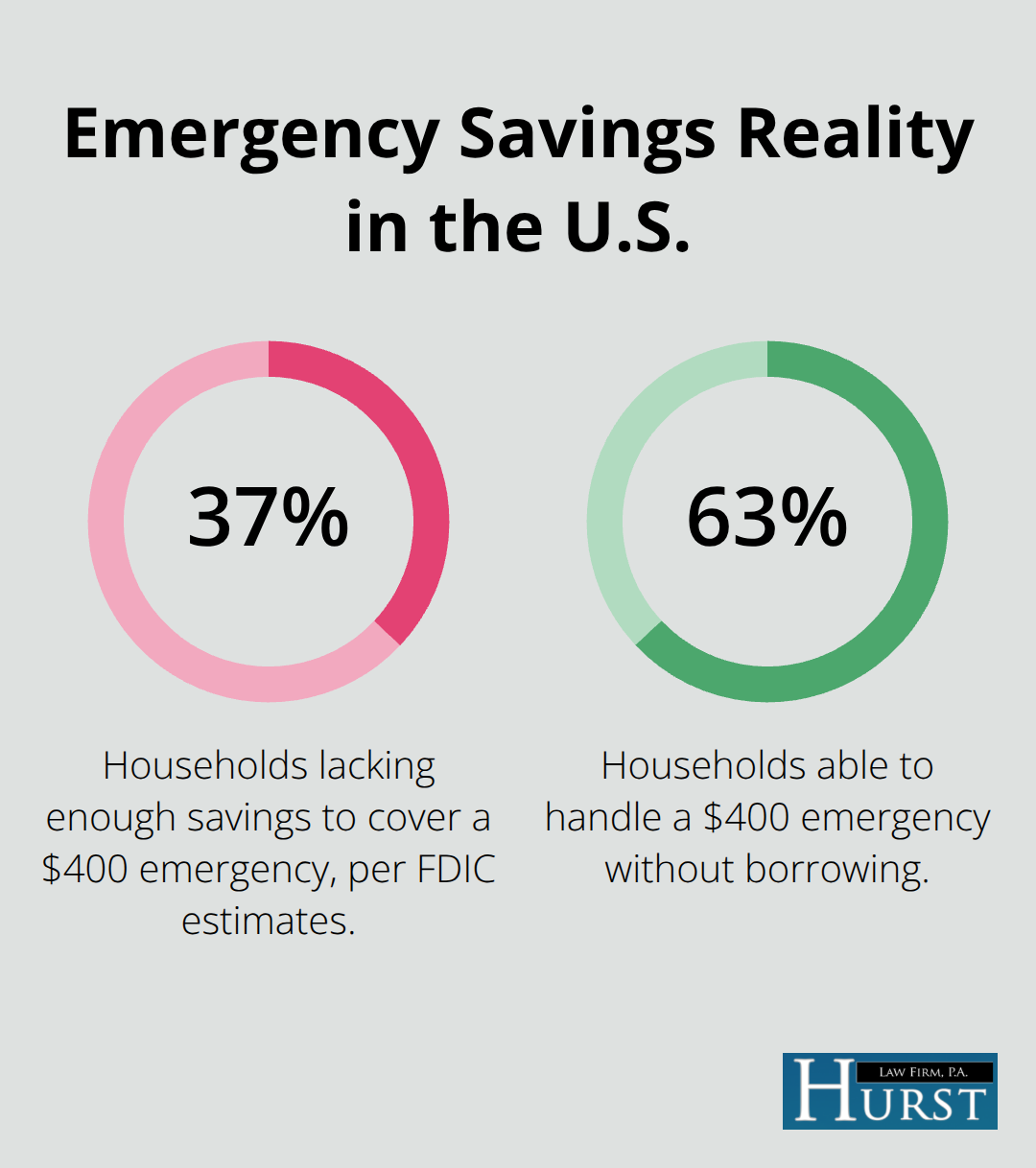
The FDIC estimates that 37 percent of American households do not have enough savings to cover a $400 emergency, which explains why so many people return to debt after bankruptcy. Your goal is to become part of the 63 percent who can handle unexpected expenses without borrowing.
Create a Budget That Matches Your Reality
Creating a budget that actually works requires abandoning the detailed spreadsheet approach most financial advisors recommend. Instead, use the 50/30/20 rule adapted for post-garnishment life: allocate 50 percent of your take-home pay to essential expenses, 30 percent to debt repayment under your Chapter 13 plan or Chapter 7 obligations, and 20 percent to savings and discretionary spending.
Tennessee law requires your Chapter 13 trustee to calculate your disposable income based on actual living expenses, so your budget must match those calculations exactly. Request a copy of your bankruptcy schedules from your bankruptcy trustee and use those expense figures as your baseline.
Track your spending for exactly 30 days using a simple method like photographing receipts or using a free app like GoodBudget. Most people discover their actual spending differs dramatically from what they estimated. After those 30 days, you will have concrete data showing where adjustments are necessary.
Protect Your Wages From Illegal Deductions
As a Tennessee employee, you also have rights regarding wage deductions that many people ignore. Your employer cannot deduct wages for uniforms, tools, or other job-related expenses if those deductions drop your pay below minimum wage. Many employers violate this rule intentionally or through ignorance.
If you suspect illegal wage deductions, contact the Tennessee Department of Labor and Workforce Development before assuming your paycheck is accurate. This agency recovered over $2 million in wage theft claims in the past three years for Tennessee workers.
Final Thoughts
Wage garnishment drains your paycheck month after month, but you have concrete legal options to stop it. Federal and Tennessee state laws limit how much creditors can take, yet these limits provide little comfort when money disappears regularly. The automatic stay triggered by bankruptcy filing halts garnishment immediately, giving you the breathing room to address your financial situation without constant collection pressure.
Chapter 7 bankruptcy eliminates unsecured debts entirely, making it ideal if your income falls below Tennessee’s median levels, while Chapter 13 bankruptcy restructures your debts into a manageable repayment plan that protects your wages from further garnishment. Both options stop wage garnishment and provide a path forward that negotiation or settlement rarely achieves once a judgment exists. After garnishment stops, your real work begins with building an emergency fund and creating a realistic budget based on your actual spending patterns.
The first step is reaching out to someone who understands Memphis bankruptcy law and your specific situation. We at Hurst Law Firm, P.A. help individuals and families in Memphis navigate Chapter 7 and Chapter 13 filings to achieve financial stability. Visit Hurst Law Firm, P.A. to discuss your wage garnishment situation and explore which bankruptcy option fits your circumstances.