


Your first bankruptcy attorney consultation can feel overwhelming, but it doesn’t have to be. Walking in prepared makes the process smoother and helps us at Hurst Law Firm, P.A. give you the clearest picture of your options.
This guide walks you through what happens before, during, and after your initial visit so you know exactly what to expect.
Preparing for Your First Meeting in Memphis TN
Collect Your Financial Documents
Bring your financial documents to your consultation with us at Hurst Law Firm, P.A.-this step directly determines how quickly we can assess your situation and identify your best path forward. Start by collecting bank statements from the past three months, which show your income patterns and spending habits. Next, pull together credit card statements, loan documents, and any collection notices you’ve received. The National Foundation for Credit Counseling reports that people who arrive organized to their first consultation receive more accurate debt calculations, which means fewer surprises later. Don’t worry about organizing these perfectly; just bring them in a folder or envelope.
Verify Your Income and Assets
You’ll also need recent pay stubs to verify current income, mortgage or rental agreements if you own property, and any documentation related to vehicles (including loan papers and registration). If you’re self-employed, bring your last two years of tax returns and recent profit-and-loss statements. These documents give us the complete financial picture needed to determine whether Chapter 7 or Chapter 13 makes sense for your situation.
Create a Written Debt and Asset Inventory
A written list of everything you owe and everything you own takes about an hour but saves significant time during your consultation. Write down each debt separately-credit cards, medical bills, personal loans, car payments, and tax debts-along with the approximate balance and creditor name. For assets, list your home, vehicles, bank accounts, retirement accounts, and any valuable personal property. According to the American Bankruptcy Institute, people who arrive with this information already compiled reduce their initial consultation time by roughly 40 percent, which means lower attorney fees. Don’t estimate or guess at amounts; reasonable approximations work fine, and we’ll verify exact figures later through credit reports.

Bring Documentation of Legal Actions
Bring any recent collection letters or court documents related to lawsuits, as these affect your filing timeline and strategy. This documentation helps us understand the urgency of your situation and what creditors have already taken action against you. With these materials in hand, you’ll walk into your first appointment ready to have a meaningful conversation about your financial future.
What Happens During Your Consultation
During your consultation, we review everything you brought and ask clarifying questions about your financial situation. This isn’t an interrogation-it’s a conversation designed to understand exactly how you got here and what options make sense for your circumstances. We examine your income, expenses, debts, and assets to calculate your debt-to-income ratio, which directly determines whether Chapter 7 or Chapter 13 is viable for you. The Federal Judiciary reports that the median Chapter 7 case costs between $1,500 and $2,500 in attorney fees, while Chapter 13 cases typically range from $2,500 to $4,000, depending on complexity. Knowing these costs upfront during your initial consultation prevents sticker shock later. We also pull your credit report to identify all debts you may have forgotten about, since creditors sometimes appear on reports that you weren’t actively managing.
Comparing Chapter 7 and Chapter 13 for Your Situation
Chapter 7 bankruptcy eliminates most unsecured debts like credit cards, medical bills, and personal loans within three to six months, but you must pass the means test, which compares your income to your state’s median. Chapter 13 reorganizes your debts into a three-to-five-year repayment plan, which works better if you have a steady income, want to keep your home, or earn too much to qualify for Chapter 7. The U.S. Trustee Program shows that Chapter 7 filers dispose of an average of $45,000 to $75,000 in debt, while Chapter 13 allows you to catch up on mortgage arrears while protecting assets. We explain which path applies to you based on your specific numbers, not general advice. This conversation isn’t about what sounds easier-it’s about what actually works for your financial reality and long-term goals.
Understanding Your Legal Obligations Moving Forward
We walk you through what filing means: the automatic stay that stops creditor calls and lawsuits immediately, the credit counseling requirement you must complete before filing, and the financial management course you’ll take afterward. These aren’t bureaucratic hoops-they’re real protections and education that affect your case. You’ll learn about what property you can keep, what happens to your home or car, and how bankruptcy affects your credit score. We’re direct about what comes next: court dates, trustee meetings, and the timeline for your fresh start. With this foundation in place, you’re ready to understand the concrete steps that follow your decision to move forward.
Moving Forward After Your Consultation
After your consultation ends, the real work begins, but it follows a predictable path. Most people file their bankruptcy petition within two to four weeks of their initial consultation, assuming you’ve gathered all necessary documents and made your decision about Chapter 7 or Chapter 13. This timeline isn’t arbitrary-it’s driven by practical factors. If creditors have filed lawsuits or wage garnishments are pending, filing sooner protects you through the automatic stay, which stops collection actions immediately. The U.S. Trustee Program requires that you complete a credit counseling course before filing, which typically takes one to two hours and can be done online.
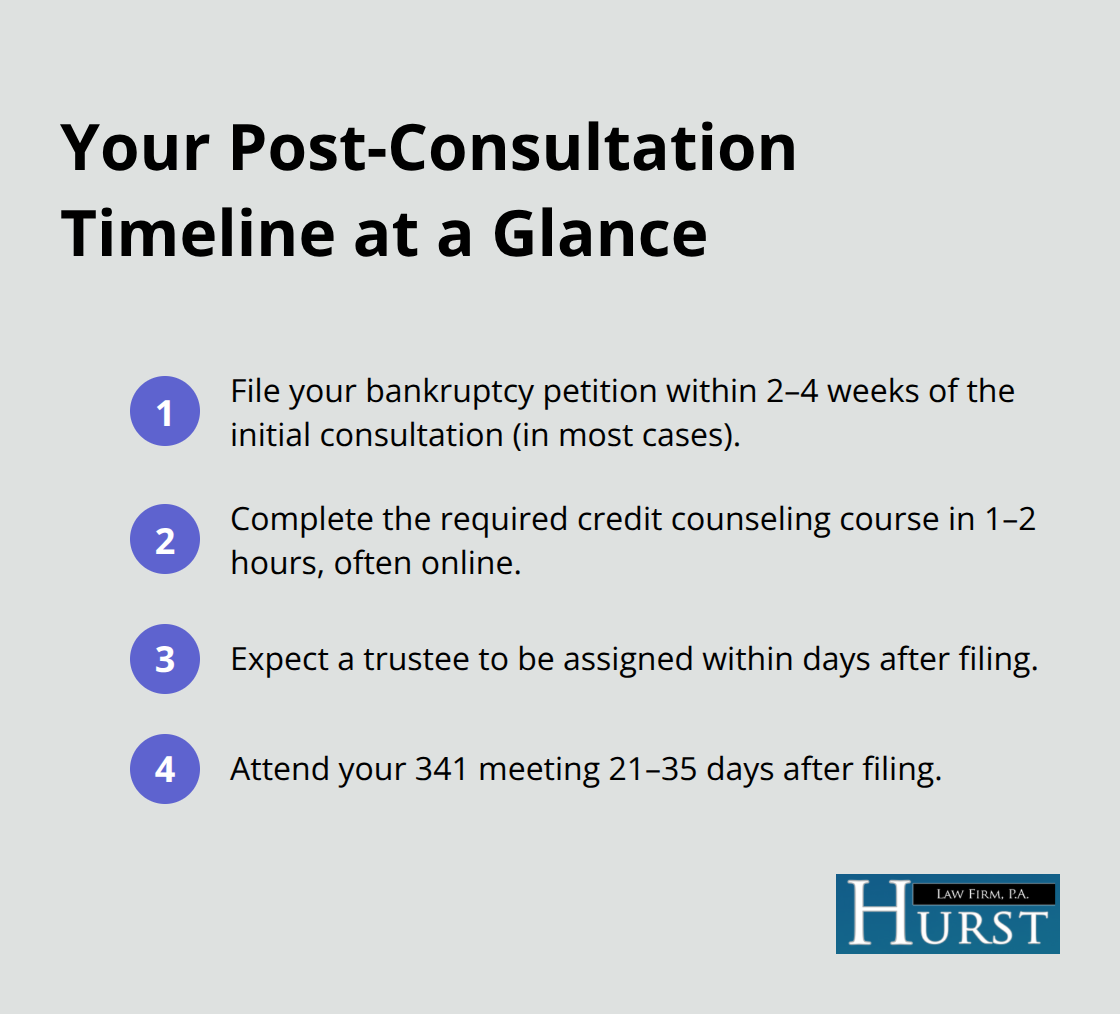
Once you file, the court assigns a trustee to your case within days, and you’ll receive notice of your 341 meeting, commonly called the creditors’ meeting, which is scheduled 21 to 35 days after filing.
What Happens at Your 341 Meeting
This meeting sounds intimidating but is straightforward-the trustee reviews your paperwork, asks standard questions about your finances, and creditors rarely attend. For Chapter 7 cases, the trustee determines what non-exempt assets can be liquidated to pay creditors; for Chapter 13 cases, the trustee proposes a repayment plan based on your income and expenses. Understanding this timeline helps you plan financially and mentally for what’s coming.
Understanding Your Costs and Fees
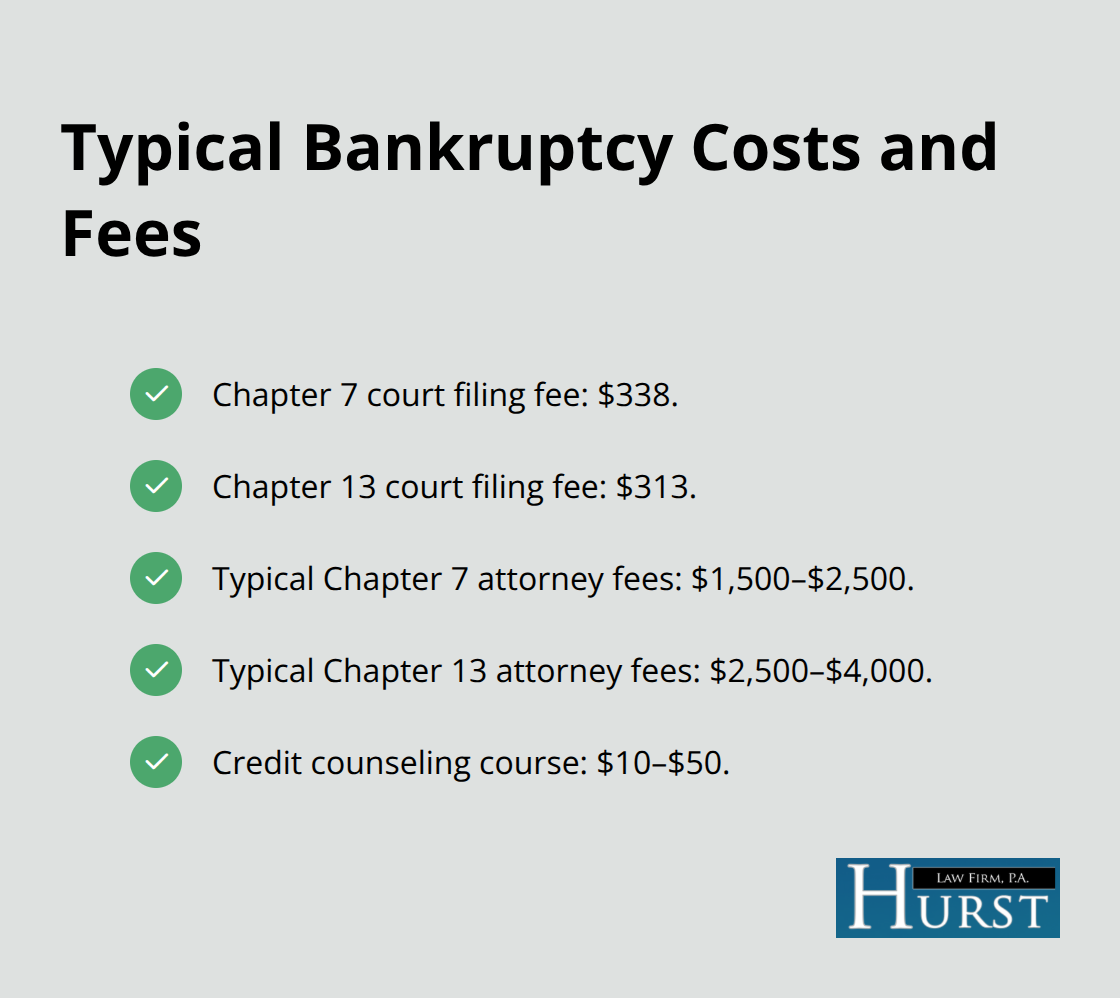
Costs vary significantly based on which chapter you file and the complexity of your situation. Chapter 7 filing fees total $338 according to the Federal Judiciary, while Chapter 13 filing fees are $313, but attorney fees dwarf these court costs. Most Chapter 7 cases cost between $1,500 and $2,500 in attorney fees, while Chapter 13 typically ranges from $2,500 to $4,000, though cases with significant assets or multiple properties cost more. Some attorneys offer payment plans, which matters because many people filing bankruptcy lack liquid cash. After filing, you’ll pay for the credit counseling course, which costs $10 to $50 depending on the provider.
Your Timeline From Filing to Discharge
The bankruptcy process itself-from filing through discharge-takes three to six months for Chapter 7 and three to five years for Chapter 13. During this time, you’ll attend the 341 meeting, possibly a confirmation hearing for Chapter 13, and financial management education courses. Chapter 13 filers make monthly payments to the trustee starting within 30 days of filing, which becomes your primary financial obligation during the plan period. Knowing these costs and timelines upfront prevents surprises and helps you rebuild your credit as you move toward financial relief in Memphis TN.
Final Thoughts
Your first bankruptcy attorney consultation marks the beginning of a concrete path toward financial relief in Memphis TN. Walking in prepared with your documents, debt list, and asset inventory transforms what could feel chaotic into a straightforward conversation about your options. You’ll leave understanding whether Chapter 7 or Chapter 13 makes sense for your situation, what your costs will be, and exactly when you’ll file your petition.
We at Hurst Law Firm, P.A. have helped Memphis families navigate bankruptcy since 1997, and we’ve seen firsthand how preparation during that first visit accelerates everything that follows. When you arrive organized, we can spend less time gathering information and more time explaining your actual options and what happens next. The automatic stay that stops creditor calls, the timeline to discharge, the costs involved, and your path to rebuilding credit all become concrete rather than theoretical.
Taking action toward financial relief means scheduling your bankruptcy attorney consultation and bringing what you’ve gathered. The process from first visit to discharge takes months, not years, and the sooner you start, the sooner creditors stop calling and wage garnishments stop. Visit Hurst Law Firm, P.A. to schedule your consultation and take the first real step toward the fresh start you need.