


A 341 meeting of creditors in Memphis TN is one of the few moments in a bankruptcy case where you have to speak for yourself, and for many people it is the part of the process that causes the most worry. The good news is that the meeting is usually short, follows a predictable script, and goes smoothly when you know what the trustee will ask and what you need to bring with you.
We at Hurst Law Firm, P.A. help individuals and families in Memphis and the surrounding communities work through Chapter 7 and Chapter 13 cases from the first consultation to the final discharge. This guide explains what the meeting of creditors actually is under federal law, how it works on the day itself, and the mistakes that most often cause delays, so you can walk in prepared and move forward with confidence.
What the 341 Meeting of Creditors Actually Is
The meeting gets its nickname from Section 341 of the Bankruptcy Code, which requires that within a reasonable time after the order for relief in a case, the United States trustee convene and preside at a meeting of creditors. In a voluntary consumer case, the order for relief happens automatically when you file your petition, so the clock starts the day your case begins. Every individual Chapter 7 and Chapter 13 filer in the Western District of Tennessee goes through this step, and your case cannot move toward a discharge without it.
A Meeting, Not a Courtroom Hearing
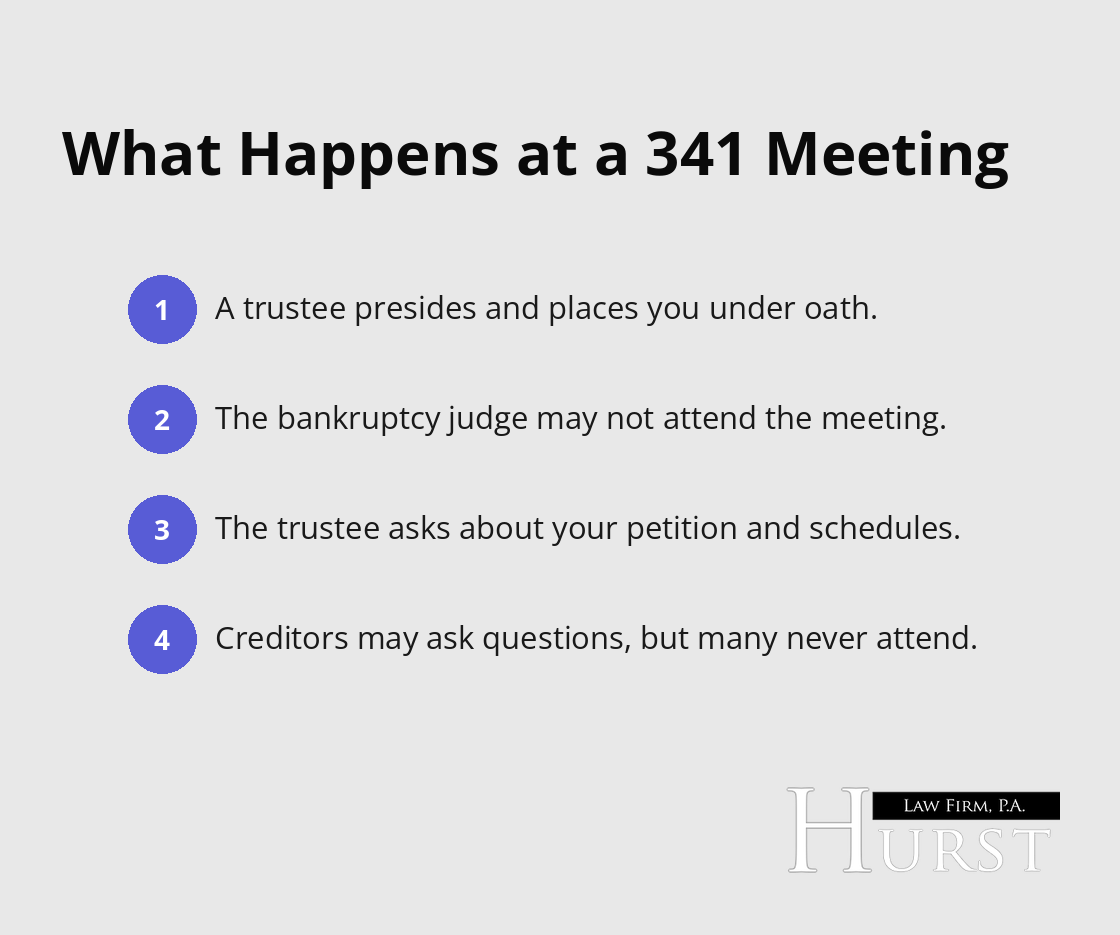
Many people picture a judge in a robe and a crowded courtroom. That is not what happens. Federal law says the bankruptcy court may not preside at, and may not attend, the meeting of creditors. Instead, a trustee runs the meeting, places you under oath, and asks questions about your petition and schedules. There is no jury, no verdict, and no judge deciding anything that day. The purpose is to confirm your identity and give the trustee and your creditors a chance to ask questions about the information you filed.
Why Your Testimony Matters
Section 343 of the Bankruptcy Code states that the debtor shall appear and submit to examination under oath at the meeting of creditors. That means attendance is not optional and your answers carry the same weight as sworn testimony. The trustee will typically ask whether you signed your petition, whether you reviewed it before filing, whether everything in it is true and complete, and whether you listed all of your assets and debts. Honest, accurate answers are the foundation of a smooth case, and they protect your right to a discharge later.
When the Meeting Takes Place
The Federal Rules of Bankruptcy Procedure set the timing window. Rule 2003 requires the United States trustee to call the meeting no fewer than 21 days and no more than 40 days after the order for relief in a Chapter 7 case, and no fewer than 21 days and no more than 50 days after the order for relief in a Chapter 13 case. The notice of your bankruptcy case lists the date, the time, and the instructions for attending, so read it carefully as soon as it arrives and put the date on your calendar right away.
How the Meeting of Creditors Actually Works in Memphis TN
On the day of the meeting, you will usually wait while the trustee works through a list of cases scheduled for the same session. When your case is called, the trustee confirms who you are, administers the oath, and begins a set of standard questions. Most meetings take only a few minutes, although the trustee can ask follow-up questions about anything in your paperwork that looks incomplete or unclear.

Identification You Must Bring
Bankruptcy Rule 4002 requires an individual debtor to bring a government-issued identification with the debtor’s picture, or other personal information that establishes identity, along with evidence of any Social Security number or a written statement that no such evidence exists. In practice, that usually means a driver’s license or passport and a Social Security card or another document showing your full number. Forgetting these items is one of the most common reasons a meeting cannot go forward as scheduled.
Financial Documents the Trustee Reviews
The same rule requires you to bring evidence of current income, such as your most recent pay stub, and, unless the trustee instructs otherwise, a statement for each checking, savings, money-market, mutual fund, or brokerage account covering the period that includes the date you filed. If any of these documents do not exist or are not in your possession, you can provide a written statement saying so. The trustee may also ask for documents ahead of the meeting, so stay in close contact with your attorney in the weeks before your date.
Questions the Trustee Commonly Asks
Beyond confirming your identity and the accuracy of your filing, the trustee may ask about recent transfers of property, money owed to you, recent large purchases, real estate, vehicles, and any lawsuits or claims you might have against someone else. In a Chapter 7 case, Section 341(d) also requires the trustee to orally examine you to make sure you are aware of the potential consequences of seeking a discharge, including the effect on your credit history, your ability to file under a different chapter, the effect of receiving a discharge, and the effect of reaffirming a debt.
Whether Creditors Will Show Up
Section 343 allows creditors, any trustee in the case, and the United States trustee to examine the debtor, and Section 341(c) permits a creditor holding a consumer debt to appear with or without an attorney. In many consumer cases, no creditors attend at all. When one does appear, the questions usually focus on a specific loan, a vehicle, or a debt the creditor believes may not be dischargeable. Your attorney can help you prepare for those questions and step in if they go beyond what is relevant to the case.
What Commonly Derails a 341 Meeting
Most meetings of creditors end with the trustee concluding the meeting and the case moving to the next stage. Problems tend to come from a small group of avoidable mistakes, and almost all of them can be prevented with preparation. Knowing those pitfalls ahead of time is the simplest way to keep your case on schedule.

Missing the Meeting Without a Good Reason
Because the law requires you to appear and testify, failing to attend can stall your case. The trustee may reschedule the meeting, but repeated absences can lead the trustee or the United States trustee to ask the court to dismiss the case. In Chapter 7, Section 707(a) allows the court, after notice and a hearing, to dismiss a case for cause, including unreasonable delay by the debtor that is prejudicial to creditors. If an emergency or illness makes attendance impossible, contact your attorney immediately rather than simply not appearing.
Answers That Do Not Match Your Schedules
The trustee compares what you say under oath with what you listed in your petition, schedules, and statement of financial affairs. If you mention a bank account, a vehicle, a transfer to a relative, or an expected inheritance that does not appear in your paperwork, the trustee may continue the meeting and ask for amended filings. Reviewing your schedules line by line before the meeting, and telling your attorney about any changes since you filed, keeps those surprises to a minimum.
Overlooking Chapter 13 Deadlines Around the Meeting
Chapter 13 filers face a few extra milestones that cluster around the meeting of creditors. Section 1326 requires the debtor to begin making plan payments not later than 30 days after the date the plan was filed or the order for relief, whichever is earlier, unless the court orders otherwise. Section 1324 provides that the confirmation hearing may be held not earlier than 20 days and not later than 45 days after the meeting of creditors, unless the court finds an earlier date is in the best interests of creditors and the estate and no one objects. Falling behind on early plan payments or missing information the trustee requested can lead to objections at confirmation.
Final Thoughts
The 341 meeting of creditors is a required step in every Chapter 7 and Chapter 13 case, but it is rarely the confrontation people fear. A trustee, not a judge, asks a short list of questions under oath, creditors often do not attend, and the most important things you can do are show up on time, bring your identification and income and account documents, and give honest answers that match your filing. If you want a refresher on how filing protects you in the weeks before the meeting, our guide to how the automatic stay protects you walks through that part of the process.
Preparation turns a stressful day into a routine one. When you review your schedules ahead of time, gather the required documents, and know what the trustee is likely to ask, you can answer clearly and keep your case moving toward the fresh start you filed for.
If you have a meeting of creditors coming up, or you are deciding whether Chapter 7 or Chapter 13 fits your situation, contact Hurst Law Firm, P.A. to speak with our team in Memphis, Tennessee. We will review your paperwork, prepare you for the trustee’s questions, and stand beside you at the meeting so you can move forward with confidence.