


Deciding whether to convert Chapter 13 to Chapter 7 in Memphis TN often comes up when life changes in the middle of a repayment plan. A job loss, a medical setback, a divorce, or a drop in household income can make plan payments that once seemed manageable impossible to keep up with. Federal bankruptcy law gives Chapter 13 debtors a way to change course, but the switch has consequences for your property, your deadlines, and your discharge that you should understand before you act.
We at Hurst Law Firm, P.A. help individuals and families in Memphis and the surrounding communities work through Chapter 7 and Chapter 13 cases from the first consultation to the final discharge, including cases that need to change direction partway through. This guide explains how conversion actually works under the Bankruptcy Code, what happens after the switch, and the mistakes that can make a conversion harder than it needs to be, so you can move forward with confidence.
How Converting Chapter 13 to Chapter 7 Actually Works
Conversion moves your existing bankruptcy case from one chapter to another rather than starting a brand-new case. The Bankruptcy Code gives Chapter 13 debtors a strong right to make this change, and the Federal Rules of Bankruptcy Procedure set out how it happens. Understanding the basic rules helps you see why conversion can be a practical option when a plan no longer fits your life.
Your Right to Convert at Any Time
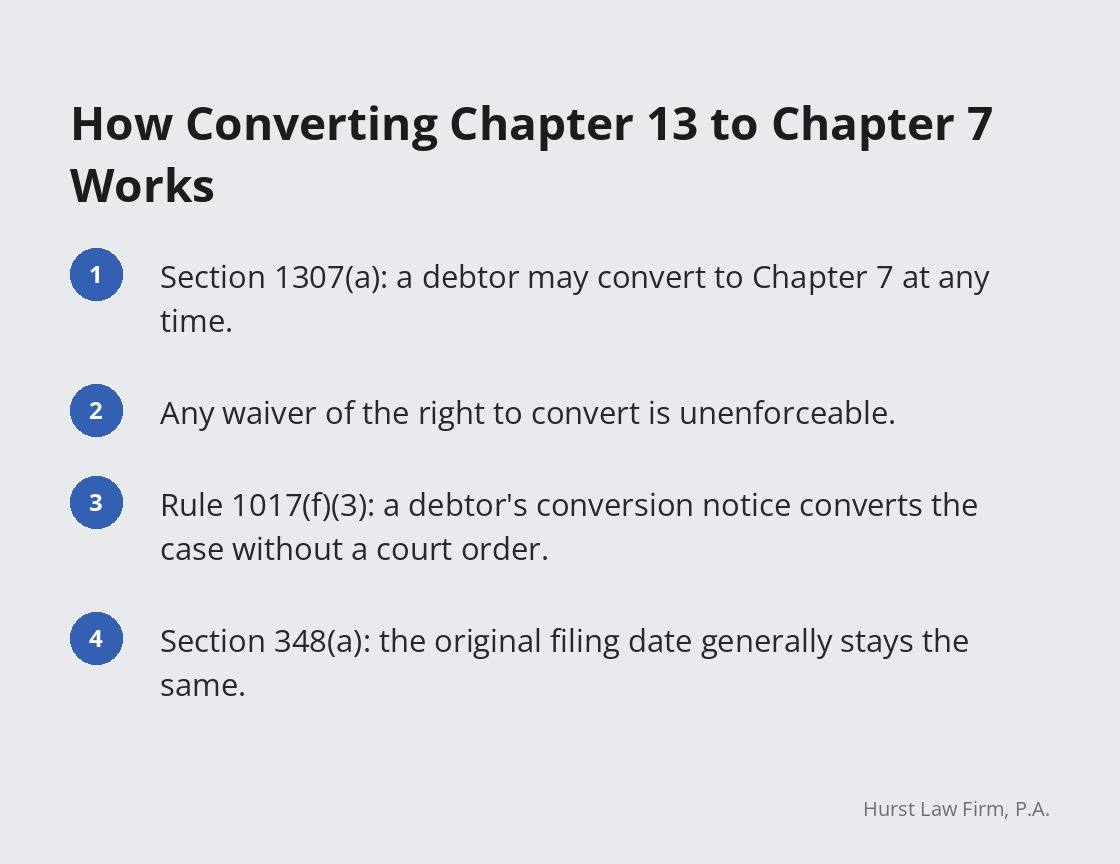
Section 1307(a) of the Bankruptcy Code provides that the debtor may convert a case under Chapter 13 to a case under Chapter 7 at any time. The same subsection states that any waiver of the right to convert is unenforceable, which means a creditor or a plan provision cannot take that right away from you. There is one important limit. Section 1307(g) provides that a case may not be converted to another chapter unless the debtor may be a debtor under that chapter, so you must still be eligible for Chapter 7 relief.
How the Conversion Happens
For a voluntary conversion, the process is simpler than many people expect. Under Federal Rule of Bankruptcy Procedure 1017(f)(3), when a Chapter 13 debtor files a conversion notice under Section 1307(a), the case is converted without a court order. The rule treats the notice date as the date of the conversion order for certain purposes, and the clerk sends a copy of the notice to the United States trustee. Memphis-area cases in the Western District of Tennessee are handled by the U.S. Bankruptcy Court’s Memphis office on Jefferson Avenue.
Why Your Original Filing Date Still Matters
Conversion does not erase the history of your case. Section 348(a) provides that conversion constitutes an order for relief under the new chapter, but with limited exceptions it does not change the date of the filing of the petition, the commencement of the case, or the order for relief. Your original filing date continues to matter for many purposes, including which property belongs to the bankruptcy estate. This connection to the original case is one reason conversion can be more efficient than dismissing a case and filing again.
When the Court Can Order Conversion
Conversion is not always the debtor’s idea. Under Section 1307(c), on request of a party in interest or the United States trustee and after notice and a hearing, the court may convert a Chapter 13 case to Chapter 7 or dismiss it, whichever is in the best interests of creditors and the estate, for cause. The statute lists examples of cause, including unreasonable delay by the debtor that is prejudicial to creditors, failure to commence making timely plan payments, and material default with respect to a term of a confirmed plan. Acting on your own terms before a motion is filed often gives you more control over the outcome.
What Happens After Your Case Converts to Chapter 7
Once a case converts, it follows the Chapter 7 process, but several rules are specific to converted cases. Knowing what to expect helps you prepare for the new trustee, the new deadlines, and the questions about your property that come with the change.
A New Trustee Takes Over
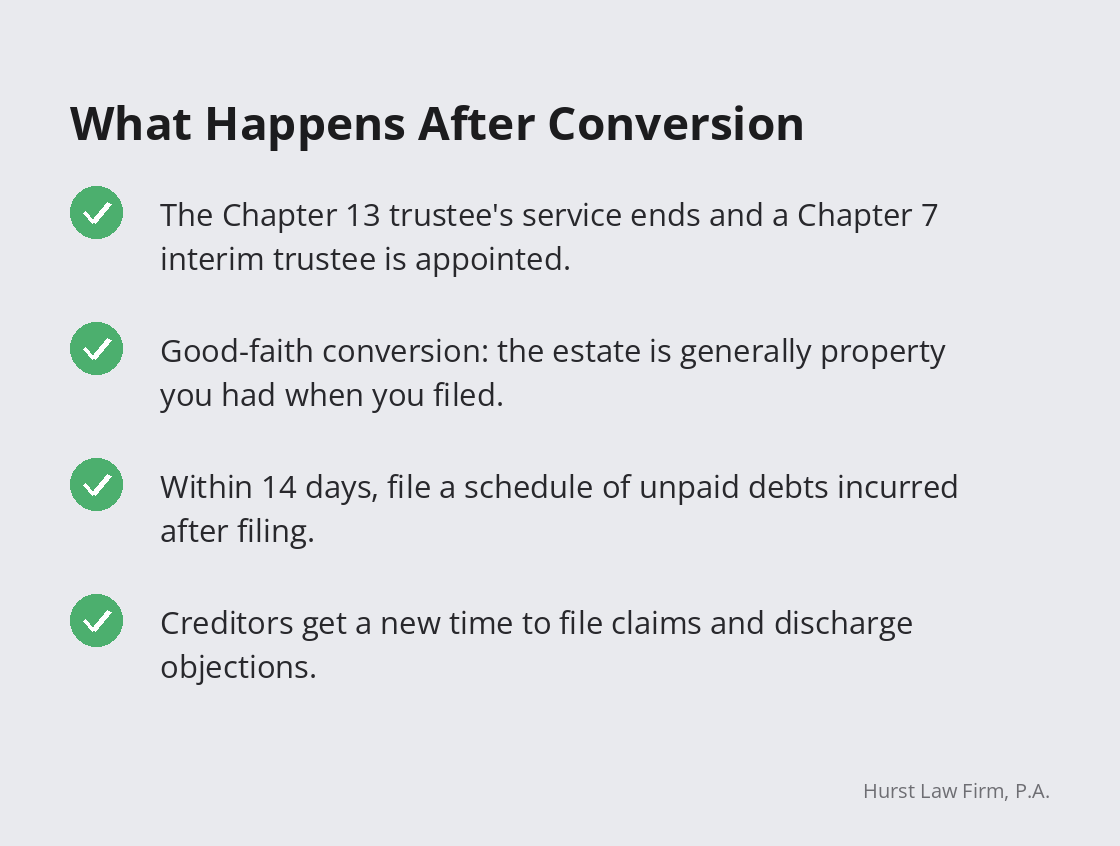
Section 348(e) provides that conversion terminates the service of any trustee serving in the case before conversion, which ends the Chapter 13 trustee’s role. Section 701(a) then requires the United States trustee, promptly after the order for relief, to appoint an interim trustee in the Chapter 7 case. Under Rule 1019(d), unless the court orders otherwise, the previously acting trustee must promptly turn over to the Chapter 7 trustee all documents and property of the estate in its possession or control.
What Property Belongs to the Estate
One of the most important protections for debtors who convert in good faith appears in Section 348(f)(1)(A). When a Chapter 13 case converts, property of the estate in the converted case consists of property of the estate, as of the date of filing of the petition, that remains in the possession of or is under the control of the debtor on the date of conversion. In other words, the focus generally stays on what you had when you first filed. Section 348(f)(2) changes that rule if the debtor converts in bad faith, in which case the estate consists of property of the estate as of the date of conversion.
Paperwork and New Deadlines
Rule 1019(a)(1) provides that, unless the court orders otherwise, the schedules and statements you filed in Chapter 13 are considered filed in the Chapter 7 case. You may still have new tasks. Under Rule 1019(e)(2), within 14 days after conversion the debtor must file a schedule of unpaid debts incurred after the petition was filed but before conversion. If a statement of intention is required, Rule 1019(a)(2) requires it within 30 days after the conversion order or before the first date set for the meeting of creditors, whichever is earlier. Rule 1019(b) also starts a new time for creditors to file claims, object to discharge, or ask the court to decide whether a specific debt can be discharged.
Because Chapter 7 relies heavily on the automatic stay and a relatively quick path to discharge, our article on how the automatic stay protects you is helpful background as you prepare for the converted case.
Mistakes to Avoid When Converting Chapter 13 to Chapter 7
Conversion can be a smart move, but it is not automatic relief from every problem. A few common mistakes can create new complications or cause you to give up options that might have served you better.
Converting Without Considering Alternatives
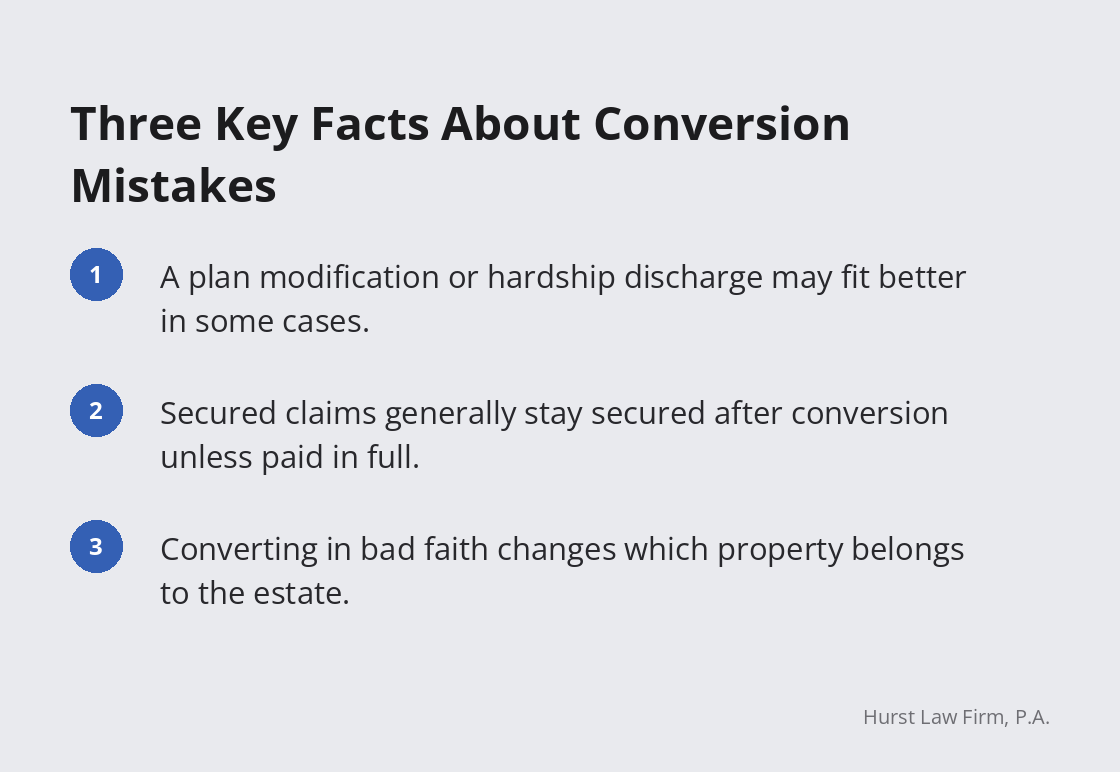
Conversion is not the only answer when a plan becomes difficult. In some cases, a plan can be modified under Section 1329 to reflect new circumstances. Section 1328(b) also allows the court, after notice and a hearing, to grant a hardship discharge to a debtor who has not completed plan payments, but only if the failure is due to circumstances for which the debtor should not justly be held accountable, each unsecured creditor has received at least what it would have been paid in a Chapter 7 liquidation as of the plan’s effective date, and modification of the plan is not practicable. Comparing these options with conversion helps you choose the path that protects the most.
Overlooking Secured Debts and Your Property
Many Chapter 13 filers chose that chapter to protect a home or vehicle, often by catching up on missed payments through the plan. Section 348(f)(1)(C) provides that after conversion from Chapter 13, a secured creditor’s claim generally remains secured by its collateral unless the claim has been paid in full, and that unless a prebankruptcy default has been fully cured under the plan at the time of conversion, the default keeps the effect given under nonbankruptcy law. Before converting, it is important to understand what will happen to your house, your car, and any other secured property.
Waiting Until the Case Is Already in Trouble
Some debtors wait until they are far behind on plan payments or a motion to dismiss has been filed. By then, the court may be asked to choose between conversion and dismissal under Section 1307(c), and dismissal can leave you without bankruptcy protection. Acting in good faith and early, with honest and complete information about your property and income, also helps you keep the protections of Section 348(f)(1) rather than facing the bad faith rule in Section 348(f)(2).
Final Thoughts
Choosing to convert Chapter 13 to Chapter 7 in Memphis TN can give you a fresh path when a repayment plan no longer matches your income or your life. Federal law protects your right to convert, keeps your original filing date in place for most purposes, and generally limits the estate to the property you had when you filed if you convert in good faith. At the same time, conversion brings a new trustee, new paperwork, and important questions about secured property that deserve careful thought.
The right decision depends on your income, your property, and how far along your plan is. A careful review of your options, including plan modification and a hardship discharge, makes it much more likely that the path you choose leads to the fresh start you filed for.
If your Chapter 13 plan has become difficult to keep up with, or you are wondering whether conversion makes sense for your situation, contact Hurst Law Firm, P.A. to speak with our team in Memphis, Tennessee. We will review your case, explain each option in plain language, and help you move forward with confidence.