


Bankruptcy doesn’t have to define your financial future. We at Hurst Law Firm, P.A. know that rebuilding credit after bankruptcy is possible, and it starts with understanding where you stand right now.
The path forward takes time, but it’s achievable with the right steps and local support in Memphis.
What Happens to Your Credit Score After Bankruptcy
Chapter 7 bankruptcy hits your credit score hard and fast. You can expect an approximate 200-point drop, which sounds devastating until you realize that this damage is temporary and improves measurably with the right actions. The bankruptcy stays on your credit report for 10 years, but here’s the reality that matters: the negative impact weakens significantly after the first two years when you demonstrate responsible behavior. Chapter 13 bankruptcy, which involves a repayment plan over three to five years, typically produces a smaller initial impact on your score because the court actively manages your debt repayment. However, the bankruptcy still appears on your report for seven years. The key difference is that Chapter 13 shows lenders you’re working through your debt rather than discharging it, which some creditors view more favorably during the rebuilding phase.
The First 24 Months Determine Your Recovery
The first 24 months after discharge are the most critical for recovery because lenders focus intensely on your recent payment history. A single late payment during this early period can erase months of progress, which is why consistency matters far more than the payment amount. On-time payments account for about 35 percent of your FICO score, so you must automate payments for all obligations. Set up autopay for at least the minimum on every account reporting to the bureaus, and keep a $200 to $300 checking buffer to avoid overdrafts that could trigger late fees. If you cannot make a payment, contact creditors before the 30-day mark; many offer hardship programs that protect your credit if you communicate early. Within the first month after discharge, open a secured credit card with a deposit of $500 to $2,500, which becomes your credit limit and reports to all three bureaus. After 12 to 18 months of perfect payments on this card, you can request an upgrade to an unsecured card and recover your deposit, signaling serious rebuilding to future lenders.
How Chapter 7 and Chapter 13 Recovery Timelines Differ
Chapter 7 generally wraps up in three to six months, which means you can start rebuilding sooner than Chapter 13 filers. Chapter 13 takes three to five years to complete the repayment plan, but this extended timeline has an advantage: you demonstrate consistent payment behavior over years, not months. Mortgage lenders typically require at least four years of post-discharge history for conventional loans, though FHA loans may be available sooner. This means Chapter 13 filers often build more seasoning by the time they reach discharge and qualify for a mortgage. For both chapters, the two biggest score levers after discharge are payment history and credit utilization. You should keep overall credit utilization below 10 percent, not the 30 percent threshold that works for those without recent bankruptcy. The balance reported at your statement close date matters more than your due-date balance, so you can lift your score 20 to 40 points in some cases by paying before the statement date.
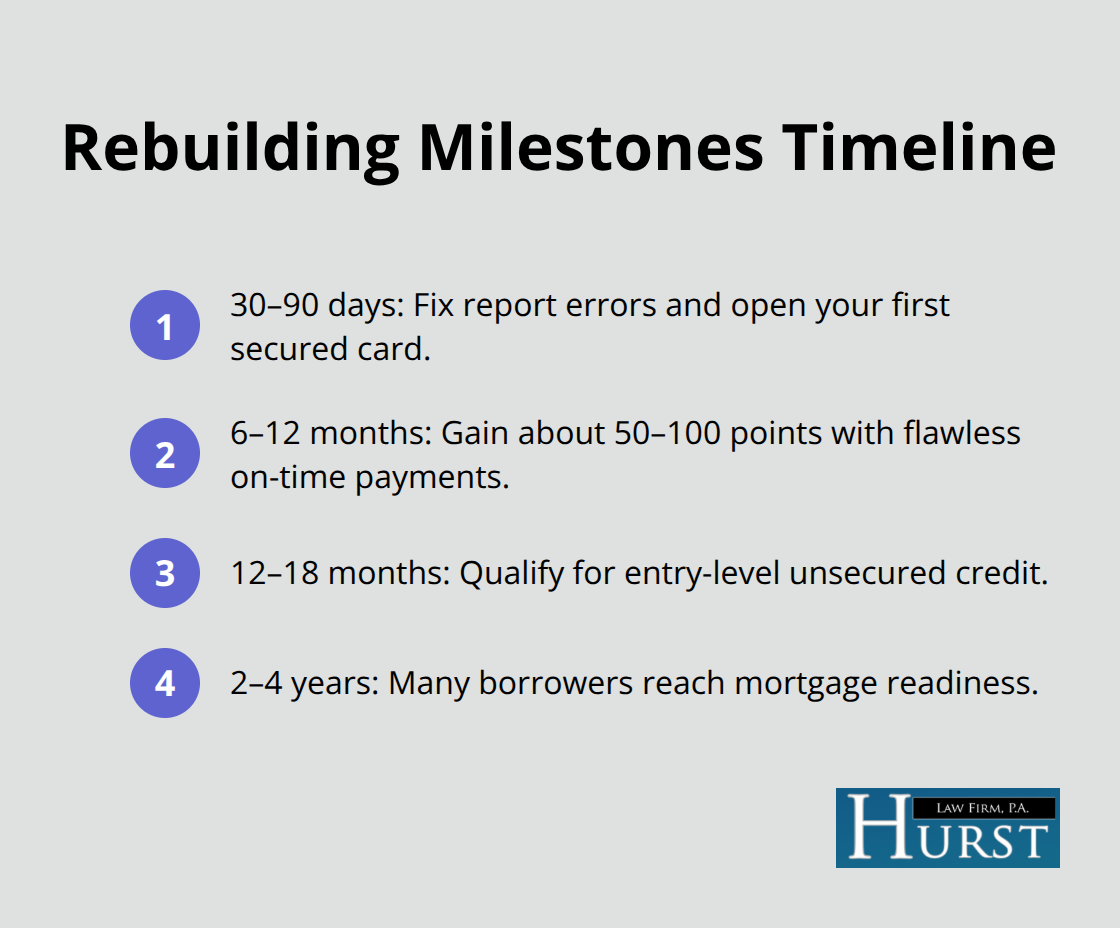
Realistic rebuilding milestones include 30 to 90 days to fix errors and open your first secured card, 6 to 12 months to gain 50 to 100 points with on-time payments, 12 to 18 months to qualify for basic unsecured credit, and 2 to 4 years to be mortgage-ready for many lenders. Missed payments, high utilization, and multiple credit inquiries in a short window stall your progress fastest.
What Comes Next in Your Rebuilding Journey
Your credit score recovery depends on the specific actions you take in the months ahead. The foundation you build now-through secured cards, on-time payments, and low utilization-directly shapes whether you qualify for better rates and terms when you apply for new credit. Understanding these timelines and score drivers prepares you to make informed decisions about the credit-building tools available to you in Memphis.
How to Build Credit the Right Way After Bankruptcy
Open a Secured Credit Card Within Your First Month
Secured credit cards represent your most powerful tool in the first year after discharge. A secured card requires a cash deposit-typically $500 to $2,500-which becomes your credit limit and reports to all three bureaus. This is not a gimmick; it proves to lenders that you can handle credit responsibly when your history says otherwise. Select a card with no annual fee and use it for one or two small purchases monthly, then pay the full balance immediately. After 12 to 18 months of perfect payments, you can request an upgrade to an unsecured card and recover your deposit. This upgrade signals to future lenders that your rebuilding efforts are serious.
Avoid payday loans, rent-to-own agreements, and guaranteed-approval cards with predatory rates-these trap you in cycles that damage your recovery. If a secured card feels too restrictive, consider a credit-builder loan from a credit union or community bank instead. These loans place the borrowed amount in a savings account while you make monthly payments; the credit union typically reports your on-time payments to all three bureaus, and you build savings simultaneously. You can locate federally insured credit unions near you through the National Credit Union Administration locator.
Automate Payments and Protect Your Payment History
On-time payments make up 35 percent of your FICO score, so you must automate every payment for at least the minimum on accounts that report to the bureaus. Set up autopay through your bank, and keep a $200 to $300 buffer in checking to prevent overdrafts that trigger late fees and derail your progress. If you anticipate a missed payment, contact the creditor before day 30; many lenders offer hardship programs that protect your credit if you communicate early instead of ignoring the bill.
For credit utilization, try staying below 10 percent of your total available credit-far stricter than the 30 percent rule for people without recent bankruptcy. The balance reported at your statement close date matters most, not your due-date balance, so paying before the statement date can boost your score 20 to 40 points in some cases. This timing strategy works because card issuers report the balance shown on your monthly statement, not what you owe on the due date.
Monitor Your Credit Reports and Fix Errors Immediately
Pull free credit reports from AnnualCreditReport.com quarterly during your first two years, then annually afterward, and dispute any errors immediately. Common mistakes include balances still showing as owed, accounts marked open or past due, and incorrect discharge dates. File written disputes with Equifax, Experian, and TransUnion at no cost, keep documentation, and recheck after dispute cycles complete.
Use Experian Boost to add on-time utility and phone payments to your Experian file at no cost, which accelerates your score recovery. This tool lets you claim credit for payments you already make, turning them into score-building activity without requiring new accounts.
Space New Credit Applications Strategically
Space new credit applications 3 to 6 months apart to avoid multiple hard inquiries in a short window, which can temporarily lower your score and raise red flags to lenders. Each application triggers a hard inquiry, and too many in quick succession signal financial desperation to creditors. When you do apply for new credit-whether an auto loan or another card-plan ahead so you can space requests appropriately and demonstrate that you’re rebuilding deliberately, not frantically seeking credit everywhere.
The credit-building tools and monitoring habits you establish now position you to access the local resources and professional guidance available in Memphis that can accelerate your recovery.
Memphis Resources That Actually Help You Rebuild
Local Credit Counseling Organizations Deliver Real Results
Memphis has legitimate credit counseling organizations that produce measurable outcomes, not empty promises. The Greater Memphis Financial Empowerment Center operates in your area and has helped clients reduce debt by over five million dollars while achieving an average credit score improvement of about 599 points. They offer free guidance on budgets, credit reports, and negotiating with creditors, plus webinars on establishing and improving credit. The National Foundation for Credit Counseling reports that participants on debt management plans pay off debt about 23 percent faster than those negotiating alone, which shows the concrete value of working with someone who understands your situation.
Avoid upfront-fee credit repair firms that promise quick fixes; these companies drain your money while you could access free or low-cost help from nonprofits. When selecting a counseling provider, verify they are US Trustee-approved to ensure the guidance counts toward any future bankruptcy requirements and meets federal standards. Contact your chosen provider early, especially if you anticipate filing, since pre-bankruptcy counseling in Tennessee is required before you can file and must be completed with an approved organization. The counseling certificate you receive must be filed with your bankruptcy petition, so planning ahead prevents delays when you need to move forward.
Monitor Your Credit Reports With Free Tools
Credit monitoring tools matter more after bankruptcy than they do for anyone else because errors on your report can suppress your score for months. Pull free reports quarterly during your first two years from AnnualCreditReport.com and review all three bureaus to catch mistakes before they compound. Use Equifax Core Credit for free monthly VantageScore updates, then pair this with annual full reports from Equifax, Experian, and TransUnion to maintain complete visibility. These tools cost nothing and take minimal time, yet they directly protect the progress you build through secured cards and on-time payments.
Find Local Lenders Who Understand Your Situation
Local lenders in Memphis often have more flexibility than national banks when evaluating borrowers with recent bankruptcy because they understand the local economy and community circumstances. Credit unions, in particular, frequently offer credit-builder loans and secured cards with reasonable terms to members rebuilding after bankruptcy. The National Credit Union Administration locator helps you find federally insured credit unions near you, and many will work with you even when traditional banks won’t. These institutions recognize that bankruptcy does not define your ability to manage credit responsibly moving forward.
Final Thoughts
Rebuilding credit after bankruptcy in Memphis takes time and consistency, but the process works when you execute the fundamentals. Pull your free credit reports this week, dispute any errors you find, and open a secured card within your first month after discharge. Set up autopay for all bills, contact the Greater Memphis Financial Empowerment Center if you need guidance, and monitor your progress monthly through free tools.
Your timeline depends on which chapter you filed-Chapter 7 filers start rebuilding within three to six months of discharge, while Chapter 13 filers build seasoning throughout their repayment plan. Expect meaningful score improvements within 6 to 12 months if you maintain on-time payments, keep utilization low, and fix credit report errors. Mortgage readiness typically arrives between two and four years post-discharge, though FHA loans may be available sooner.
If you have questions about your discharge, remaining obligations, or whether bankruptcy is the right path forward, Hurst Law Firm, P.A. offers a free consultation. The firm has served the Memphis community since 1997 and understands the specific challenges you face. Your fresh start is possible-take the first step today.