


Wage garnishment takes money directly from your paycheck before you ever see it. If this is happening to you, you need relief fast-and the good news is that stopping wage garnishment online is possible.
We at Hurst Law Firm, P.A. know that garnishment creates immediate financial hardship. Bankruptcy offers a powerful legal tool that can halt garnishment orders and give you a fresh start.
How Wage Garnishment Works and What Protects You
Wage garnishment happens when a creditor wins a court judgment against you and then files a garnishment order with the court. Your employer becomes legally required to withhold money from your paycheck and send it to the court, which forwards the funds to the creditor. According to Tennessee wage garnishment statute, creditors can take up to 25% of your disposable income or the amount by which your weekly earnings exceed 30 times the federal minimum wage, whichever is less. The garnishment order remains valid for six months and can be renewed repeatedly until the debt is paid in full.
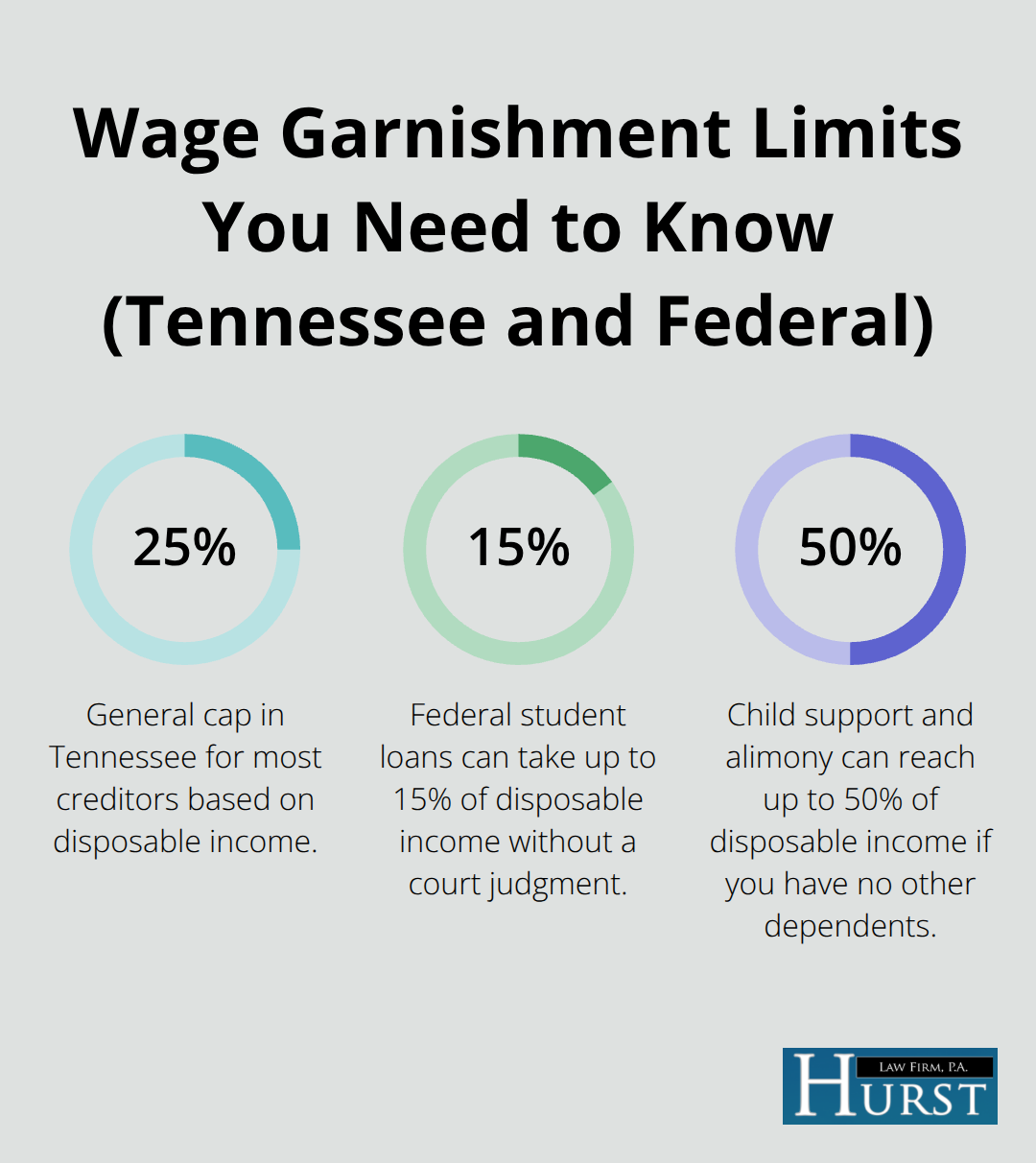
Most garnishments stem from credit card judgments, medical debt, and personal loans, though federal student loans can take up to 15% of disposable income without requiring a court judgment first. The IRS and Tennessee Department of Revenue also have the power to garnish wages without court action, and child support and alimony creditors can take up to 50% of your disposable income if you have no other dependents.
Federal protections exist but have limits
Federal law shields certain income types from garnishment, including Social Security benefits, SSI, VA benefits, and unemployment compensation. However, these protections apply only to the income source itself, not to funds already deposited into your bank account. Tennessee law provides an additional $2.50 per week exemption for each qualifying child under 16. When you receive a garnishment notice, you have exactly 10 days to file a Claim of Exemption if you cannot meet basic needs like housing and utilities. This exemption claim requires completing two forms and providing documentation of your monthly expenses to prove that continuing garnishment would prevent you from paying for essentials. If the creditor does not respond within 10 days, the court grants your exemption claim automatically. Many Memphis residents find that wage garnishment makes it impossible to cover rent, utilities, and groceries, which is why immediate action matters.
Why garnishment happens faster than you expect
Garnishment typically starts only after creditors sue you, win a judgment, and obtain a garnishment order from the court. Once the order is filed, your employer must begin withholding the correct amount from each paycheck within days. The automatic stay triggered by filing for bankruptcy in the Western District of Tennessee stops this process immediately, often on the same day you file. Chapter 7 bankruptcy eliminates most unsecured debts, including the underlying judgments that created garnishment orders, while Chapter 13 bankruptcy pauses garnishment for the duration of your three- to five-year repayment plan. Acting quickly after receiving a garnishment notice increases your chances of stopping or reducing the garnishment sooner, and bankruptcy provides faster relief than negotiating with creditors or fighting exemption claims. Understanding these timelines helps you recognize that filing for bankruptcy protection online offers the most direct path to stopping wage garnishment in Memphis TN.
How to File for Bankruptcy Protection Online in Memphis TN
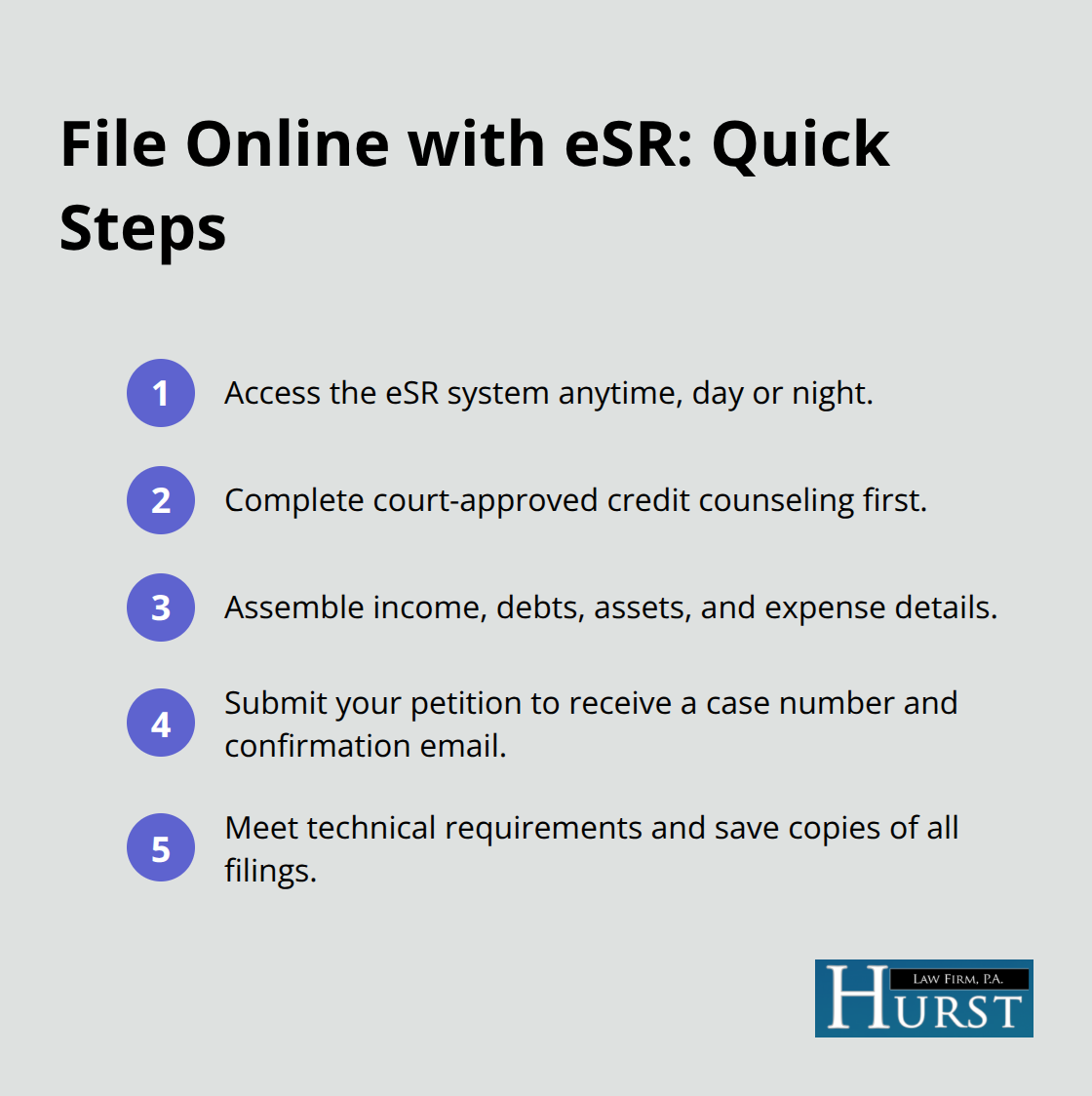
Access the eSR System 24/7
The U.S. Bankruptcy Court for the Western District of Tennessee operates the eSR system, which lets you file a Chapter 7 or Chapter 13 petition from any internet-enabled device without downloading software. You pay only the required $338 filing fee, or you can arrange installments or request a fee waiver if you qualify. The system runs 24/7, so you can start your petition whenever it fits your schedule. No attorney or bankruptcy petition preparer can use eSR-it exists exclusively for self-represented debtors who want to file their own cases.
Prepare Your Documents and Complete Credit Counseling
Before you log into eSR, obtain credit counseling from a court-approved agency, as the law requires this step. Gather all financial documents including debts, property, income, and expense information. You need this information to answer questions accurately when you create your unique eSR login and submit your petition. The system walks you through each section, asking about your property, income, and debts. You have up to 45 days from the moment you start eSR to complete your filing; incomplete cases may be deleted after this deadline.
Submit Your Petition and Receive Your Case Number
Once you submit your petition electronically, the court reviews all required documents. When the court receives everything, you will receive a case number and a confirmation email with next steps. The automatic stay takes effect immediately upon filing, stopping wage garnishment on the same day in most cases. This means your employer must stop withholding wages within 24 hours, providing relief that negotiating with creditors or filing exemption claims cannot match.
Meet Technical Requirements and Handle Emergencies
Your computer or tablet needs Adobe Reader version 8 or higher, an active internet connection, and a current browser such as Mozilla Firefox, Microsoft Edge, Chrome, or Safari. Disable pop-up blockers and print or save copies of all filings for your records. If you face foreclosure or repossession alongside garnishment, contact the Memphis divisional office at 901-328-3505 or the Jackson office at 731-421-9365 for procedural guidance and access to forms for expedited filing.
Understand the Risks of Filing Without Professional Help
Filing without professional guidance carries serious risks, including potential case dismissal or failure to properly claim exemptions that protect your assets. The bankruptcy process involves complex rules about what debts you can eliminate, which assets you can keep, and how to structure your repayment plan if you choose Chapter 13. These decisions have long-term financial consequences that affect your credit and your ability to borrow money for years. Hurst Law Firm, P.A., led by attorney Herbert Hurst and serving Memphis since 1997, helps residents navigate Chapter 7 and Chapter 13 filings to stop wage garnishment and protect your financial fresh start. Understanding whether Chapter 7 or Chapter 13 fits your situation requires examining your income, debts, and assets-a step that determines which bankruptcy path actually stops your garnishment and gives you the relief you need.
Which Bankruptcy Chapter Actually Stops Your Garnishment
Chapter 7 Delivers Immediate Relief
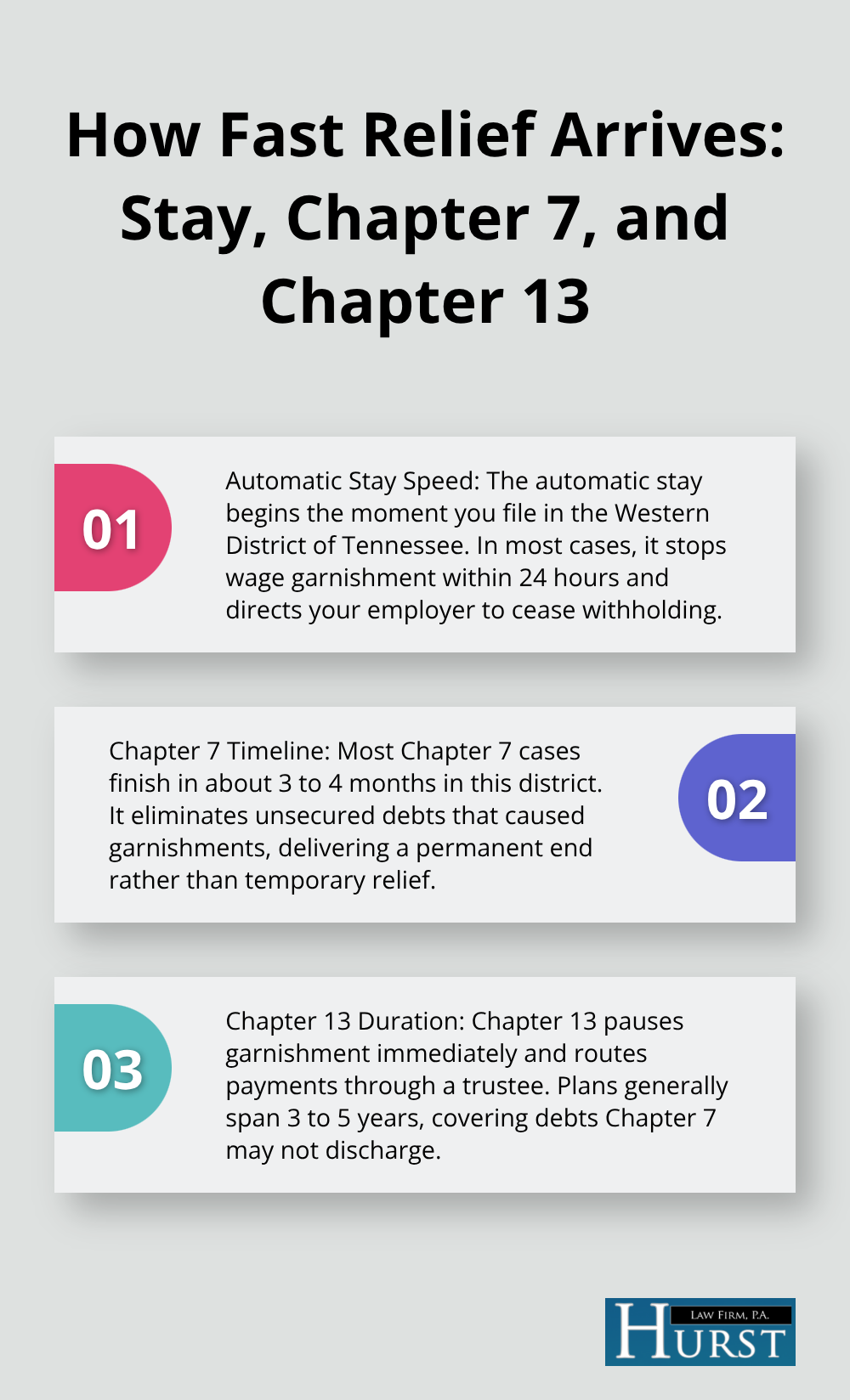
Chapter 7 bankruptcy halts wage garnishment the moment you file with the U.S. Bankruptcy Court for the Western District of Tennessee. According to the United States Bankruptcy Court Western District of Tennessee, the automatic stay takes effect on the same day as filing, stopping wage garnishment within 24 hours in most cases. Your employer must cease withholding wages immediately once notified of the bankruptcy filing. Chapter 7 works by eliminating unsecured debts entirely, which means the underlying credit card judgments, medical bills, and personal loans that triggered the garnishment orders disappear completely. Cases in the Western District of Tennessee typically conclude within 3 to 4 months, giving you a permanent end to garnishment rather than temporary relief.
Cost and Timeline for Chapter 7
The $338 filing fee represents your primary court cost, though credit counseling courses required before and after filing add minimal expense. You attend a single meeting with the trustee roughly 30 to 40 days after filing, then receive your discharge about 60 days later. This timeline matters because every week you delay costs you roughly 25% of your disposable income under Tennessee wage garnishment statute-money that disappears while you wait. Filing for bankruptcy in Memphis TN through eSR takes hours rather than weeks, and the automatic stay protection begins immediately rather than waiting for court hearings.
Chapter 13 Stops Garnishment Through Reorganization
Chapter 13 bankruptcy takes a different approach but stops garnishment just as fast. The automatic stay activates immediately upon filing, pausing all wage garnishment regardless of which creditor holds the judgment. Chapter 13 creates a 3 to 5 year repayment plan where you pay creditors through the bankruptcy trustee instead of through direct garnishment orders. This strategy works especially well if you owe back taxes, face mortgage arrears, or have debts that Chapter 7 cannot eliminate (like recent tax obligations or most student loans). The garnishment pause continues for the entire length of your repayment plan as long as you make monthly plan payments on time.
When Chapter 13 Makes More Sense
Your disposable income goes toward the plan rather than being scattered across multiple garnishment orders, giving you actual control over which debts receive payment. Higher-income filers often qualify only for Chapter 13 after the means test comparison against Tennessee median income, but this limitation becomes an advantage when you need to reorganize rather than liquidate. Both chapters stop garnishment faster than filing exemption claims, negotiating settlements, or challenging judgments separately.
Final Thoughts
Bankruptcy stands out as the fastest way to stop wage garnishment because it triggers an automatic stay that halts collection within 24 hours of filing. The automatic stay takes effect immediately upon filing your petition, stopping your employer from withholding wages on the same day you submit your case. Chapter 7 eliminates the underlying debts that created your garnishment orders, while Chapter 13 reorganizes your payments into a manageable plan that pauses garnishment for the entire repayment period.
If you received a garnishment notice, you have 10 days to file a Claim of Exemption, but bankruptcy offers faster protection that stops wage garnishment online without waiting weeks for court hearings. Gather your financial documents, complete credit counseling through a court-approved agency, and determine whether Chapter 7 or Chapter 13 fits your income and debts. Contact the U.S. Bankruptcy Court for the Western District of Tennessee at 901-328-3505 in Memphis or 731-421-9365 in Jackson if you need procedural guidance.
We at Hurst Law Firm, P.A. help Memphis families stop wage garnishment through Chapter 7 and Chapter 13 filings. Led by attorney Herbert Hurst and serving the community since 1997, we understand how garnishment disrupts your ability to pay for essentials. Visit Hurst Law Firm, P.A. to discuss your situation and learn which bankruptcy path protects your financial future.