

Wage garnishment in Tennessee takes money directly from your paycheck before you ever see it. This happens when a creditor wins a court judgment and the court orders your employer to withhold a portion of your wages.
We at Hurst Law Firm, P.A. know that wage garnishment creates real financial hardship. The good news is you have options to fight back, and some solutions work faster than others.
Understanding Tennessee’s Wage Garnishment Process
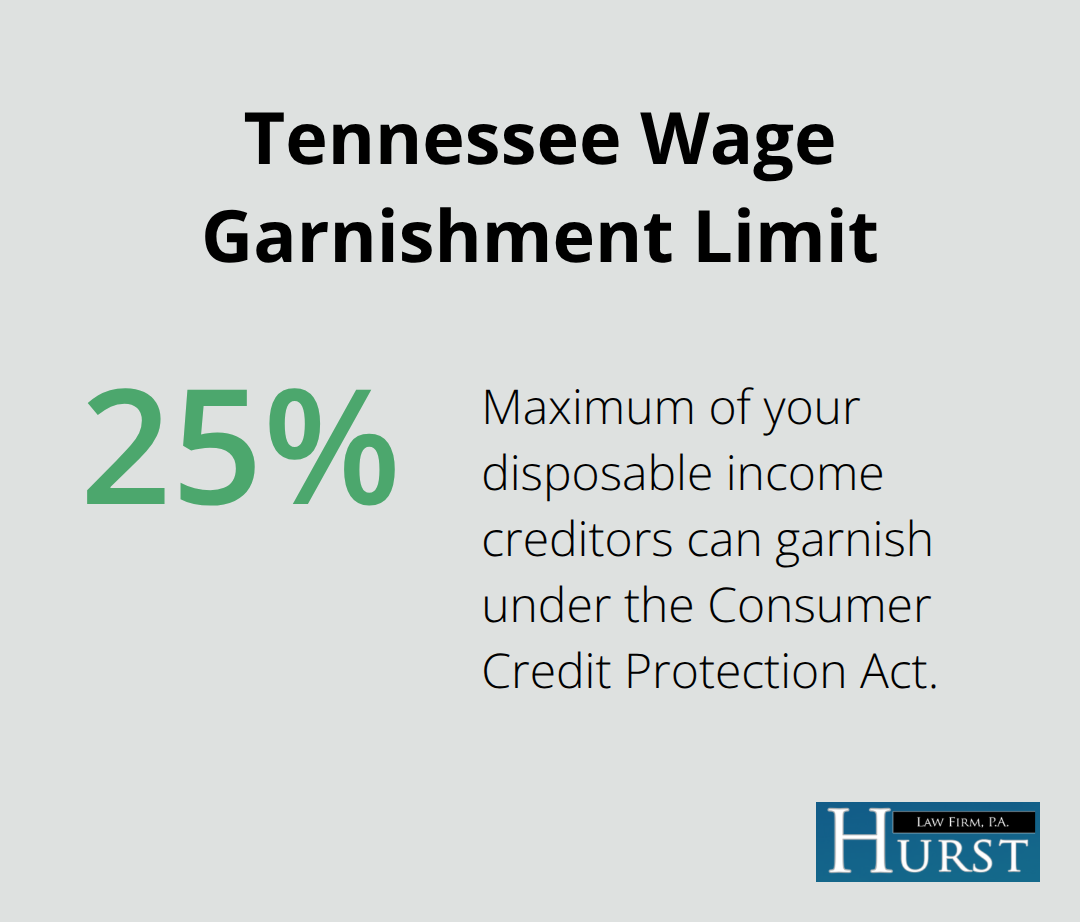
Wage garnishment in Tennessee operates through a straightforward legal procedure that puts your paycheck at risk. A creditor files a lawsuit against you, wins a judgment in court, and then requests that your employer withhold money from your wages. Tennessee law allows creditors to garnish up to 25 percent of your disposable income, whichever is less, according to federal wage garnishment limits under the Consumer Credit Protection Act. Disposable income means what remains after legally required deductions like taxes and Social Security. Your employer must comply with the garnishment order or face legal consequences.
The court sends the garnishment order directly to your employer’s payroll department, and the money flows to the creditor through the court system. This process typically takes weeks from the time a creditor files for garnishment until money actually stops coming from your paycheck.
What debts trigger garnishment
Unsecured debts like credit card balances, medical bills, and personal loans lead to wage garnishment most often in Tennessee. A creditor must first win a court judgment before they can garnish your wages-they cannot simply take action without going through the courts. Child support and tax debts operate differently and can lead to garnishment without a judgment, making these obligations particularly aggressive. Federal student loans have specific rules about how much can be taken if you default.
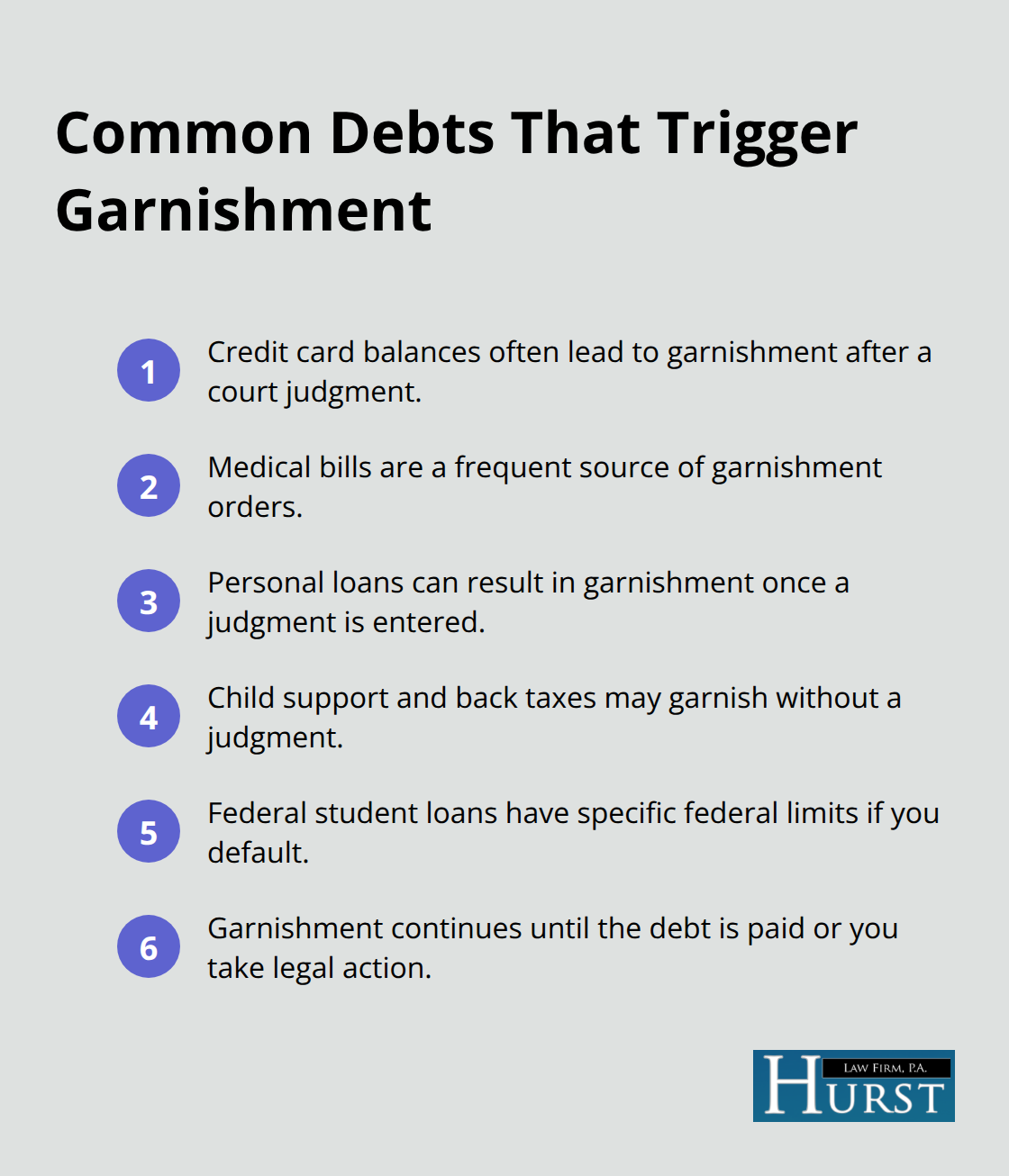
Most people do not realize garnishment is coming until their employer notifies them that the court order has arrived. Once garnishment starts, it continues until the debt is paid in full or until you take action to stop it.
Why waiting makes the problem worse
Each month of garnishment removes 25 percent of your disposable income, which compounds your financial crisis. If you earn $2,000 monthly in disposable income, a garnishment takes $500 every paycheck. Over a year, that amounts to $6,000 leaving your account while your other bills pile up. Many people facing garnishment fall behind on rent, utilities, and food expenses because the garnishment makes their already tight budget impossible. Additional creditors often obtain judgments and stack their own garnishments on top of the first one. Tennessee law does not prevent multiple garnishments, which means your paycheck can shrink to near nothing if multiple creditors act (and they frequently do).
How bankruptcy stops the cycle
The automatic stay in bankruptcy halts wage garnishment immediately when you file. Chapter 7 bankruptcy eliminates many unsecured debts that trigger garnishment in the first place, while Chapter 13 bankruptcy restructures your debts into a manageable repayment plan. Both options provide relief that negotiation or court objections cannot match. Understanding how these bankruptcy solutions work gives you a clear path forward from the financial trap that wage garnishment creates.
Bankruptcy Stops Wage Garnishment Fast
How Chapter 7 Halts Garnishment Immediately
Filing for Chapter 7 bankruptcy triggers the automatic stay, a court order that halts wage garnishment the moment your case is filed with the court, according to the United States Courts. This stops your employer from sending garnished wages to creditors immediately, even though the bankruptcy paperwork is still being processed. You do not wait months for relief-the garnishment pause happens within days. Chapter 7 then eliminates most unsecured debts like credit cards and medical bills that caused the garnishment in the first place, meaning once your case closes in roughly three to six months, those debts vanish and garnishment cannot resume.
The automatic stay is powerful because it works regardless of how many creditors have stacked garnishments on your paycheck. If three different creditors are each taking money, all three stop when you file. This immediate relief matters enormously when you are barely making rent because your paycheck shrinks every two weeks.
Why Chapter 13 Works for Higher Earners
Chapter 13 bankruptcy works differently but solves garnishment just as effectively for people who earn steady income. Instead of eliminating debts, Chapter 13 creates a three to five year court-approved repayment plan where you pay creditors through the bankruptcy trustee, according to the United States Courts. The automatic stay stops garnishment the same day you file, and your wages go into the repayment plan instead of directly to creditors.
This approach works better if you have significant assets you want to keep or income that is too high to qualify for Chapter 7. The means test, which uses a 180-day lookback of your earnings, determines whether Chapter 7 is available to you, according to the United States Courts. If your income exceeds Tennessee’s state median, Chapter 13 becomes your practical path.
Choosing Between Chapter 7 and Chapter 13
The key difference is Chapter 7 erases debts while Chapter 13 reorganizes them, yet both stop garnishment immediately and give you breathing room to rebuild. Your specific financial situation determines which option makes sense for you. Chapter 7 works best if you have limited assets and income below the state median. Chapter 13 protects your assets and accommodates higher income levels through a structured repayment plan. Both paths eliminate the immediate threat of wage garnishment and prevent additional creditors from stacking more garnishments on your paycheck. Understanding which option fits your circumstances requires examining your income, assets, and the types of debts you owe. The next section explores other options available to you if bankruptcy does not align with your goals or if you want to understand all possible paths before making a decision.
Alternatives Before Bankruptcy
Negotiating Payment Plans with Creditors
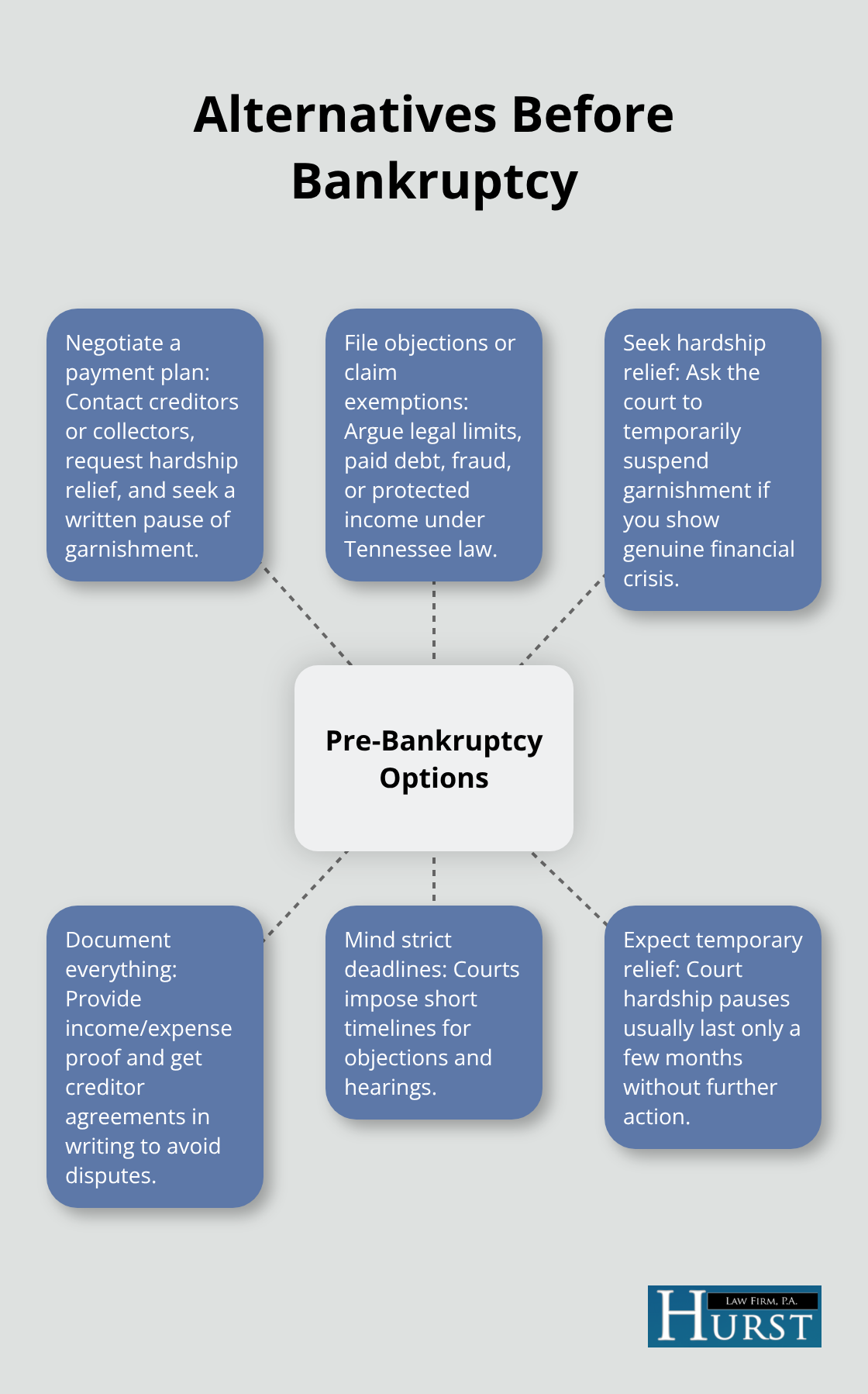
Negotiating directly with creditors before filing bankruptcy sometimes stops garnishment, but success depends heavily on your creditor’s willingness to work with you. Most major credit card companies and debt collection agencies maintain hardship programs that allow them to pause garnishment in exchange for a payment plan, though they rarely volunteer this information. You must contact the creditor or collection agency in writing and explain your financial situation clearly, including your monthly income and expenses. Request a settlement or payment arrangement that stops the garnishment immediately. This approach works best when you can demonstrate you have some ability to pay, even if it is small.
However, creditors have no legal obligation to accept your proposal, and many simply ignore hardship requests entirely. The Federal Trade Commission reports that debt collection agencies receive millions of complaints annually, with many consumers reporting that negotiation attempts produced no results. If a creditor agrees to pause garnishment, obtain the agreement in writing before making any payments, because verbal promises vanish quickly when disputes arise.
Filing Objections and Claiming Exemptions
Filing objections to garnishment in court presents another option, though it requires understanding specific Tennessee procedures and having valid grounds for your objection. You can claim that the garnishment amount exceeds legal limits, that the debt was already paid, that the judgment was obtained fraudulently, or that you qualify for state income exemptions that protect your wages. Tennessee law provides certain income protections under state exemptions, and if your income falls below specific thresholds or consists primarily of protected sources like Social Security or disability payments, garnishment may be limited or stopped entirely.
Filing an objection requires submitting paperwork to the court that issued the garnishment order, and you must act quickly because most states impose strict deadlines. Many people miss these deadlines simply because they do not know objections exist. The court then schedules a hearing where you present your case to a judge. This path demands careful attention to procedural rules and often benefits from legal guidance to succeed.
Seeking Hardship Relief Through the Court
Hardship relief through the court remains an option in some jurisdictions, where judges can temporarily suspend garnishment if you demonstrate genuine financial crisis, though Tennessee courts vary in how readily they grant such relief. This temporary relief may buy you time to explore other solutions, but it does not address the underlying debt problem. Courts typically require detailed documentation of your expenses and income to evaluate hardship claims, and approval is never guaranteed. The relief, when granted, usually lasts only a few months before garnishment resumes unless you take additional action.
These alternatives offer some hope, but they rarely provide the permanent, comprehensive relief that bankruptcy delivers automatically.
Final Thoughts
Wage garnishment in Tennessee creates an urgent financial crisis that demands action. Negotiating with creditors and filing court objections offer limited relief and require cooperation that happens inconsistently. Hardship relief through the court provides only temporary breathing room before garnishment resumes.
Bankruptcy delivers permanent relief that other options cannot match. Chapter 7 eliminates unsecured debts entirely, stopping garnishment within days through the automatic stay and preventing it from ever resuming once your case closes. Chapter 13 restructures your debts into a manageable repayment plan while the automatic stay halts garnishment immediately, protecting your income and allowing you to rebuild.
If wage garnishment threatens your financial stability in Memphis, we at Hurst Law Firm, P.A. can evaluate your situation and explain which bankruptcy path fits your circumstances. Contact us today to discuss your options and take control of your financial future.