


Bankruptcy discharge marks a turning point, not an ending. The moment your debts are eliminated, you can begin rebuilding your credit and moving toward financial stability.
We at Hurst Law Firm, P.A. know that many people feel lost after discharge, unsure where to start. This guide walks you through concrete steps to rebuild credit after discharge and reclaim your financial future.
Understanding Your Credit After Bankruptcy Discharge
How Your Credit Score Changes After Discharge
Bankruptcy discharge eliminates your debts, but it doesn’t erase your credit history overnight. The discharge itself appears on your credit report and initially lowers your credit score. Most people see a drop of 130 to 200 points immediately after discharge, according to data from the Consumer Financial Protection Bureau. This hit is significant, but it’s temporary. Your credit score starts recovering the moment you make on-time payments and reduce your overall debt levels. The Federal Trade Commission reports that people who actively rebuild after discharge can see their scores improve by 100 points or more within 12 to 18 months. The key difference between those who recover quickly and those who don’t is intentional action, not time alone. Passive waiting won’t move your score upward.
Understanding Your Financial Record After Discharge
Discharge means your debts are legally eliminated, but the bankruptcy filing itself stays on your credit report for seven to ten years, depending on whether you filed Chapter 7 or Chapter 13. Chapter 7 bankruptcy remains for ten years from the filing date, while Chapter 13 stays for seven years from the completion date. This doesn’t mean your creditworthiness is permanently damaged. Credit bureaus and lenders recognize that people move forward after bankruptcy. A bankruptcy filing from five years ago carries far less weight than one from last month. Lenders increasingly focus on your post-discharge behavior rather than the bankruptcy itself. If you make consistent on-time payments since discharge, that positive history counterbalances the older bankruptcy notation. The narrative shifts from financial failure to financial recovery, which is exactly what rebuilding is about. Account information for debts discharged under either chapter may be included in credit reports for seven years after the accounts go inactive.
The Timeline for Credit Recovery
Your credit recovery follows a predictable pattern if you stay disciplined. Within the first three to six months after discharge, your score stabilizes as the initial shock wears off. Between months six and twelve, active rebuilding strategies like secured credit cards and perfect payment records start showing measurable improvements, often gaining 50 to 75 points.
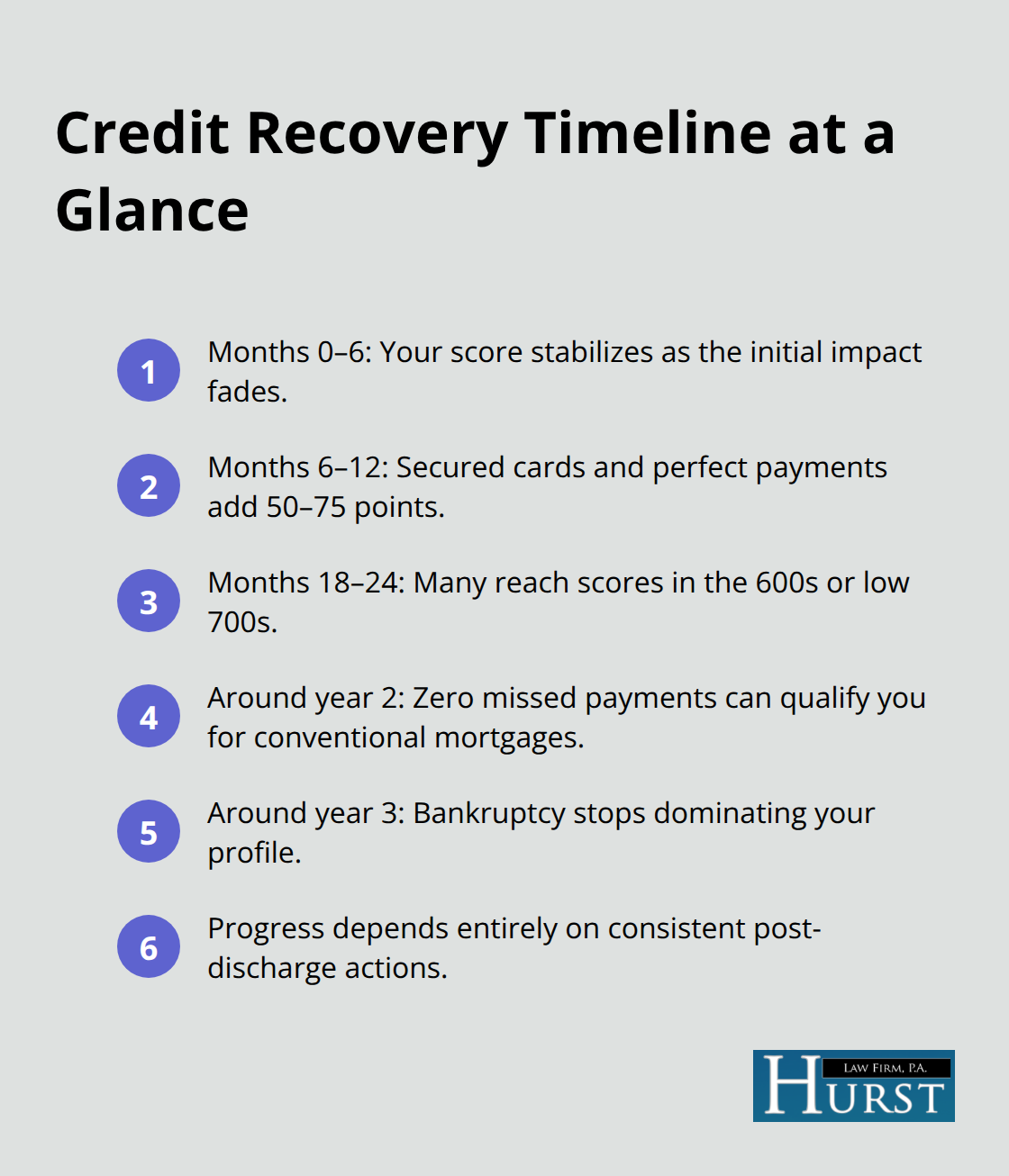
Within 18 to 24 months, many people reach credit scores in the 600s or low 700s, which opens access to better loan terms and credit products. Research from Experian shows that individuals who maintain zero missed payments for two years post-discharge can qualify for conventional mortgages with reasonable interest rates. The timeline accelerates further after three years, when the bankruptcy stops dominating your credit profile. This recovery timeline depends entirely on your actions post-discharge, not on how severe your bankruptcy was.
Your credit doesn’t rebuild itself-you rebuild it through deliberate financial choices. The next section covers the practical steps that actually move your score forward and position you for long-term financial stability.
Rebuild Your Credit Actively
Use Secured Credit Cards to Prove Your Creditworthiness
Secured credit cards are your fastest tool for demonstrating creditworthiness after discharge. A secured card requires a cash deposit, typically between $500 and $2,500, which becomes your credit limit. This deposit protects the card issuer, so they approve you despite your bankruptcy history. You charge small purchases monthly and pay the full balance before the due date every single month.
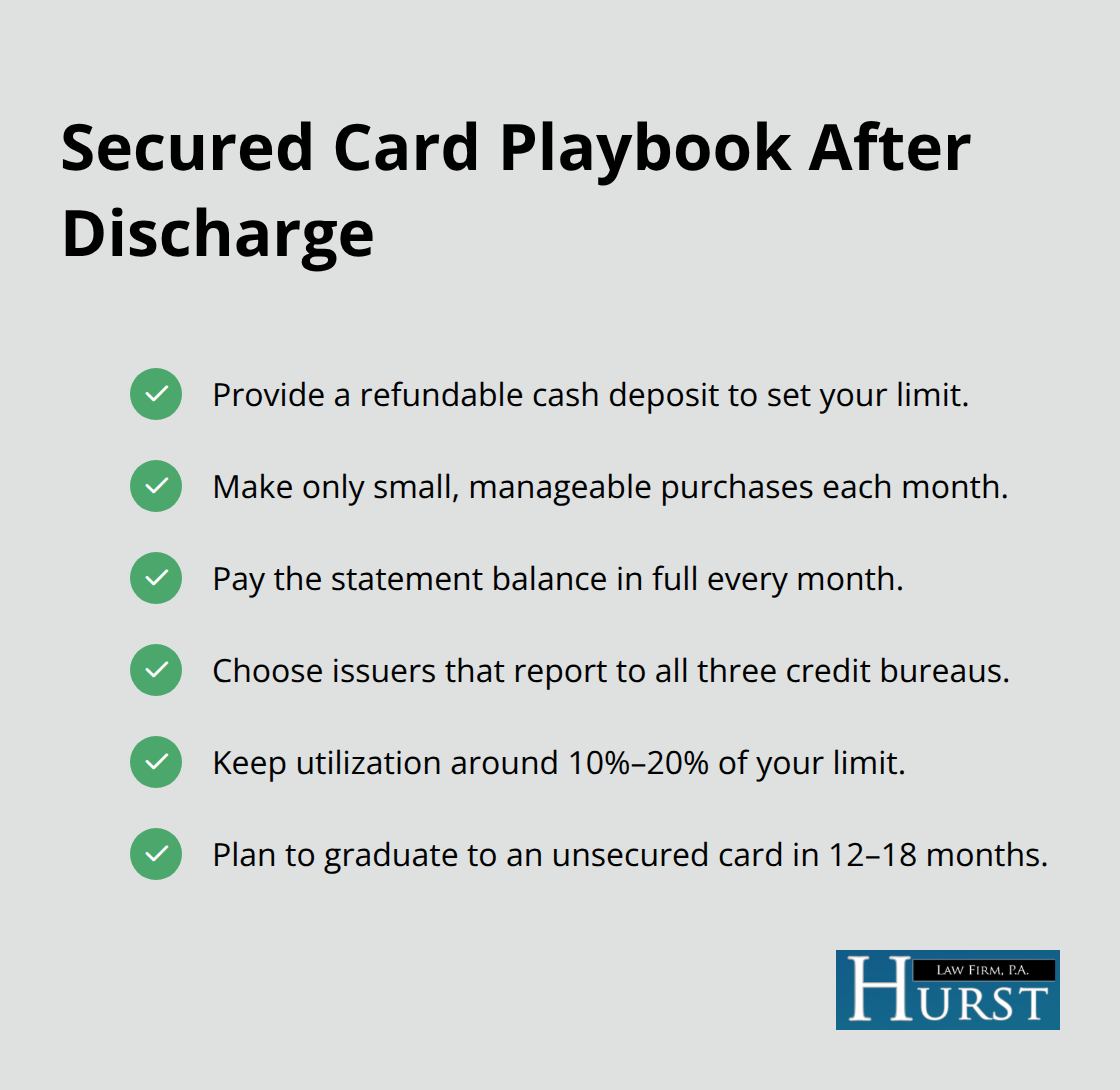
Capital One, Discover, and U.S. Bank all offer secured cards that report to all three credit bureaus. After 12 to 18 months of perfect payments, most issuers graduate you to an unsecured card and return your deposit.
The Federal Reserve found that people using secured cards strategically reach credit scores of 650 or higher within two years. Don’t make the mistake of maxing out a secured card or carrying a balance-that defeats the entire purpose. Try charging roughly 10 to 20 percent of your credit limit and pay it off completely. This low utilization ratio signals financial responsibility to credit bureaus.
Make Every Payment On Time Without Exception
Perfect payment history matters more than anything else after bankruptcy. A single late payment sets your recovery back months. You should set up automatic payments for every bill through your bank to eliminate the possibility of forgetting. Equifax research shows that individuals with no missed payments for 24 consecutive months see their credit scores jump 100 points faster than those with even one late payment.
This includes utilities, rent, phone bills, insurance premiums, and any credit accounts. Many people ignore utility and phone bills because they don’t report to credit bureaus, but late payments can trigger collection accounts that destroy your score. Your payment discipline directly determines how quickly your score climbs.
Identify and Fix Errors on Your Credit Report
Your credit report needs scrutiny because errors are common after bankruptcy. You can pull your free annual report from all three bureaus at annualcreditreport.com. Look for accounts that should have been discharged still appearing as active or accounts listed twice. File disputes directly with the credit bureaus for any errors.
The FTC reports that roughly one in four people find errors on their credit reports, and removing those errors can raise scores by 25 to 100 points. Inaccuracies cost you money in higher interest rates and rejections for credit, so you must dispute them immediately. This step alone can accelerate your recovery timeline significantly.
The combination of secured cards, perfect payments, and error correction creates momentum. Your credit profile transforms from damaged to recovering, and lenders notice this shift. The next section covers the resources and support available to you as you move forward with your financial recovery.
Getting Help and Tracking Progress After Discharge
Credit Counseling Services in Memphis
Credit counseling in Memphis provides structured guidance when rebuilding feels overwhelming. The National Foundation for Credit Counseling certifies counselors who work specifically with post-bankruptcy clients, and Memphis has several approved agencies offering services. These counselors review your budget, help you prioritize debt repayment if you filed Chapter 13, and teach you spending habits that prevent future financial crisis.
The Consumer Financial Protection Bureau reports that people who complete credit counseling sessions improve their credit scores 15 to 25 points faster than those who skip this step, mainly because counselors catch mistakes in your financial strategy before they damage your score further. Counseling typically costs $100 to $300 for a complete session, and many agencies offer sliding scale fees based on income. Legitimate nonprofit counselors work for your benefit, not their commission-avoid debt settlement companies that charge thousands upfront and often worsen your situation.
Monitor Your Credit with the Right Tools
Tracking your credit progress requires consistent monitoring and the right tools. Pull your credit reports quarterly from annualcreditreport.com rather than waiting for your annual free report, because you can stagger pulls across the three bureaus to monitor changes throughout the year. Credit monitoring services like Credit Karma and Experian’s free monitoring show your score changes weekly and alert you to new accounts or inquiries, catching identity theft or errors immediately.
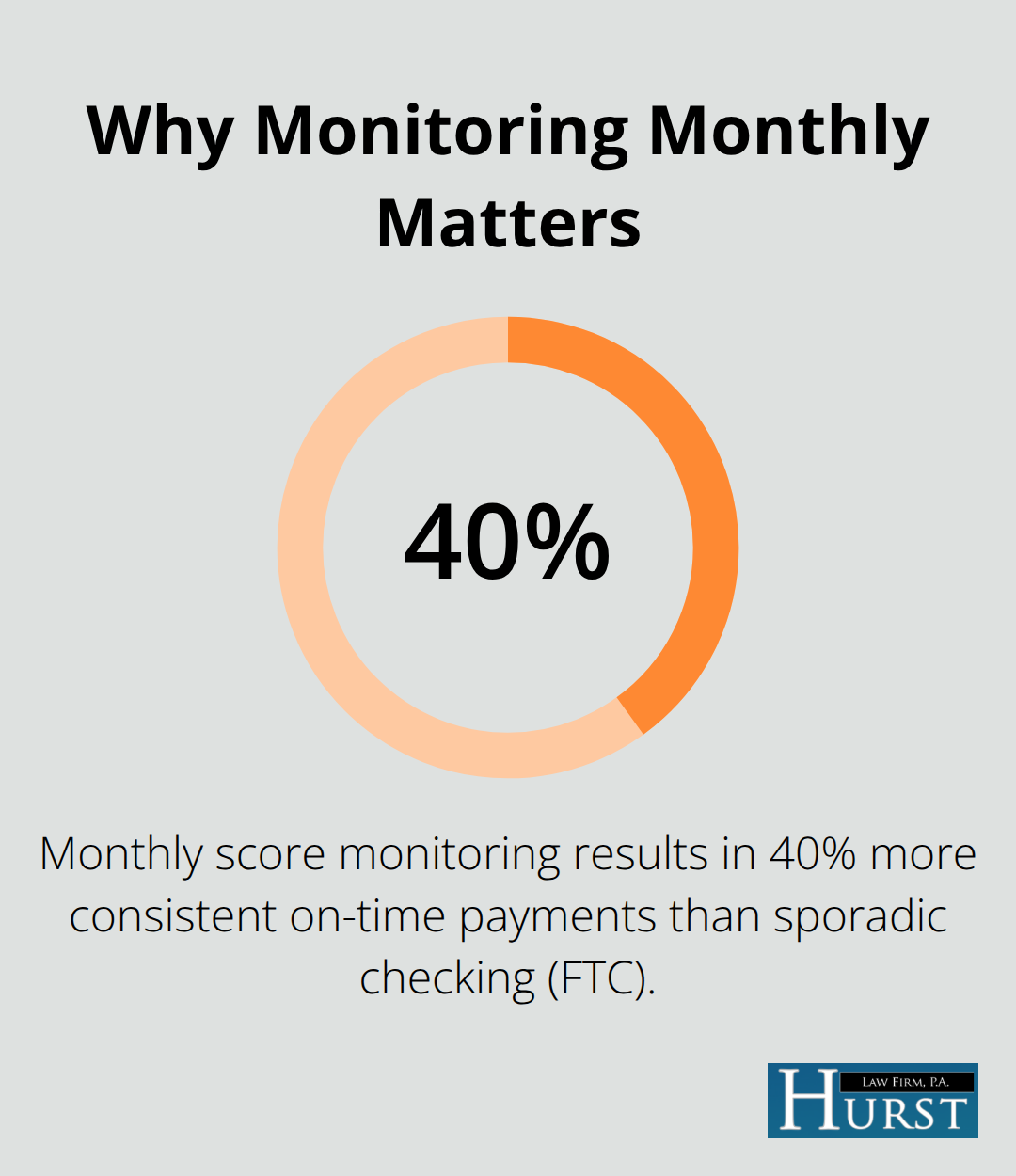
NerdWallet’s credit monitoring shows how specific actions impact your score, so you see the actual results of your secured card payments or error disputes. The Federal Trade Commission found that people who monitor their scores monthly stay disciplined with on-time payments 40 percent more consistently than those who check sporadically. This accountability keeps you focused on the actions that matter most.
Support Through Your Bankruptcy Recovery
We at Hurst Law Firm, P.A. have assisted the Memphis community since 1997 and continue supporting clients after discharge by connecting you with vetted counseling services and helping you understand how your specific bankruptcy type affects your credit timeline. Chapter 7 and Chapter 13 discharges follow different credit recovery paths, and we help you know exactly what to expect during your rebuilding years.
Final Thoughts
Your financial recovery after bankruptcy discharge is real and achievable. The steps you’ve learned-securing a credit card, maintaining perfect payments, and monitoring your credit report-work because they address what lenders actually care about: your behavior after discharge. Thousands of Memphis residents have rebuilt credit after discharge and moved forward with mortgages, car loans, and better interest rates.
Within three to five years, you’ll qualify for conventional financing at rates comparable to borrowers without bankruptcy histories. Your insurance premiums drop as your credit improves, and employers in Tennessee increasingly focus on your recovering score rather than your past filing. Most importantly, you regain control over your financial future instead of being controlled by past mistakes.
We at Hurst Law Firm, P.A. have guided Memphis families through bankruptcy since 1997 and continue supporting clients as they rebuild their financial lives. Whether you’ve just completed your discharge or you’re already months into recovery, understanding your path forward removes the uncertainty that keeps people stuck.