


Debt doesn’t have to define your financial future. If you’re struggling with overwhelming bills and creditors, a bankruptcy attorney in Memphis TN can help you understand your options and protect what matters most.
We at Hurst Law Firm, P.A. guide clients through every step of the bankruptcy process, from initial filing to final discharge. Whether Chapter 7 or Chapter 13 is right for you, we’re here to help you move toward a fresh start.
Why a Bankruptcy Attorney Matters in Memphis
The Cost of Filing Without Legal Help
Most people filing for bankruptcy without legal guidance make costly mistakes that undermine their financial recovery. The bankruptcy system in Tennessee follows federal law under Title 11 of the U.S. Code, and one misstep during filing can result in dismissed cases, lost asset protection, or missed opportunities to discharge debts. An attorney ensures your petition includes all required forms, proper documentation, and accurate financial schedules. The U.S. Courts system processes bankruptcy through 94 federal judicial districts nationwide, and Memphis falls under the Western District of Tennessee, which has specific local rules and filing requirements that differ from other regions.
Local Court Requirements and Asset Protection
Courts in the Western District of Tennessee have standing judges overseeing cases, and procedures vary based on your chosen chapter. Without an attorney, you risk filing incomplete paperwork, missing court deadlines, or failing to claim exemptions that could protect your home or vehicle. Tennessee allows homestead exemptions up to $5,000 of equity in your primary residence, but only if you properly claim them in your filing. Many people don’t realize this protection exists until it’s too late.
How Creditors Challenge Weak Filings
Creditors often challenge filings when representation is absent, prolonging your case and adding stress. The automatic stay-the immediate halt to creditor collection actions-activates the moment you file, but only if your paperwork is correct and timely filed. An attorney handles the mechanics so you don’t accidentally forfeit this protection.
Choosing the Right Chapter for Your Situation
Your decision between Chapter 7 and Chapter 13 depends on income, assets, and debt type, and an attorney evaluates your situation against the Means Test to determine eligibility. Chapter 7 typically discharges unsecured debts like credit cards and medical bills within 3–6 months, while Chapter 13 restructures debts over 3–5 years, allowing you to keep assets. Both paths offer legitimate fresh starts, but choosing the wrong chapter wastes time and money. An attorney also identifies non-dischargeable debts (student loans, child support, recent taxes) so you know exactly what obligations survive bankruptcy and plan accordingly for long-term recovery. Understanding these distinctions between the two chapters helps you move forward with confidence.
Chapter 7 or Chapter 13: Which Path Clears Your Debt Faster
Chapter 7 and Chapter 13 serve different financial situations, and picking the wrong one costs you time and money. Chapter 7 is liquidation bankruptcy that wipes out most unsecured debts like credit cards, medical bills, and personal loans within 3–6 months. The American Bankruptcy Institute reports that over 95% of Chapter 7 cases result in a discharge, meaning creditors permanently lose the right to pursue those debts. You keep exempt assets, including up to $5,000 of home equity in Tennessee, but a court-appointed trustee may sell non-exempt property to pay creditors. Chapter 13 works differently: you keep all your assets and instead commit to a court-approved repayment plan lasting 3–5 years.
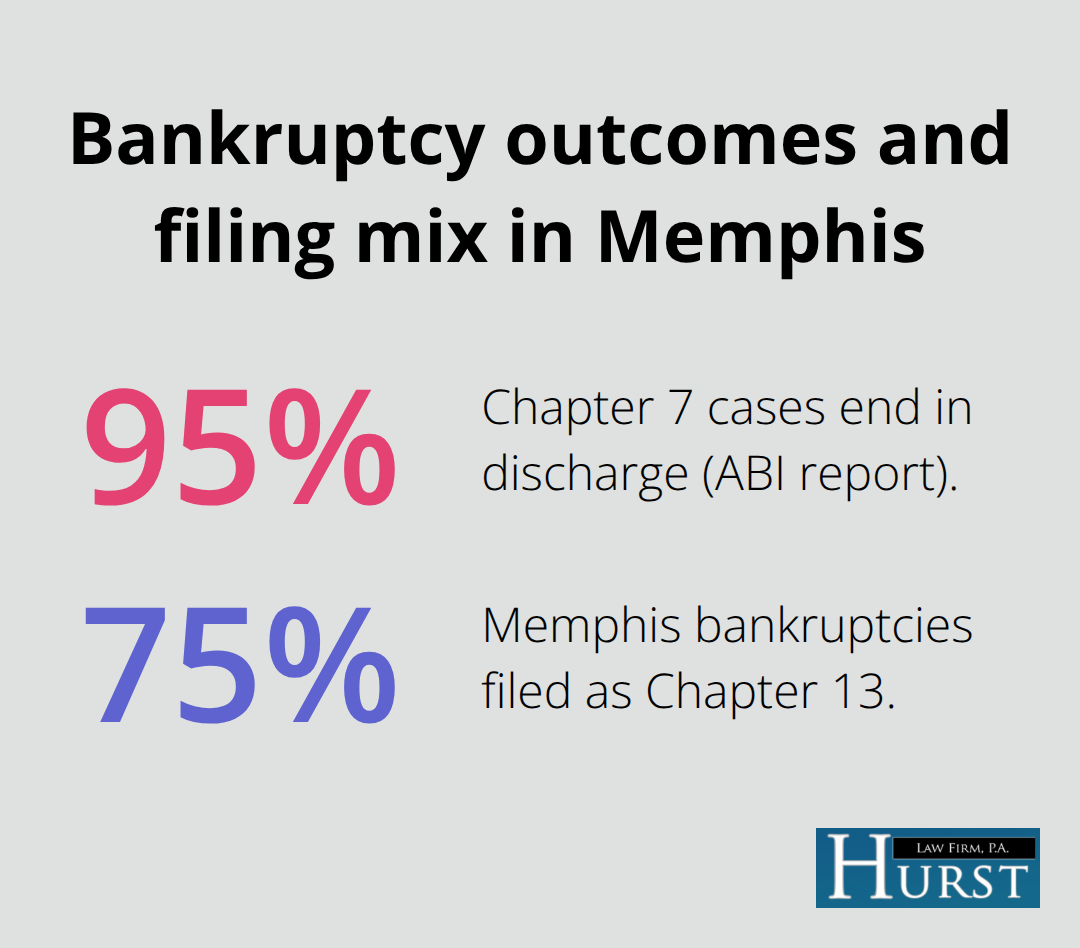
This chapter restructures your debts, addressing mortgage arrears, tax debt, and credit card balances simultaneously. Memphis-specific filing data shows about 75% of local bankruptcies are Chapter 13 filings, which reflects how many residents need to preserve assets or handle secured debts like mortgages.
Income Thresholds and the Means Test
Chapter 7 requires you to pass the Means Test, an income calculation that determines whether your earnings fall below Tennessee thresholds. As of 2025, a single person earning under $39,759 or a family of four earning under $93,767 may qualify, though allowable expense deductions can adjust these numbers. If you exceed the threshold, Chapter 13 becomes your path forward.
Three Factors That Shape Your Decision
Your choice depends on three concrete factors: income stability, asset value, and debt composition. If you earn steady income from employment, retirement, or dividends, Chapter 13 becomes viable because you must make monthly plan payments over years. If your income fluctuates or you lack consistent earnings, Chapter 7 moves faster and requires no ongoing payment obligation after discharge.
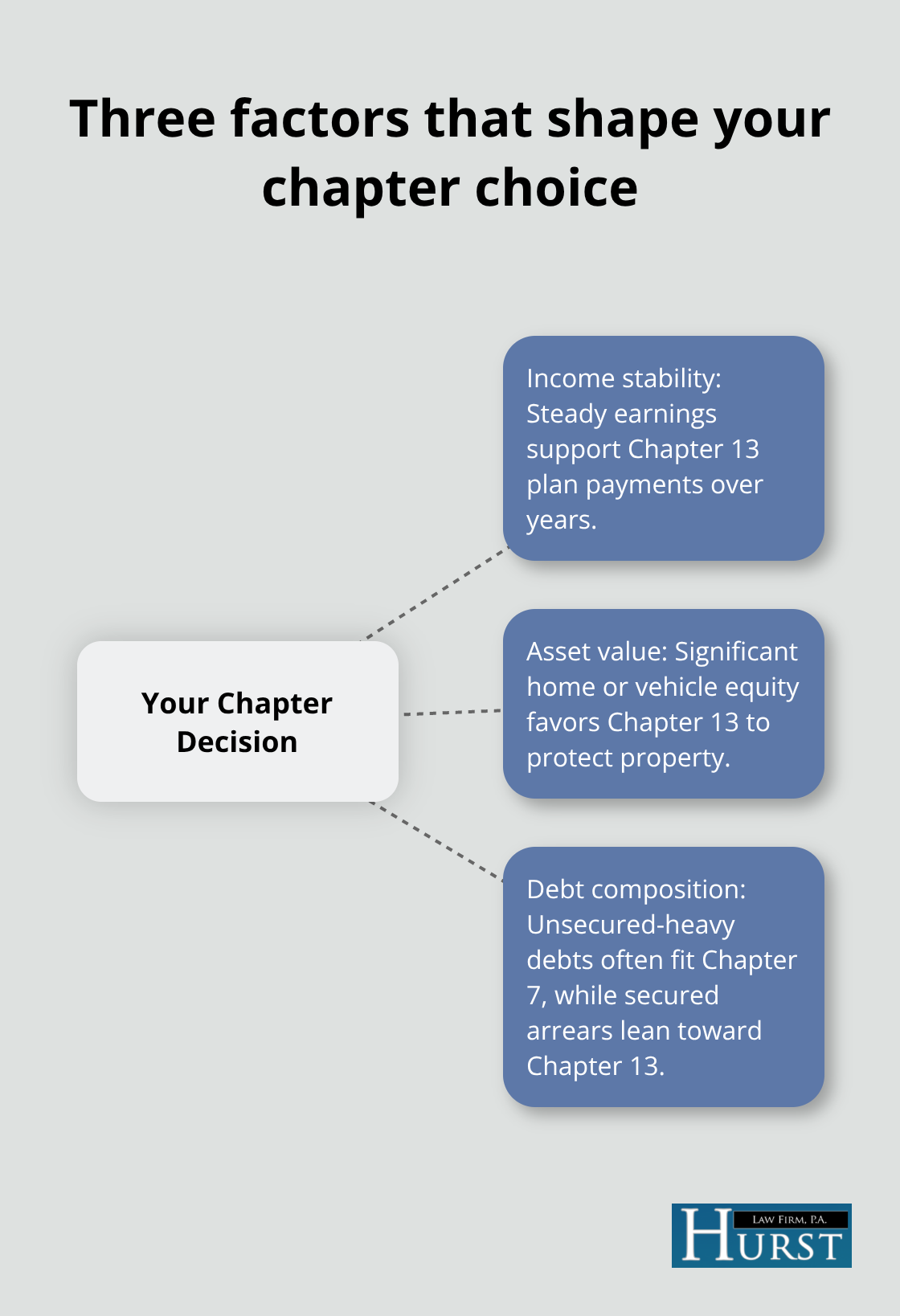
Home and vehicle ownership strongly influences the decision. Chapter 13 protects these assets through the repayment plan, while Chapter 7 risks repossession or foreclosure if you cannot reaffirm secured debts.
Debts That Survive Bankruptcy
Student loans almost never discharge in either chapter; the U.S. Department of Education reports less than 0.1% of filers successfully discharge student loans, so this debt survives bankruptcy regardless. Non-dischargeable debts also include child support, alimony, recent tax obligations, court fines, and criminal restitution. Before you choose, calculate what debts actually qualify for discharge in your case.
Getting Professional Guidance for Your Situation
A local attorney evaluates your income against the Means Test, identifies which assets qualify for exemption under Tennessee law, and matches your situation to the chapter that minimizes your financial burden and timeline. Hurst Law Firm, P.A. has assisted Memphis residents since 1997 through this critical decision, helping you understand the discharge timeline and long-term implications before filing. The next section walks you through what actually happens once you file-the paperwork, court meetings, and milestones that lead to your fresh start.
From Filing to Discharge: What Happens in Your Bankruptcy Case
Preparing Your Petition and Required Documentation
Filing for bankruptcy in Memphis means submitting a petition package to the U.S. Bankruptcy Court for the Western District of Tennessee, which requires specific forms and documentation that most people underestimate. The petition itself is Form B101, and you must include schedules listing all assets, liabilities, income, and creditor names with amounts owed. The U.S. Courts system mandates credit counseling certification from an approved provider before you file, so obtain that first from the list on justice.gov/ust.
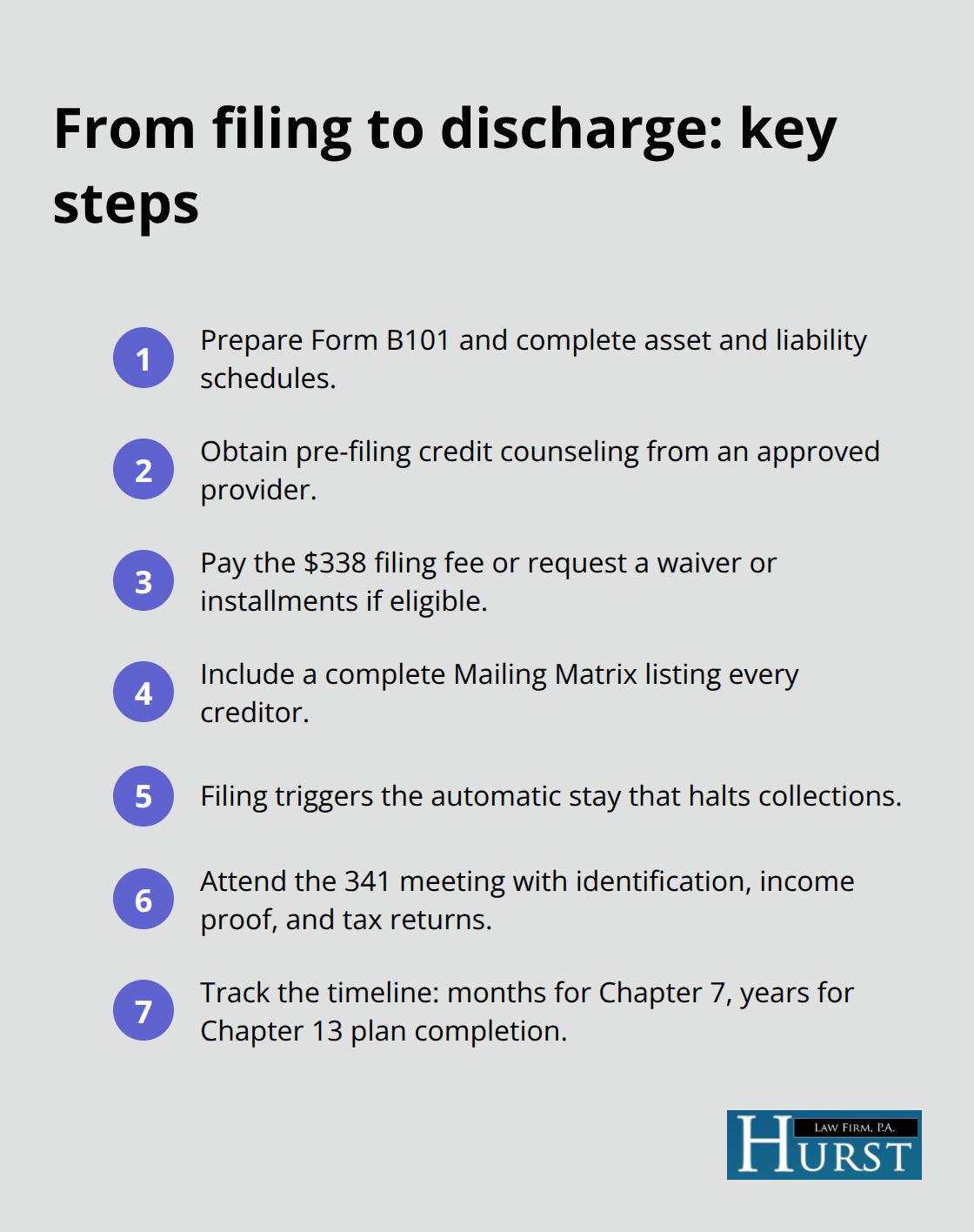
Your filing fee is $338, though you can request a waiver if your income qualifies as low, and the court allows installment payments if paying the full amount upfront creates hardship. Include a Mailing Matrix with your filing-a complete list of every creditor you owe money to, organized clearly so the court can send official notices. Missing even one creditor on this list creates problems later.
The Automatic Stay: Your Immediate Protection
The automatic stay takes effect immediately upon filing, stopping wage garnishments, collection calls, lawsuits, and repossession attempts the moment your paperwork reaches the court. This protection is real and powerful, but only if your filing is complete and timely submitted to the Memphis or Jackson clerk’s office. Creditors cannot legally pursue collection actions once the court receives your petition, giving you breathing room to move forward with your case.
The 341 Meeting of Creditors
The 341 meeting of creditors happens 21 to 40 days after filing, where a court-appointed trustee asks questions about your finances, assets, and debts while creditors have the opportunity to attend and ask questions. Most creditors don’t show up, especially in Chapter 7 cases where the American Bankruptcy Institute reports over 95% of cases result in discharge. Prepare for this meeting by bringing identification, proof of income, tax returns, and a list of all assets and liabilities. The trustee’s role differs between chapters: in Chapter 7, the trustee may liquidate non-exempt assets to pay creditors, while in Chapter 13, the trustee oversees your repayment plan and collects your monthly payments.
Timeline to Discharge and Creditor Protections
For Chapter 7 filers in Tennessee, discharge typically arrives 3 to 4 months after filing if no creditor objects, meaning most unsecured debts vanish permanently and creditors lose all legal right to pursue you for those balances. Chapter 13 discharge happens only after you complete all plan payments, which takes 3 to 5 years of consistent monthly payments. Once discharged, creditors are barred from collection actions forever; calls, letters, lawsuits, and wage garnishments stop permanently. The entire timeline from filing to discharge in Chapter 7 spans 3 to 6 months in most cases, while Chapter 13 extends years but allows you to retain assets throughout the process.
Moving Forward After Discharge
Bankruptcy discharge marks a turning point in your financial life, and your credit score recovers faster than you might expect with deliberate action immediately after discharge. The FTC reports that credit scores typically recover within 12 to 18 months when you maintain consistent good habits, even though bankruptcy remains on your report for 10 years. Use a secured credit card, pay all bills on time, and check your credit report regularly to dispute errors that appear.
Employment and housing discrimination based solely on bankruptcy is illegal, though you may face extra scrutiny during applications (prepare income documentation and consider a larger security deposit or co-signer for rental housing to strengthen your position). Long-term financial stability depends on addressing the root causes that triggered your debt in the first place, whether job loss, medical expenses, or divorce. An emergency savings fund prevents future debt spirals when unexpected expenses arise, so prioritize setting aside even small amounts each month.
A bankruptcy attorney Memphis residents trust helps you navigate not just the filing process, but the recovery phase that follows. We at Hurst Law Firm, P.A. have guided Memphis residents since 1997 through both Chapter 7 and Chapter 13 cases, and we understand the local court system and what comes after discharge. Contact Hurst Law Firm, P.A. today for a free initial consultation to discuss your situation and start your path toward genuine financial stability.