


A Chapter 13 co-debtor stay in Memphis, TN can protect more than just you when you file bankruptcy. Many people put off getting help because a parent, spouse, sibling, or friend cosigned a car loan, a personal loan, or a credit card, and they worry that filing will send collectors straight to that person’s door. That worry is understandable, and it keeps a lot of families stuck in debt longer than they need to be.
At Hurst Law Firm, P.A., we help Memphis families understand how each chapter of bankruptcy affects the people who signed alongside them, so you can make a clear decision and move forward with confidence. This guide explains what the co-debtor stay actually is, how it works during a Chapter 13 case, and the mistakes that can leave a cosigner exposed.
What the Chapter 13 Co-Debtor Stay Actually Is
When you file bankruptcy, the automatic stay stops most collection activity against you. Chapter 13 adds a second layer of protection found in 11 U.S.C. 1301, which is titled “Stay of action against codebtor.” This provision extends a shield to certain people who share responsibility for your consumer debts.
Understanding exactly who and what this protection covers helps you decide whether Chapter 13 is the right fit for your situation.
Who the Co-Debtor Stay Protects
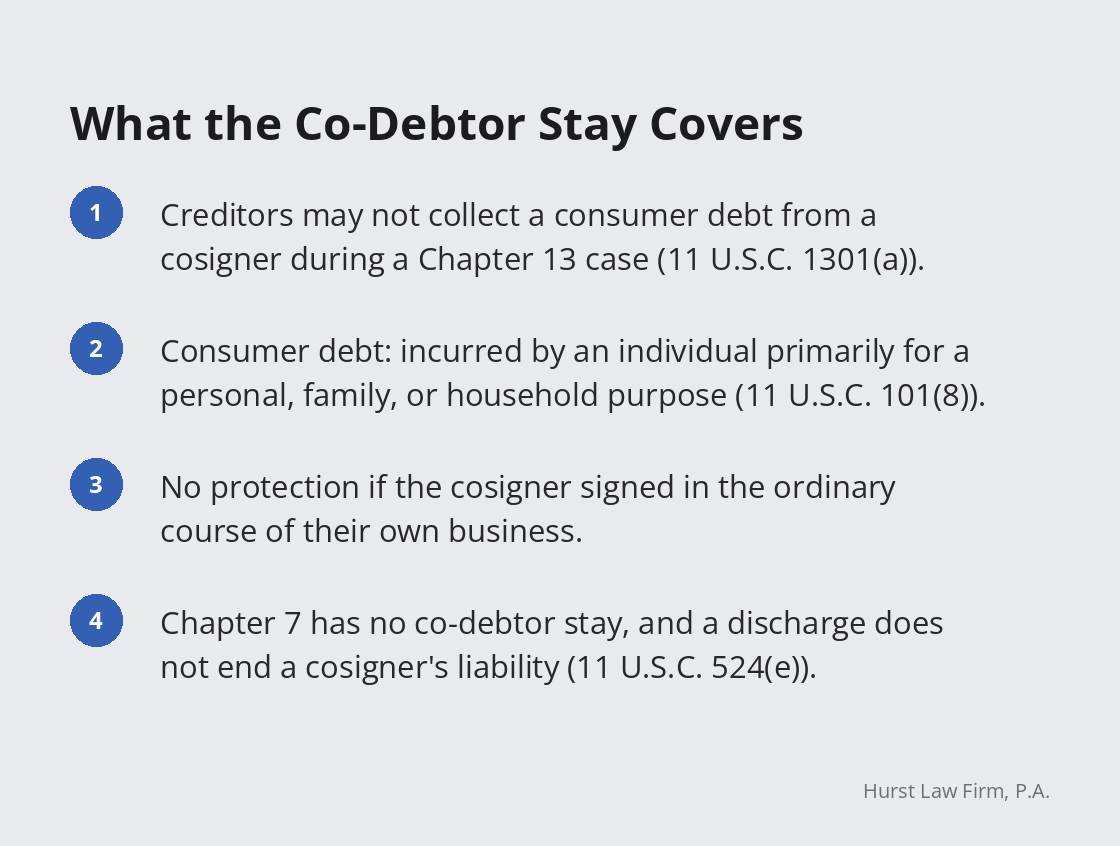
Under 11 U.S.C. 1301(a), after the order for relief in a Chapter 13 case, a creditor may not act, or commence or continue any civil action, to collect all or any part of a consumer debt of the debtor from any individual that is liable on the debt with the debtor or that secured the debt. In plain terms, a creditor generally cannot turn to your cosigner to collect that consumer debt while your Chapter 13 case is active.
For many Memphis families, this means a parent who cosigned a car loan or a relative who signed on a personal loan does not have to fear collection calls or a lawsuit while you work through your plan.
What Counts as a Consumer Debt
The co-debtor stay applies only to consumer debts. The Bankruptcy Code defines a consumer debt in 11 U.S.C. 101(8) as debt incurred by an individual primarily for a personal, family, or household purpose. A car you drive to work, household furniture, or a personal loan used for family needs will often fall into this category.
Debts taken on primarily for a business purpose are treated differently, and the stay also does not apply when the cosigner became liable on or secured the debt in the ordinary course of that person’s own business.
Why Chapter 7 Works Differently
The co-debtor stay is a Chapter 13 tool. Under 11 U.S.C. 103(j), Chapter 13 of the Bankruptcy Code applies only in a case under that chapter, so a Chapter 7 filing does not include the protection found in Section 1301. In addition, 11 U.S.C. 524(e) provides that the discharge of a debt of the debtor does not affect the liability of any other entity on that debt.
That means a Chapter 7 discharge can wipe out your personal obligation on a qualifying debt while your cosigner may still be responsible for it. If protecting a cosigner matters to you, that difference deserves careful attention before you choose a chapter.
How the Co-Debtor Stay Works During Your Memphis Case
For people in Shelby County, bankruptcy cases are handled in the Western District of Tennessee. Under 28 U.S.C. 123(c), the district’s Western Division includes Fayette, Lauderdale, Shelby, and Tipton counties, and court for that division is held at Memphis.
Once your case is filed, the co-debtor stay works in the background, but creditors do have ways to ask the court to lift it. Knowing those rules helps you build a plan that keeps your cosigner protected.
When the Protection Begins and Ends
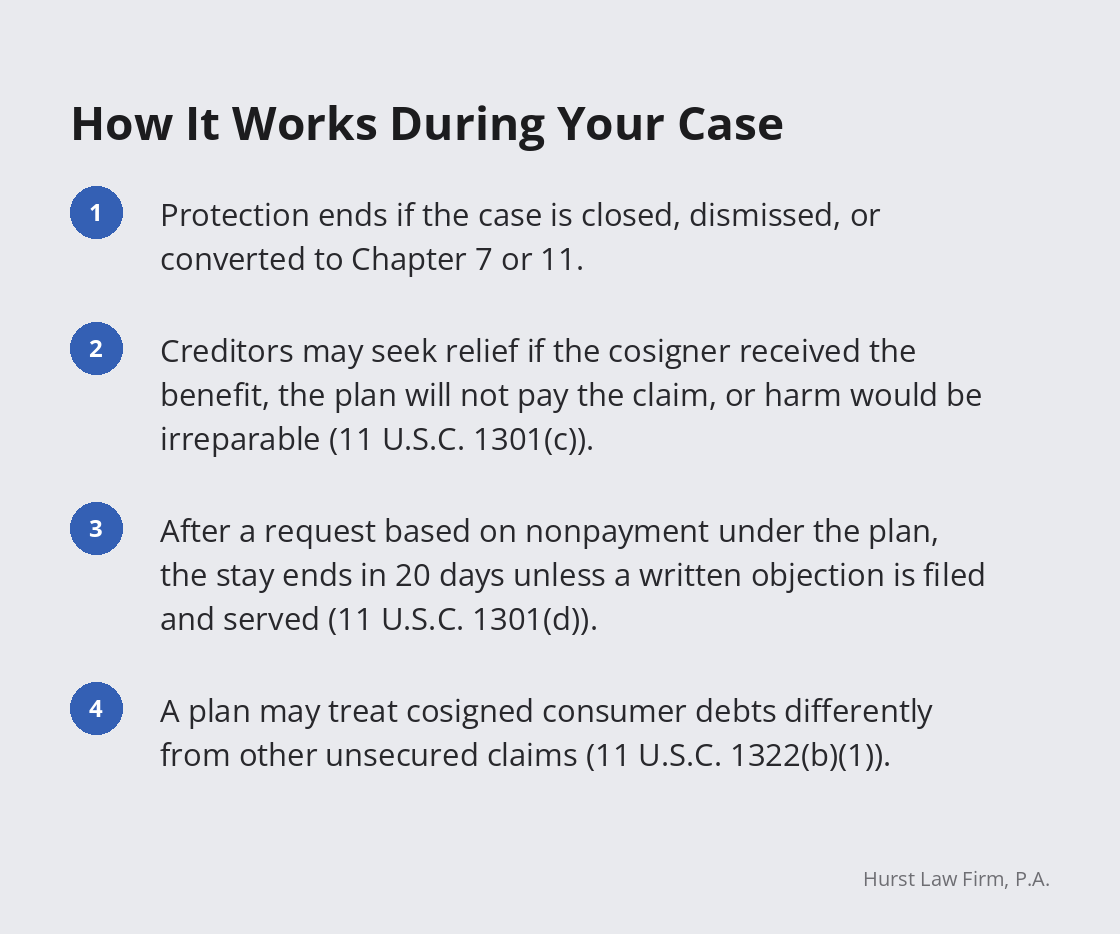
The protection in Section 1301(a) takes effect after the order for relief in your Chapter 13 case. It does not last forever. The statute provides that the stay no longer applies once the case is closed, dismissed, or converted to a case under Chapter 7 or Chapter 11.
This is one reason to think carefully before converting or allowing a case to be dismissed. Under 11 U.S.C. 1307(a), you have the right to convert a Chapter 13 case to Chapter 7 at any time, but doing so ends the co-debtor protection your cosigner has been relying on. Our guide on when to convert Chapter 13 to Chapter 7 in Memphis TN explains more about that decision.
How Creditors Can Ask for Relief
Under 11 U.S.C. 1301(c), on request of a party in interest and after notice and a hearing, the court shall grant relief from the co-debtor stay to the extent that one of three situations applies. The first is when, as between you and the cosigner, the cosigner actually received the consideration for the claim. The second is when your plan proposes not to pay the claim. The third is when the creditor’s interest would be irreparably harmed by continuing the stay.
The first situation can come up when the cosigner, rather than you, is the person who actually received and used what the loan paid for. In that case, the law looks at who really benefited from the debt, and the cosigner may not be protected.
The Twenty-Day Objection Window
Timing matters when a creditor asks for relief because your plan proposes not to pay its claim. Under 11 U.S.C. 1301(d), twenty days after a request under subsection (c)(2) is filed, the stay is terminated as to the creditor making that request unless you or the cosigner file and serve a written objection to the proposed action.
If you receive a motion of this kind, do not set it aside. Responding within that window can be the difference between keeping your cosigner protected and seeing collection resume.
Treating Cosigned Debts in Your Plan
Chapter 13 also gives you some flexibility in how cosigned debts are handled. Under 11 U.S.C. 1322(b)(1), a plan may designate classes of unsecured claims and may treat claims for a consumer debt on which another individual is liable with the debtor differently than other unsecured claims.
That provision allows many people to propose a plan that addresses a cosigned debt in a way that reduces the risk of a creditor seeking relief from the stay. How that is structured depends on your income, your other debts, and the terms of the plan the court can confirm.
Mistakes That Can Leave a Cosigner Exposed
The co-debtor stay is a valuable protection, but it is not automatic in every situation, and it can disappear if a case goes off track. Avoiding a few common mistakes helps keep the people who helped you out of the line of fire.
Each of these problems is easier to prevent than to fix after a creditor has already acted.
Assuming Every Debt Is Covered
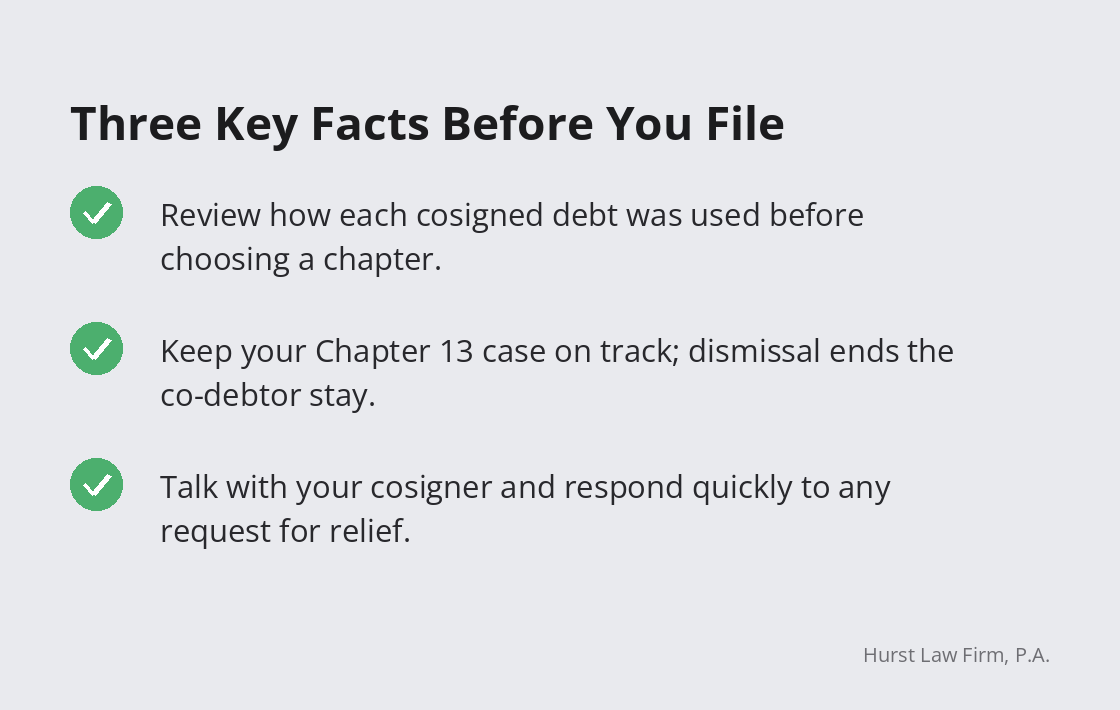
Because the stay applies only to consumer debts, a loan that was primarily for a business purpose may fall outside its protection. The same is true if the cosigner signed in the ordinary course of that person’s own business. Reviewing each cosigned debt before you file helps you know exactly where your cosigner stands.
Be ready to explain how each debt was used, since the purpose of the debt is what drives the consumer debt question.
Letting the Case Get Dismissed
Missing plan payments or court requirements can lead to dismissal, and dismissal ends the co-debtor stay. When that happens, creditors may return to collecting from your cosigner. Staying in close contact with your attorney when your income changes gives you a chance to address problems before they threaten the case.
If a job loss, illness, or other setback makes the plan hard to keep up with, there may be options to explore before the case is lost.
Not Talking With Your Cosigner
Your cosigner may receive notices about your case or about a creditor’s request for relief. A cosigner who does not understand what is happening might panic, ignore important papers, or pay a creditor without realizing protections exist. A simple, honest conversation about what you are doing and why can prevent confusion and protect the relationship.
Your cosigner can also seek independent advice about their own situation, since their interests and yours may not always line up perfectly.
Final Thoughts
The Chapter 13 co-debtor stay can give Memphis families real breathing room by keeping creditors away from the people who cosigned their consumer debts. It works only in Chapter 13, applies only to consumer debts, and lasts only while the case stays on track, so the details matter.
If protecting a cosigner is part of your decision, it is worth comparing Chapter 7 and Chapter 13 carefully before you file, and planning how each cosigned debt will be treated.
If you are worried about how bankruptcy will affect someone who signed with you, contact Hurst Law Firm, P.A. to talk with our team in Memphis. We will review your debts, explain how each chapter affects your cosigner, and help you take the next step with confidence.