


A Chapter 13 hardship discharge in Memphis, TN can be the difference between losing years of progress and walking away with real relief when life knocks your repayment plan off course. If a layoff, a serious illness, or a disabling injury has made it impossible to keep up with your plan, you may feel like every payment you already made was wasted. The Bankruptcy Code recognizes that some setbacks are nobody’s fault, and it gives honest debtors a narrow but meaningful path to finish their case even when they cannot finish every payment.
At Hurst Law Firm, P.A., we help Memphis families understand every option when a Chapter 13 plan starts to slip, so you can make a clear decision and move forward with confidence. This guide explains what the hardship discharge actually is, how the court decides whether you qualify, and the mistakes that can close this door before you ever reach it.
What a Chapter 13 Hardship Discharge Actually Is
Chapter 13 is often called a wage earner’s plan because it lets a person with regular income keep property and repay some or all of their debts over time. Under 11 U.S.C. 1322(d), the length of the plan generally depends on how your income compares with the state median, typically three years below it and five years above it, and no plan may provide for payments over a period longer than five years. When you complete every payment, the court enters what most people think of as the standard Chapter 13 discharge under 11 U.S.C. 1328(a). That standard discharge is the finish line most filers have in mind when they start their case.
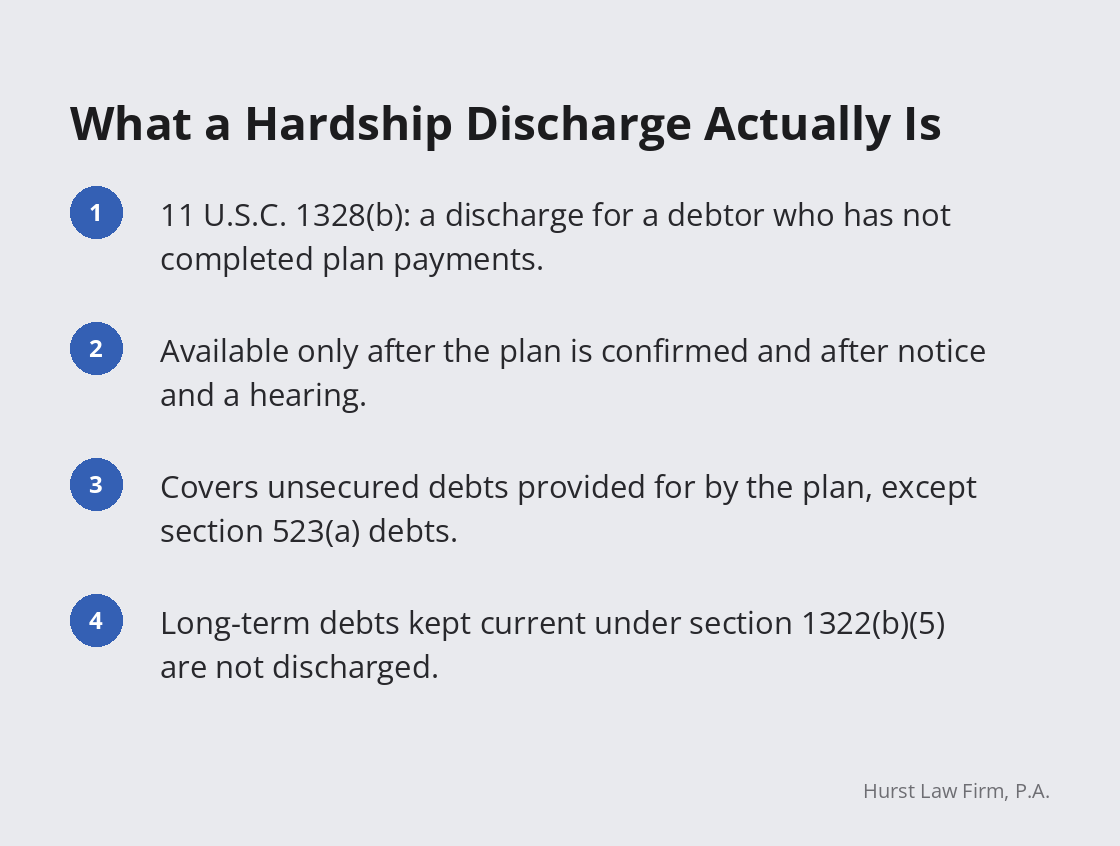
The hardship discharge is a separate, more limited finish line. Section 1328(b) allows the court to grant a discharge to a debtor who has not completed plan payments, but only after the plan has been confirmed and only after notice and a hearing. In other words, it is not something that happens automatically when payments stop. You have to ask for it, creditors and the trustee have a chance to respond, and a bankruptcy judge decides whether the facts of your situation meet the statute.
Who Can Ask for It
The hardship discharge is available only to a debtor whose plan has already been confirmed by the court. If your case is still in the early stages and no plan has been confirmed, this option is not yet on the table, and other tools such as amending the proposed plan or changing chapters may be more appropriate. Once confirmation has happened and you have been making payments, a change in circumstances can open the door to a hardship request. Timing matters, because the request must be made while the case is still open and before it has been dismissed or converted.
How It Differs From the Standard Discharge
The standard Chapter 13 discharge is known for being broad. It can wipe out certain debts that would survive a Chapter 7 case, which is one reason many people choose Chapter 13 in the first place. The hardship discharge does not carry that extra breadth. Under 11 U.S.C. 1328(c), a hardship discharge releases unsecured debts provided for by the plan or disallowed by the court, but it does not reach any debt of a kind listed in section 523(a), the same list of exceptions that applies in Chapter 7. The federal courts’ own Chapter 13 guidance puts it simply: the hardship discharge is more limited and does not apply to any debts that are nondischargeable in a Chapter 7 case.
Debts That Survive Either Way
Long-term debts that your plan was designed to keep current, such as a home mortgage whose final payment falls after the plan ends, are not wiped out by a hardship discharge. Section 1328(c)(1) expressly excludes debts provided for under section 1322(b)(5), which is the provision that lets a plan cure a default and maintain ongoing payments on a long-term obligation. Domestic support obligations, most student loans, and other debts listed in section 523(a) also remain. Knowing which of your debts fall into these categories helps you judge whether a hardship discharge truly solves your problem or only part of it.
How the Court Decides Whether You Qualify
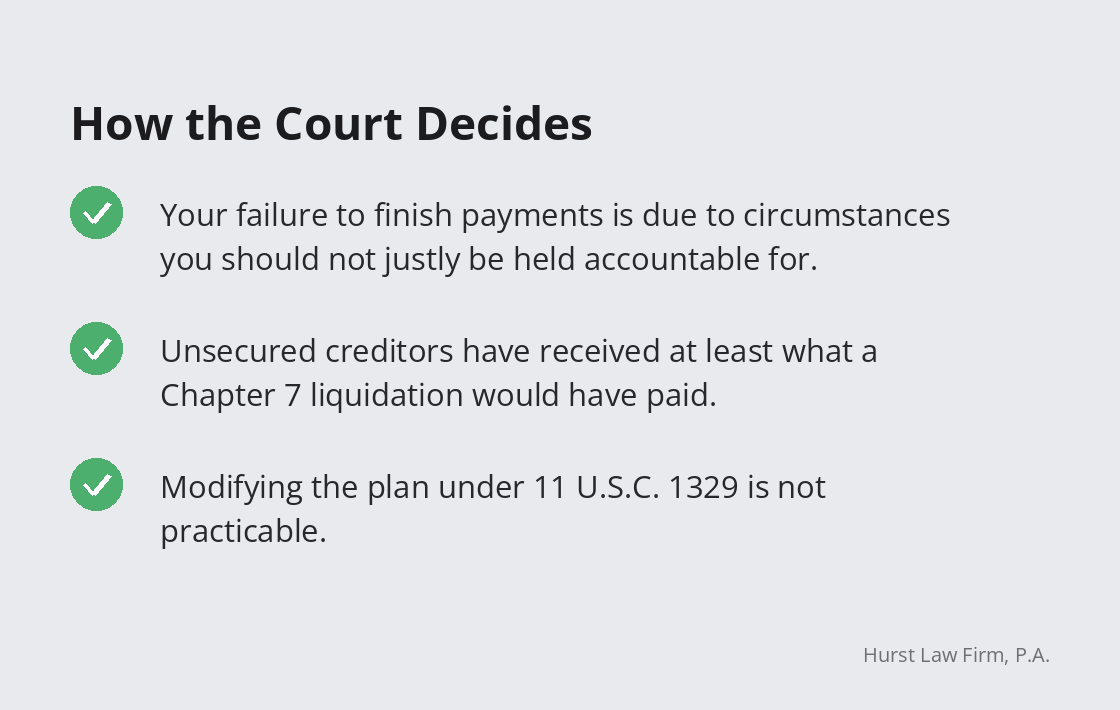
Section 1328(b) sets out three requirements, and the court may grant a hardship discharge only if all three are met. Each one asks a different question about your case, and a strong request addresses every element with specific facts and documents rather than general statements. Judges in the Western District of Tennessee, like bankruptcy judges everywhere, apply the statute as written, so it pays to understand exactly what each requirement means before you file a motion.
Circumstances You Should Not Be Held Accountable For
The first requirement is that your failure to complete payments is due to circumstances for which you should not justly be held accountable. The federal courts describe this as circumstances beyond the debtor’s control and through no fault of the debtor. Their guidance gives a clear example: an injury or illness that prevents employment sufficient to fund even a modified plan may serve as the basis for a hardship discharge. A voluntary decision, such as leaving a job without a strong reason or taking on new obligations, is much harder to fit within this standard. Medical records, termination letters, disability determinations, and similar documents help show the court why the change was outside your control.
The Chapter 7 Comparison Test
The second requirement looks backward at what your unsecured creditors have already received. Under section 1328(b)(2), the value of property actually distributed under the plan on account of each allowed unsecured claim, measured as of the plan’s effective date, must be at least what that creditor would have received if your estate had been liquidated under Chapter 7 on that date. This is sometimes called the best interest of creditors test. The federal courts summarize it as creditors having received at least as much as they would have received in a Chapter 7 liquidation. Your trustee’s records of distributions are usually central to this analysis.
Why Modification Must Be Impractical
The third requirement is that modification of the plan under 11 U.S.C. 1329 is not practicable. Section 1329 allows a confirmed plan to be modified at any time before payments are complete, at the request of the debtor, the trustee, or an unsecured creditor, to increase or reduce payments or to extend or reduce the time for those payments. Because modification is often the first and best solution when income drops, the court will want to know why a reduced or restructured plan would not work for you. If you could realistically fund a smaller plan, the court may expect you to try that path instead.
What Derails a Hardship Discharge Request
Even debtors who face a genuine crisis can lose the chance at a hardship discharge through avoidable missteps. The most common problems involve waiting too long, assuming the court already knows what happened, or overlooking other requirements that apply to every Chapter 13 discharge. Being proactive with your trustee and the court protects the options that the law provides.
Waiting Until the Case Is Dismissed
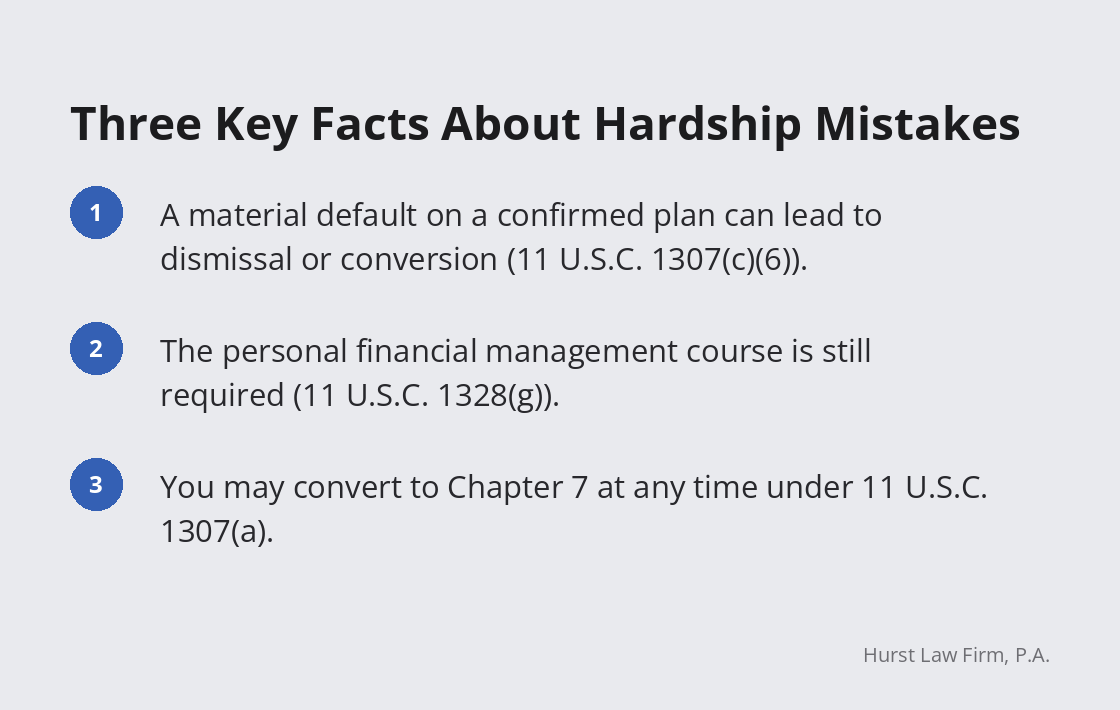
Missing plan payments without explanation is one of the fastest ways to lose your case. Under 11 U.S.C. 1307(c)(6), a material default with respect to a term of a confirmed plan is one of the listed causes for which the court, on request of a party in interest or the United States trustee and after notice and a hearing, may convert or dismiss a Chapter 13 case. If your case is dismissed before you ask for relief, the hardship discharge is no longer available in that case. Reaching out as soon as your circumstances change gives you time to evaluate modification, hardship, or another route before a motion to dismiss is decided.
Skipping the Financial Management Course
Some people assume that a hardship discharge excuses every remaining step, but that is not how the statute reads. Under 11 U.S.C. 1328(g), the court shall not grant a discharge under section 1328 unless, after filing the petition, the debtor has completed an approved instructional course concerning personal financial management, subject to limited exceptions. That requirement applies to discharges under section 1328 generally, so completing the course promptly keeps a paperwork gap from delaying or blocking relief you otherwise deserve.
Overlooking Other Options
A hardship discharge is not the only way out of a plan that no longer fits your life. Under 11 U.S.C. 1307(a), you may convert your Chapter 13 case to Chapter 7 at any time, and under section 1307(b) you may ask the court to dismiss your case at any time if it has not already been converted. Each option carries different consequences for your property, your remaining debts, and your future filing choices. Our earlier guide on converting Chapter 13 to Chapter 7 in Memphis explains that path in more detail, and comparing it with a hardship request side by side often makes the right choice clear.
Final Thoughts
A Chapter 13 plan is a long commitment, and few people can predict every turn their health, work, or family life will take over three to five years. The hardship discharge exists because Congress understood that honest debtors sometimes face setbacks they cannot control. When the three requirements of section 1328(b) are met, the court can close your case with a discharge of eligible unsecured debts rather than leaving you with nothing to show for your effort.
The key is acting early and choosing the right tool. Modification, a hardship discharge, conversion to Chapter 7, and dismissal each fit different situations, and the best choice depends on your income, your property, and the debts you most need to resolve. If you are still learning how your plan works, our guide to the Chapter 13 repayment plan is a helpful starting point.
If you are struggling to keep up with your plan, contact Hurst Law Firm, P.A. to speak with our bankruptcy team in Memphis. We will review your case, explain whether a hardship discharge or another option fits your circumstances, and help you move forward with confidence.