


Chapter 13 bankruptcy offers a structured way to repay your debts while keeping your assets. Unlike Chapter 7, which liquidates assets, Chapter 13 lets you reorganize what you owe through a manageable repayment plan.
This chapter 13 plan overview walks you through how the process works, from calculating what you can afford to pay each month to staying on track once your plan begins. We at Hurst Law Firm, P.A. help clients navigate each step so they can move toward financial stability.
What Chapter 13 Actually Is
Chapter 13 bankruptcy is a court-approved repayment plan that reorganizes your debts over three to five years while you keep your assets intact. The court assigns a trustee to collect one monthly payment from you and distribute those funds to your creditors according to a confirmed plan. This differs fundamentally from Chapter 7, where a trustee liquidates your non-exempt assets to pay creditors. You retain ownership of your home, vehicle, and other property as long as you make your plan payments on time. The automatic stay that triggers when you file immediately halts foreclosures, repossessions, wage garnishments, and collection calls, giving you breathing room to execute your plan.
Many people choose Chapter 13 specifically because they want to keep their house or car while still addressing their debt problem. The plan pays priority debts first-such as child support, alimony, and certain taxes-before distributing remaining funds to unsecured creditors like credit card companies. Unsecured creditors often receive only a partial payment, meaning you could eliminate a significant portion of what you owe. Interest on most debts stops accruing once your plan is confirmed, which dramatically reduces the total amount you repay compared to what you currently owe.
Income Requirements and Eligibility Thresholds
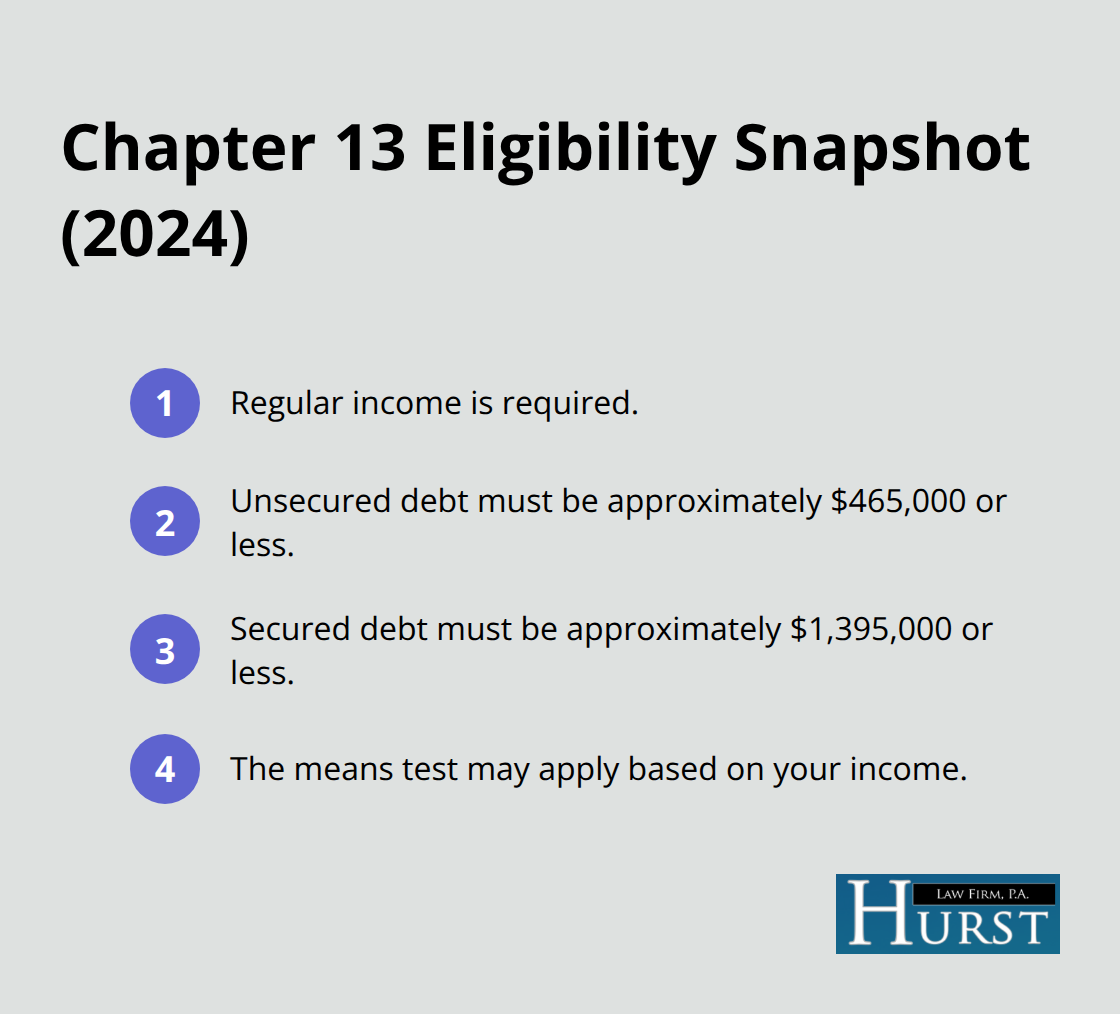
Chapter 13 is available only to individuals with a regular income and debts below specific thresholds set by bankruptcy law. Your unsecured debt cannot exceed approximately $465,000 and your secured debt cannot exceed approximately $1,395,000 as of 2024, though these figures adjust annually. The means test determines whether your income qualifies you for Chapter 13 or whether Chapter 7 would be appropriate instead.
If your income exceeds your state’s median income for your household size, you must pass the means test, which subtracts allowed living expenses from your gross income to calculate disposable income. This disposable income becomes your proposed monthly plan payment. Self-employed individuals, freelancers, and gig workers qualify as long as they demonstrate consistent income through tax returns and bank statements.
Why Regular Income Matters
The key requirement is proving you have enough regular income to commit to a three to five year payment schedule without defaulting immediately after filing. Lenders, employers, and the court all want to see that you can sustain payments over time. Your income documentation (tax returns, pay stubs, and bank statements) provides the foundation for your entire plan, so accuracy matters significantly. Once you understand whether you meet these eligibility requirements, the next step involves calculating exactly how much you can afford to pay each month toward your debts.
Building Your Repayment Plan
Calculating Your Disposable Income
Your disposable income forms the foundation of your entire Chapter 13 plan and determines everything about your financial obligations for the next three to five years. The means test subtracts your allowed living expenses from your gross monthly income to arrive at this number, which becomes your proposed monthly payment to the trustee. The court applies specific expense allowances based on IRS standards, not your actual spending habits, so you cannot claim lower expenses simply because you cut back on groceries or entertainment. This standardized calculation means your plan payment reflects what the court allows, rather than what you personally spend.
If your income falls below your state’s median, the calculation becomes simpler and focuses primarily on your actual income minus reasonable expenses. If your income exceeds the median, the means test applies more rigorous scrutiny, and you need accurate documentation including your last two years of tax returns, recent pay stubs, and a detailed accounting of monthly expenses.
Understanding Plan Duration and Payment Structure
Once the court determines your disposable income, the plan duration typically runs five years unless you can afford to repay your debts faster or unless your income falls below the median (which may allow a three-year plan). The trustee collects your monthly payment starting approximately 30 days after you file, even before the court confirms your plan-missing that initial payment can result in immediate dismissal of your case. Your monthly amount remains fixed throughout the plan unless your financial circumstances change materially, which allows you to budget with certainty.
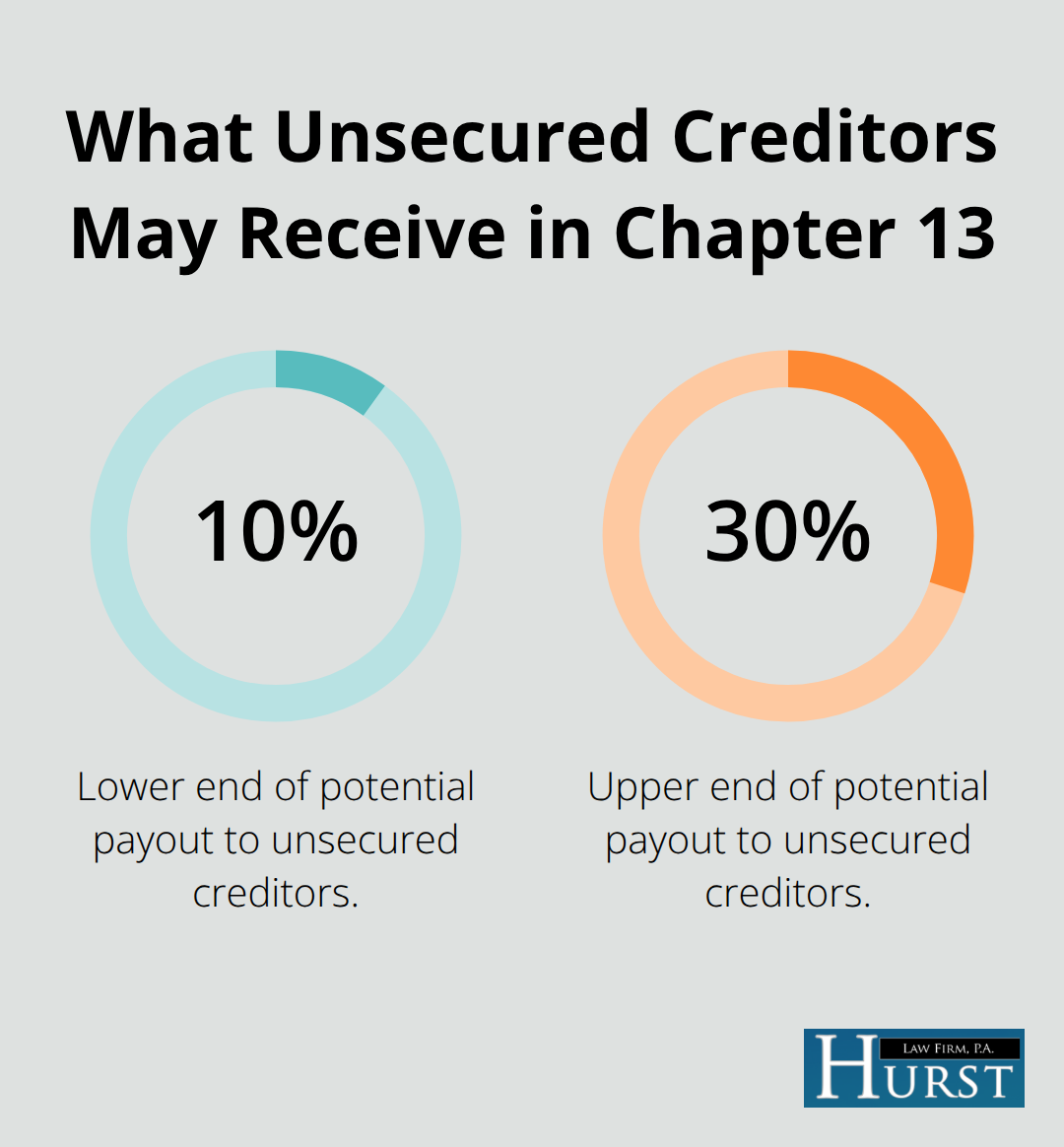
Many filers use budgeting tools like YNAB to track income and expenses throughout their plan, ensuring they never fall short on trustee payments. Priority debts including child support, alimony, and certain taxes must be paid in full through your plan before unsecured creditors receive distributions, so these amounts are non-negotiable. Unsecured creditors such as credit card companies often receive only partial payment, sometimes as low as 10 to 30 percent of what you owe, which is why Chapter 13 can eliminate a substantial portion of your total debt.
How Interest Stops Accruing
Interest stops accruing on most debts once your plan is confirmed, making the total repayment significantly lower than what you currently owe with ongoing interest charges. This feature alone can save you thousands of dollars over the life of your plan, as creditors cannot add new interest to your existing balances.
Working with the Trustee
The trustee begins working with you after you file and your case is assigned, typically around 45 days after filing when the creditors’ meeting occurs. At this meeting, you must present your most recent tax return and answer questions about your finances and plan. The trustee reviews your income documentation, verifies your expenses, and ensures your proposed payment amount aligns with what the law requires. Once the trustee confirms your plan is viable, you move into the execution phase where consistent monthly payments become your primary responsibility.
Staying on Track During Your Five-Year Plan
The Non-Negotiable Monthly Payment
Your Chapter 13 plan succeeds or fails based on one simple reality: you must make your monthly trustee payment on time, every month, for the entire duration of your plan. Missing even one payment within the first 30 days after filing results in immediate dismissal of your entire case, erasing your fresh start before it begins. After that critical window, missed payments give creditors grounds to object to your plan and can lead to conversion to Chapter 7 liquidation or dismissal entirely. The trustee has no discretion here-the court requires absolute consistency, which means you should set up automatic bank transfers to your trustee account immediately after filing. Most filers treat their trustee payment exactly like a mortgage or rent payment: non-negotiable and due before any other discretionary spending occurs. This mindset shift from viewing the payment as optional to viewing it as mandatory determines whether you complete your plan successfully or face dismissal.
Creating a Four-Account Financial Structure
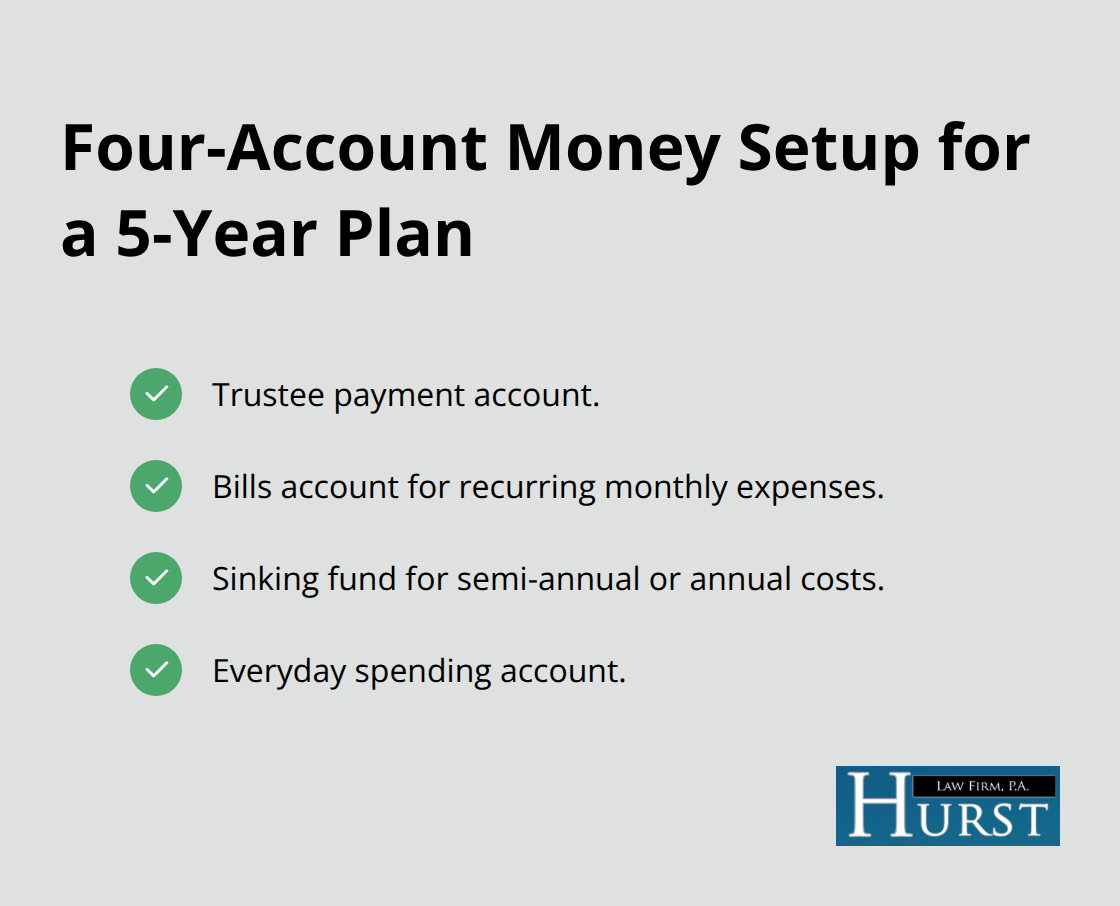
You cannot survive five years without a financial buffer separate from your plan payment account. The four-account approach works because it compartmentalizes your money: one account holds funds for your trustee payment, another covers recurring monthly bills, a third accumulates money for semi-annual or annual expenses like car insurance and property taxes, and the fourth manages everyday spending.
Without this structure, a single unexpected car repair or medical bill tempts you to skip your trustee payment to cover emergencies. Many filers use YNAB budgeting software to track their progress and identify where money leaks occur each month, allowing them to redirect funds toward their emergency cushion rather than lifestyle inflation.
Managing Income Changes Throughout Your Plan
Your income may increase during your five-year plan through raises, bonuses, or side income from gig work like Shipt deliveries or Facebook Marketplace sales. The trustee typically keeps small cost-of-living raises while substantial salary jumps trigger plan payment adjustments. This means your financial discipline directly impacts whether you keep additional income or watch it go toward creditors. If your circumstances change materially-you lose your job, face reduced hours, or encounter major medical expenses-you can modify your plan, convert to Chapter 7 if you become eligible, or in extreme cases request a temporary adjustment. However, requesting modifications requires court approval and takes time, so preventing the need for modification through aggressive budgeting from day one remains your strongest strategy for completing the plan as originally confirmed.
Final Thoughts
Chapter 13 bankruptcy offers a realistic path forward when you have income but too much debt to manage alone. Success depends on three core elements: understanding your eligibility and plan structure, calculating your disposable income accurately, and maintaining absolute consistency with monthly trustee payments for three to five years. The automatic stay stops creditors immediately, interest stops accruing on most debts, and you keep your home and vehicle while reorganizing what you owe.
The complexity lies not in the concept but in the execution. Your plan payment must be treated as non-negotiable, your income and expenses must be documented precisely, and your financial discipline must remain unwavering throughout the entire repayment period. Missing payments, failing to provide required documentation, or ignoring trustee communications can result in dismissal of your case and loss of the automatic stay protection. The four-account budgeting structure and tools like YNAB help many filers stay on track, but your commitment to the plan forms the foundation.
Contact Hurst Law Firm, P.A. to discuss whether Chapter 13 makes sense for your situation and to receive a personalized Chapter 13 plan overview. Bring your recent tax returns, pay stubs, and a list of your debts so we can evaluate your eligibility and explain what your plan payment would likely be. The sooner you take action, the sooner the automatic stay protects you from creditors and you begin rebuilding your financial foundation.