


Wage garnishment can take a significant portion of your paycheck before it even reaches your bank account. If you’re facing this situation in Memphis, you need to understand your options and act quickly.
We at Hurst Law Firm, P.A. help people stop wage garnishment and regain control of their finances. This guide walks you through what garnishment is, how it affects you, and the concrete steps you can take to fight back.
How Wage Garnishment Actually Works in Memphis
The Judgment and Garnishment Process
Wage garnishment starts the moment a creditor wins a court judgment against you. Once that judgment is final, the creditor files a garnishment order with your employer, and your employer must withhold a portion of your paycheck and send it directly to the court or creditor. This happens automatically-you don’t get a choice. In Tennessee, this process moves fast. According to Tennessee Code Annotated 26-2-106, creditors can garnish up to 25 percent of your disposable earnings or the amount by which your disposable earnings exceed 30 times the federal minimum wage, whichever is smaller.
How Much Money Creditors Actually Take
For someone earning $500 weekly in disposable income, roughly $70.75 leaves your paycheck each week. For $1,200 monthly disposable income, the cap reaches around $300. The math hits hard when you’re already struggling to pay rent and utilities. Tennessee law protects at least $217.50 of your weekly disposable income from garnishment. If you support children under 16, you receive an additional $2.50 per week per child added to that protection. However, creditors frequently miscalculate these exemptions and take more than the law allows.
How Long Garnishment Lasts
The garnishment order remains valid for six months under Tennessee law, and creditors can renew it indefinitely until the debt is paid. This means your income can stay frozen for years if you take no action. The types of debts that lead to garnishment in Memphis vary widely-credit card judgments, medical bills, personal loans, and payday loan judgments all trigger garnishment after a court ruling. Federal student loans can garnish up to 15 percent of your disposable income without requiring a judgment. The IRS and Tennessee Department of Revenue garnish administratively, meaning they don’t need a court order at all.
Special Garnishment Rules for Support and Taxes
Child support and alimony follow different rules and can be garnished at much higher rates: up to 60 percent if you have no current spouse or children to support, or 50 percent if you do. Back taxes also lead to garnishment. Federal law caps total garnishment across all creditors at 25 percent of disposable income (though this protection applies only when multiple creditors are involved). Understanding which debts can garnish your wages and at what rates matters because your options for stopping them differ significantly. Some debts respond well to bankruptcy filings, while others-like child support-continue even after you file.
What Wage Garnishment Actually Costs You
Wage garnishment destroys your financial stability faster than most people realize. When a creditor garnishes your paycheck, the money vanishes before you see it, making it impossible to cover rent, food, or medical expenses. Tennessee law allows creditors to take up to 25 percent of your disposable earnings, but the real impact depends on how much you earn and what debts are being collected.
The Weekly and Monthly Hit to Your Paycheck
If you make $500 weekly in disposable income, you lose roughly $70.75 each week-that’s $283 monthly gone. For someone earning $1,200 monthly in disposable income, the garnishment reaches around $300. These numbers sound manageable until you realize that $300 missing from your budget means choosing between paying utilities or buying groceries.
Tennessee Code Annotated 26-2-106 protects your first $217.50 of weekly disposable income, and if you support children under 16, you receive an additional $2.50 per week per child. However, creditors routinely miscalculate these protections and take more than allowed, forcing you to file objections and gather documentation to prove the error.
How Garnishment Multiplies Over Time
Garnishment does not stop after six months unless you take action. The creditor can renew the order indefinitely, meaning your paycheck stays frozen for years while you fall further behind on other obligations. This creates a vicious cycle: as garnishment drains your income, you fall behind on mortgage or rent payments, utility bills pile up, and new creditors file judgments.
Medical debt, credit card judgments, and personal loan judgments all trigger garnishment after court rulings. Federal student loans can garnish up to 15 percent without any judgment at all. The IRS and Tennessee Department of Revenue garnish administratively without court involvement, making their collections even harder to stop through conventional means.
Special Garnishment Rates That Exceed Normal Limits
If you pay child support or alimony, those obligations can be garnished at rates up to 60 percent if you have no current spouse or children to support-far exceeding the standard 25 percent limit. Federal law caps total garnishment at 25 percent across all creditors combined (but only when multiple creditors are involved). Knowing this distinction matters because it affects your strategy for fighting back.
The Cascading Damage to Your Financial Future
The longer garnishment continues, the more your credit score deteriorates, your savings disappear, and your ability to secure housing or employment becomes compromised. Waiting even a few months allows additional garnishment cycles and renewal orders that multiply the damage. The types of debts that lead to garnishment in Memphis vary widely-credit card judgments, medical bills, personal loans, and payday loan judgments all trigger garnishment after a court ruling. Some debts respond well to bankruptcy filings, while others (like child support) continue even after you file. Understanding which debts can garnish your wages and at what rates matters because your options for stopping them differ significantly.
How to Stop Wage Garnishment
Bankruptcy Stops Garnishment Immediately
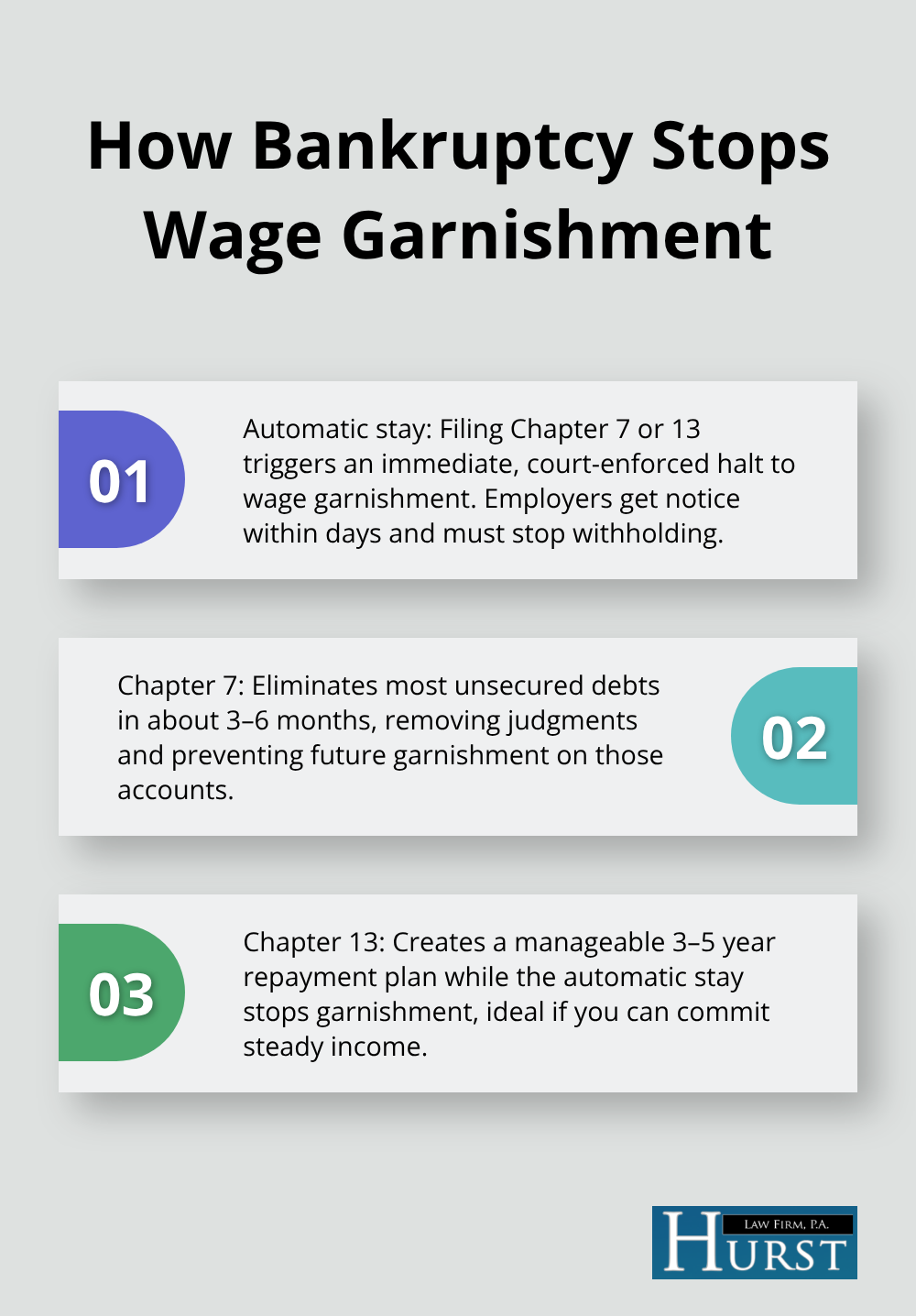
Bankruptcy is the fastest and most reliable way to stop wage garnishment in Memphis. When you file for Chapter 7 or Chapter 13 bankruptcy, an automatic stay takes effect under 11 U.S.C. § 362, which halts wage garnishment the moment you file. Your employer receives notice of the bankruptcy filing and must stop withholding money from your paycheck within days. This automatic stay is court-enforced, meaning creditors who ignore it face penalties and can be ordered to pay your attorney fees and damages under 11 U.S.C. § 362(k).
Chapter 7 Eliminates Debt Permanently
Chapter 7 bankruptcy eliminates most unsecured debts like credit card judgments, medical bills, and personal loans within 3 to 6 months. This elimination removes the underlying judgment and prevents future garnishment on those accounts. Once the court discharges your debt, creditors cannot collect on it again, and garnishment stops permanently for those debts.
Chapter 13 Creates a Manageable Repayment Plan
Chapter 13 bankruptcy reorganizes your debts into a court-approved repayment plan lasting 3 to 5 years. The automatic stay stops garnishment immediately while you pay affordable monthly amounts you can actually sustain. This option works well if you have income to commit to a plan but need relief from the current garnishment pressure.
Timing Your Filing Matters
The timing of your filing matters significantly because garnishment orders renew every six months in Tennessee. Filing before a renewal date prevents creditors from obtaining another garnishment order and charging additional court costs. The choice between Chapter 7 and Chapter 13 depends on your income level, assets, and ability to fund a repayment plan, but both options deliver immediate relief through the automatic stay.
Why Other Options Fall Short
Negotiating directly with creditors rarely produces lasting results and should not be your primary strategy. Creditors often agree to pause garnishment temporarily, but collection resumes if you miss even one payment, leaving you back where you started. Objecting to garnishment orders on hardship grounds offers only temporary relief of up to 10 days and requires extensive documentation of your financial situation, pay stubs, bank statements, and a detailed budget proving you exceed legal garnishment limits or that the creditor miscalculated your exemptions. Some creditors do miscalculate the $217.50 weekly protection under Tennessee Code Annotated 26-2-106, and if you support children under 16, you receive an additional $2.50 per week per child in protection. Filing an objection makes sense only if you can prove the creditor’s calculation is wrong, but even successful objections only delay the inevitable unless you address the underlying debt. We at Hurst Law Firm, P.A. can evaluate whether Chapter 7 or Chapter 13 provides the fastest relief for your situation and discuss your options during a free consultation.
Final Thoughts
Wage garnishment destroys your financial stability by draining your paycheck before you can pay rent, utilities, or food. Tennessee law allows creditors to take up to 25 percent of your disposable income indefinitely through renewal orders every six months, trapping you in a cycle that worsens over time. The longer it continues, the more damage accumulates to your credit, savings, and ability to rebuild.
Bankruptcy offers the most reliable path forward for wage garnishment help in Memphis. Filing for Chapter 7 or Chapter 13 triggers an automatic stay that halts wage garnishment immediately, stopping your employer from withholding money within days. Chapter 7 eliminates unsecured debts like credit card judgments and medical bills within 3 to 6 months, while Chapter 13 reorganizes your debts into a manageable 3 to 5 year repayment plan (both options provide immediate relief that negotiation or hardship objections simply cannot match).
We at Hurst Law Firm, P.A. evaluate whether Chapter 7 or Chapter 13 fits your situation best and guide you through the filing process with a free consultation. Every paycheck that gets garnished is money you cannot use for survival, so contact us today to schedule your free consultation and take the first step toward stopping garnishment and rebuilding your financial future.