


Filing bankruptcy without an attorney might seem like a way to save money, but the reality is far more complicated. The bankruptcy process involves strict deadlines, complex paperwork, and procedural requirements that trip up many people who try to go it alone.
At Hurst Law Firm, P.A., we’ve seen firsthand how costly mistakes can become when filers navigate this process without professional guidance. This guide walks you through the real risks and helps you decide whether handling your case solo makes sense for your situation.
What Goes Wrong When You File Alone
Incomplete Financial Disclosures and Asset Misclassification
Pro se filers consistently make errors that courts view as fatal. The most common mistake appears on Schedule A/B, where filers underreport assets or fail to list all property they own. Courts take this seriously because bankruptcy requires full transparency. Another frequent error involves misclassifying debts-filers fail to distinguish between secured debts (like car loans) and unsecured debts (like credit cards). This distinction matters enormously because it affects what you keep and what you pay back.
Missing Creditors and Automatic Dismissal
Many self-filers miss the requirement to list all creditors, which results in automatic case dismissal. When you omit a creditor, that creditor never receives notice of your bankruptcy filing, and the court treats this as a procedural failure serious enough to end your case. One misstep during filing can result in dismissed cases, lost asset protection, or missed opportunities to discharge debts.
Tennessee Exemptions and Unprotected Property
Without understanding exemptions specific to Tennessee, filers accidentally put property at risk that they could have protected. A single mistake on Schedule B (personal property) or Schedule C (property exemptions) results in asset seizure or case dismissal. The Chapter 7 Meeting of Creditors creates another pitfall-without preparation, filers answer questions incorrectly or provide information that contradicts their filed documents, raising red flags with the trustee.
Procedural Deadlines and Dismissal Costs
Missing a deadline for filing required documents, including the mandatory debtor education course certificate, results in automatic dismissal. If your case gets dismissed, you must refile and pay court fees again (typically $335 in filing fees plus other expenses). Creditor objections to discharge become difficult to handle without understanding bankruptcy law. When a creditor files a motion challenging your right to discharge specific debts, you need to respond within strict timeframes and present legal arguments the court accepts.
The Real Cost of Mistakes
Many pro se filers simply ignore creditor motions, which leads to the creditor winning by default. Filing incorrectly often means losing property you intended to keep or failing to discharge debts you could have eliminated. Individuals who refile months later after their initial pro se attempt failed ultimately spend more money and time than if they had hired representation from the start. These financial and emotional costs mount quickly, making the initial savings from going solo disappear entirely.
What You Must Understand Before Filing Alone
Income Determines Your Chapter Choice
The decision between Chapter 7 and Chapter 13 isn’t optional-your income, debts, and assets determine which path you take. If your household income falls below the Tennessee median, Chapter 7 liquidation becomes available to you, but exceeding that threshold forces you into Chapter 13 reorganization instead. The U.S. Trustee Program administers a means test that compares your gross income against state medians, and this calculation leaves no room for interpretation or negotiation.
Mandatory Counseling Requirements You Cannot Skip
For Chapter 7 filers in Tennessee, you must complete pre-bankruptcy credit counseling from an approved agency before filing, then file a certificate of completion with the court. Chapter 13 requires the same initial counseling but adds a second requirement: you must complete a financial management course within a specific timeframe after filing. Many pro se filers miss these timing requirements entirely, leading to automatic case dismissal. The counseling agencies charge between $50 and $250 per course, and while some offer fee waivers for low-income filers, you cannot simply skip this step or defer it. Courts will not accept your case without proof of completion, making this a non-negotiable prerequisite.
Paperwork Demands Differ Dramatically Between Chapters
Chapter 7 requires Schedules A through J and a Statement of Financial Affairs-roughly 15 pages of detailed disclosures covering every asset, debt, expense, and financial transaction from the past four years. Chapter 13 adds a proposed repayment plan on top of those same schedules, forcing you to calculate disposable income using the precise Tennessee means test formulas and project three to five years of payments. Pro se filers frequently misunderstand which assets fall under Tennessee exemptions, accidentally leaving valuable property unprotected when they could have shielded it.
Tennessee Exemptions Require Specific Legal Knowledge
Schedule C, which lists your exemptions, requires knowledge of Tennessee Code Annotated sections covering homestead, personal property, and tools of trade exemptions-information self-filers rarely possess before attempting to complete it. Without this knowledge, you risk losing property the law would have protected. The Chapter 7 Meeting of Creditors, formally called the 341 meeting, puts you face-to-face with a trustee who will ask about every line item on your filed documents. If your answers contradict what you wrote, the trustee flags potential fraud or negligence, sometimes leading to case dismissal or criminal referral. This verification process becomes far more thorough than most self-filers anticipate, and inconsistencies between your documents and your testimony create serious problems that require immediate legal response.
When You Should Consider Hiring an Attorney
Multiple Creditors and Complex Debt Structures
Your financial situation determines whether hiring an attorney shifts from optional to necessary. If you have multiple creditors spanning credit cards, medical debt, personal loans, and tax obligations, the complexity multiplies exponentially. Each creditor type follows different rules within bankruptcy court, and missing nuances for even one creditor can compromise your entire filing. When you owe more than $50,000 across various creditors, the trustee scrutinizes these cases more heavily. Additionally, if you own real estate, vehicles with equity, or retirement accounts beyond standard IRAs, you face decisions about what you can protect under Tennessee law.
Asset Protection and Exemption Calculations
The exemption calculations become intricate when multiple assets are involved, and one miscalculation on Schedule C means losing property worth thousands of dollars. Self-filers frequently underestimate the value of their assets, leading the trustee to flag inconsistencies during the 341 meeting. Tennessee law provides specific protections for homestead property, personal property, and tools of trade, but applying these protections requires precise legal knowledge. Without professional guidance, you risk losing assets that the law would have shielded from creditors.
Lawsuits, Judgments, and Creditor Actions
If creditors have already filed lawsuits against you or obtained judgments, your case demands immediate legal strategy because these judgments create additional complications within bankruptcy that self-filers struggle to address. Creditor disputes and objections represent the point where most pro se filers fail catastrophically. When a creditor files a motion to dismiss your case or objects to discharging a specific debt, you have a narrow window to respond with proper legal arguments and supporting documentation.
Responding to Creditor Objections
Courts reject responses that lack legal citations or fail to cite relevant bankruptcy code sections, and creditors know this happens frequently with self-represented filers. If you miss the deadline to respond to a creditor objection, the creditor wins automatically, and you cannot discharge that debt despite filing bankruptcy. The financial management course certificate must also be filed before discharge is granted, and many self-filers miss this deadline entirely after their cases have progressed months into the process.
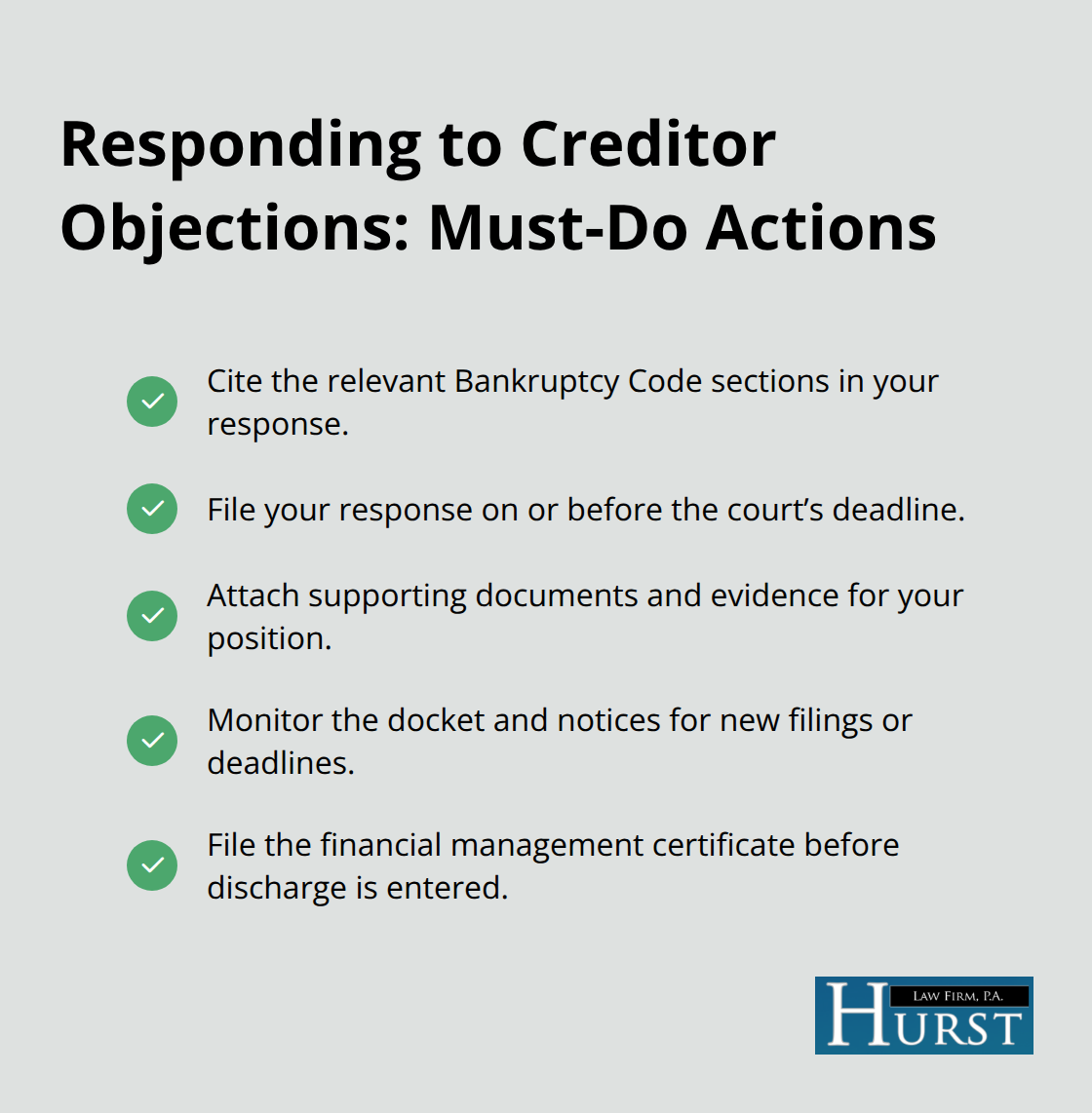
Professional representation handles these procedural requirements and creditor responses as standard practice, allowing you to focus on rebuilding your financial foundation.
Final Thoughts
Filing bankruptcy without an attorney carries real financial and legal risks that often outweigh the money you save upfront. Mistakes like missing creditors, misclassifying assets, and failing to meet deadlines happen repeatedly in pro se cases and result in dismissed filings, lost asset protection, and debts that should have been eliminated. When you refile months later after an initial failure, you pay court fees twice and spend far more time navigating a broken process than if you had hired representation from the start.
Memphis residents facing financial distress have access to legitimate resources that make professional representation affordable. Legal aid organizations in Tennessee connect low-income individuals with attorneys who handle cases at reduced rates or no cost, and many bankruptcy attorneys offer payment plans that spread costs across several months. Some courts allow fee waivers for filers with no income, reducing the $335 filing fee barrier entirely.
We at Hurst Law Firm, P.A. have served the Memphis community since 1997, helping individuals and families obtain a fresh start through Chapter 7 and Chapter 13 bankruptcy. Rather than gambling with your financial future, contact us for a consultation to discuss your specific situation and understand whether professional guidance makes sense for your case.